A First Museum Visit With Kids: Follow Their Curiosity, Not the Map
There is a particular kind of family outing that looks wonderful on a museum website and feels different once you are inside. One child wants to stop at the first display. Another is already asking for the dinosaur room. Someone needs the restroom. The grown-ups are quietly wondering whether the admission was worth it if everyone sees only one floor.
A good museum visit with kids does not have to cover the building. It can be a morning in which your child notices one surprising object, asks a question, and leaves with enough energy to talk about it later. That is a complete visit.
Choose the museum for this child, on this day
“Kid-friendly” is useful shorthand, but it is not a guarantee. A young child who loves vehicles may be happier in a transportation museum than in a large children’s museum. A child who likes drawing may enjoy one quiet art gallery. A busy natural-history hall may delight one sibling and overwhelm another.
Before you go, browse the museum’s own website for current hours, admission, timed-entry rules, food policies, stroller access, family restrooms, and any family or sensory resources. These details vary by institution and can change. For example, the Smithsonian’s visiting-with-kids page notes that some of its locations require entry passes even though most offer free admission. It also warns that entrance lines can be long at busy times. Do not assume that a free museum means a no-planning museum.
Ask your child which one thing sounds most interesting. A picture of a fossil, painting, train, or space exhibit can give them a reason to walk through the door. Your plan can be as simple as “see that, find a place to sit, then decide whether to stay.”
What works at different ages?
There is no universal “best age” for a museum. A toddler may enjoy shapes, lights, movement, and the experience of walking through a new space, but usually needs close supervision and an exit plan. A preschooler may connect with a striking object or hands-on area and ask questions that do not follow the exhibit’s intended lesson. A school-age child may want to read selected labels, compare objects, or return to a favorite display. Tweens may value choosing a gallery themselves or taking a photo where permitted.
These are starting points, not milestones. Temperament, sensory needs, mobility, fatigue, and interest matter as much as age. The goal is to match the visit to the children you have, not to prove that they can tolerate a certain number of galleries.
For a mixed-age family, give each child one small choice if you can: the younger one picks a display to examine closely; the older one chooses the next room. If one adult is present, it is fine to choose a smaller museum or a shorter route that makes staying together easier.
Let one object be enough
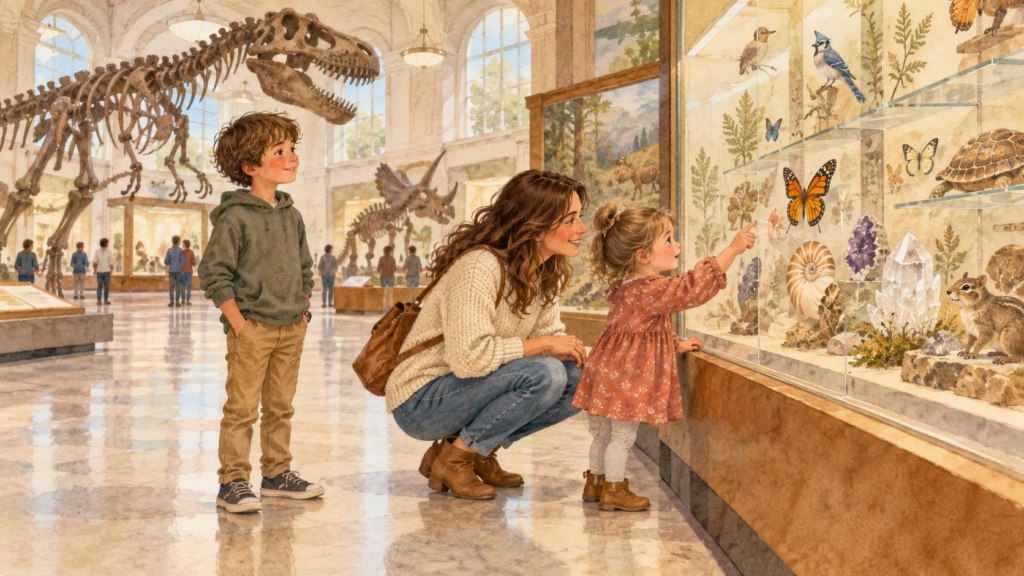
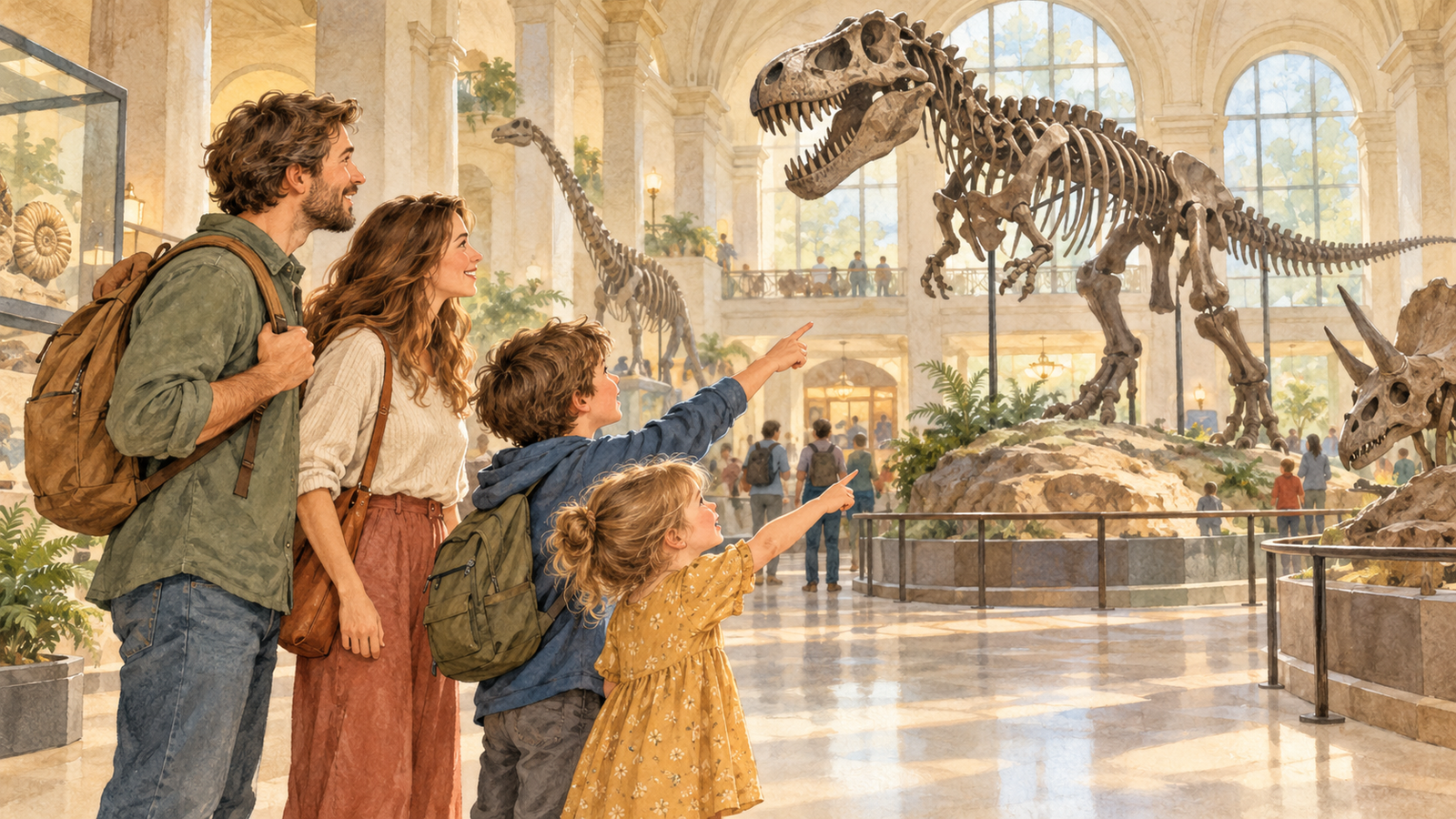
Adults often move through museums by reading a map and checking off rooms. Children may move by attraction: a huge skeleton, a tiny painted bird, a bright stone. Pause there. Ask, “What did you notice first?” or “What do you think this was used for?” You do not need to know the answer immediately. Read a short label together or ask a staff member when that is appropriate.
The Hirshhorn Museum’s family guidance suggests focusing on one area rather than trying to see the whole museum. That advice can take pressure off the adults as much as the children. Lingering with one object may lead to a richer conversation than rushing past twenty.
If your child is not interested in the display you expected them to love, follow the surprise. Their attention is information. Perhaps the room is too noisy, perhaps the object is not what they imagined, or perhaps the staircase is simply more fascinating today.
Museum rules still matter. Explain what can be touched and what cannot before reaching the gallery, and look for designated hands-on spaces where available. A sketchbook or a quiet noticing game can give hands a job in a look-but-don’t-touch room.
Plan the break before anyone needs it

Before entering the first gallery, locate a restroom and a place to sit. Check where food and drinks are allowed; many galleries prohibit them. A snack, water, and a short outdoor pause may be more useful than one more exhibit.
The National Museum of American History’s family FAQ advises planning plenty of breaks, especially with very young children. A break is not evidence that the outing is going badly. It is part of how a family makes the outing possible.
For children who are easily overwhelmed, look at the museum’s accessibility page before visiting. Some offer sensory maps, quieter hours, or other accommodations; others may not. If you need a specific accommodation, contact the museum directly rather than assuming it will be available. You also have permission to leave early. A child who leaves after an enjoyable hour may be more willing to visit again than one pushed through a difficult afternoon.
Let the conversation continue at home
The trip does not have to end at the exit. At dinner, ask, “What do you remember?” rather than “What did you learn?” A child may remember the sculpture, the echo in the hallway, or the person who helped them find a restroom. All of those are part of the experience.
If something genuinely caught their interest, borrow a related library book, draw it together, or look up a question they asked. Resist turning the outing into a worksheet. The museum has already done something valuable if it made the world feel a little larger.
The most useful planning question is not “How much can we fit in?” It is “What would make this an enjoyable first visit for our family?” That answer might be one gallery, two good questions, and a snack on a bench. It counts.