Outdoor Time Without a Backyard: Making Nature Part of Family Life
When people talk about outdoor play, it is easy to picture a large backyard, a playset, and a long stretch of free time. Many families do not have those things. They may live in an apartment, share a small outdoor space, have a busy schedule, or live somewhere that does not feel easy to explore with children.
That does not mean outdoor time has to be complicated—or that it only counts when a family plans a big adventure.
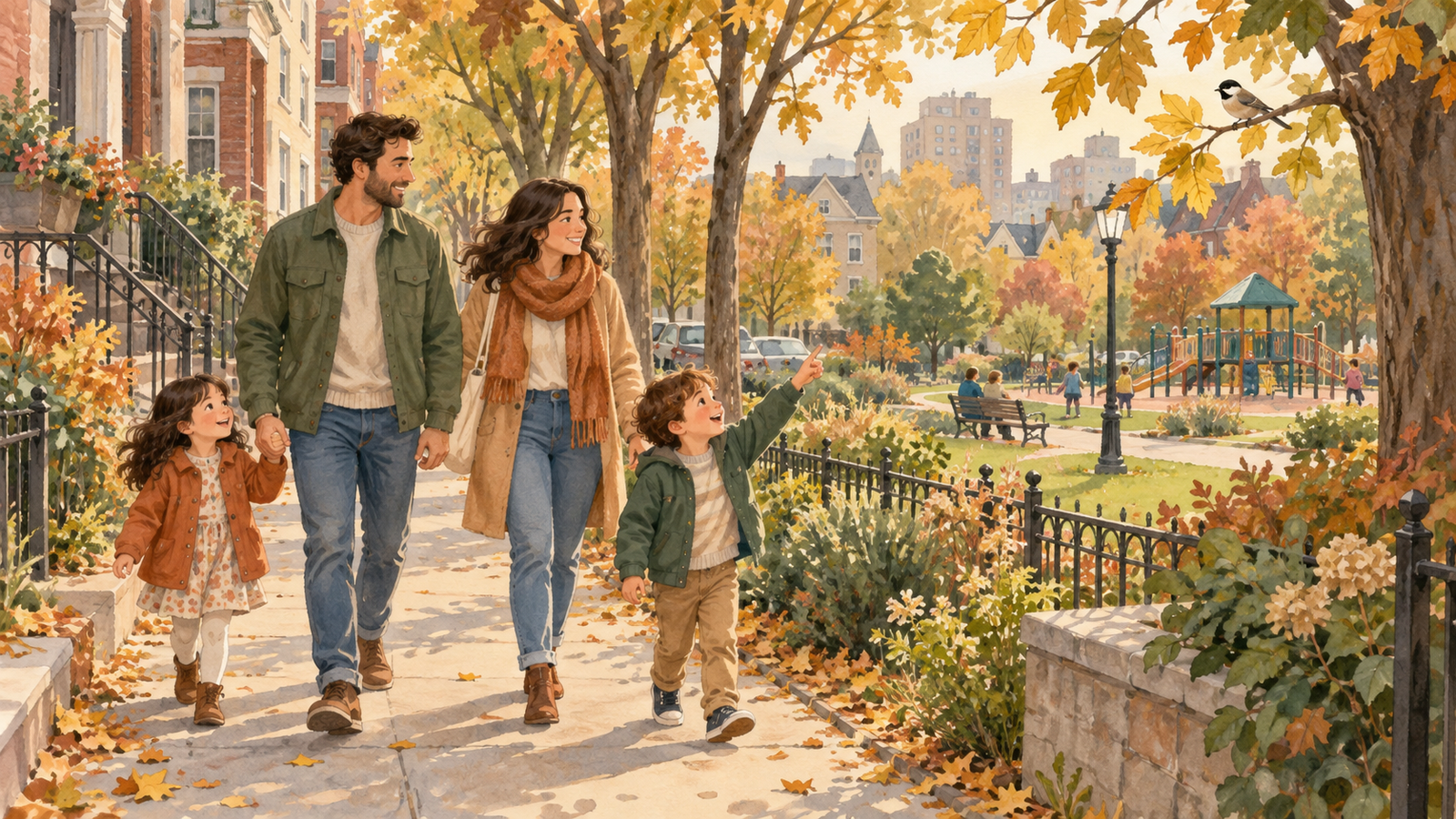
A short walk, a few minutes on a front step, or time noticing what is happening on the way to the car can become part of a family’s everyday rhythm. The goal is not to create a perfect nature-loving childhood. It is to make room for small, repeatable moments outside when they work for your family.
Outdoor time does not have to be a special event
Families sometimes think outdoor activities require equipment, a destination, or a full afternoon. That expectation can make it harder to begin. A more realistic approach is to treat outdoor time as one possible part of an ordinary day.
You might take a short walk after dinner, stop at a playground on the way home, eat a snack on the porch, or let your child help water a plant. The activity can be simple because the value is not in how impressive it looks. It is in having an opportunity to move, notice the surroundings, and share a little time together.
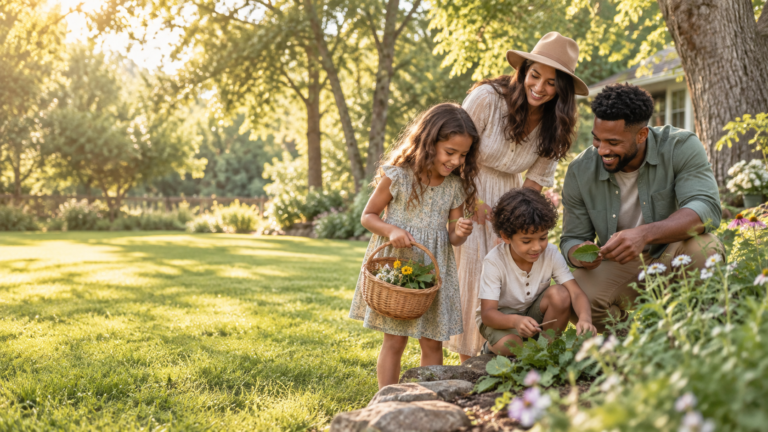
The American Academy of Pediatrics describes outdoor play as something children can enjoy in many settings, including a school playground, backyard, garden, or neighborhood green space. Nature does not have to mean a remote trail or a weekend trip. HealthyChildren.org: Playing Outside—Why It’s Important for Kids
Start with the spaces your family already has
A backyard can be convenient, but it is not the only place where children can spend time outside. Depending on what is available and safe for your family, an outdoor moment might happen on a balcony, stoop, shared courtyard, neighborhood sidewalk, school playground, community garden, or nearby park.
If you are not sure where to begin, think about places already built into your week. Is there a park near the grocery store? A quiet street you can walk after school? A library with a small garden or outdoor area? A route where your child can safely walk beside you for part of the journey?
The easiest outdoor routine is often one that does not require a separate trip. For families who rely on public transportation or do not have a car, a walkable route or a bus-accessible park may be more realistic than a distant nature destination.
Access is not the same for every family. Some neighborhoods have fewer safe, welcoming outdoor spaces, and some children need accessible paths or accommodations. If a particular place does not work for your family, that is not a failure of effort. Start with the safest and most practical option available to you.
Make the invitation small enough to say yes to
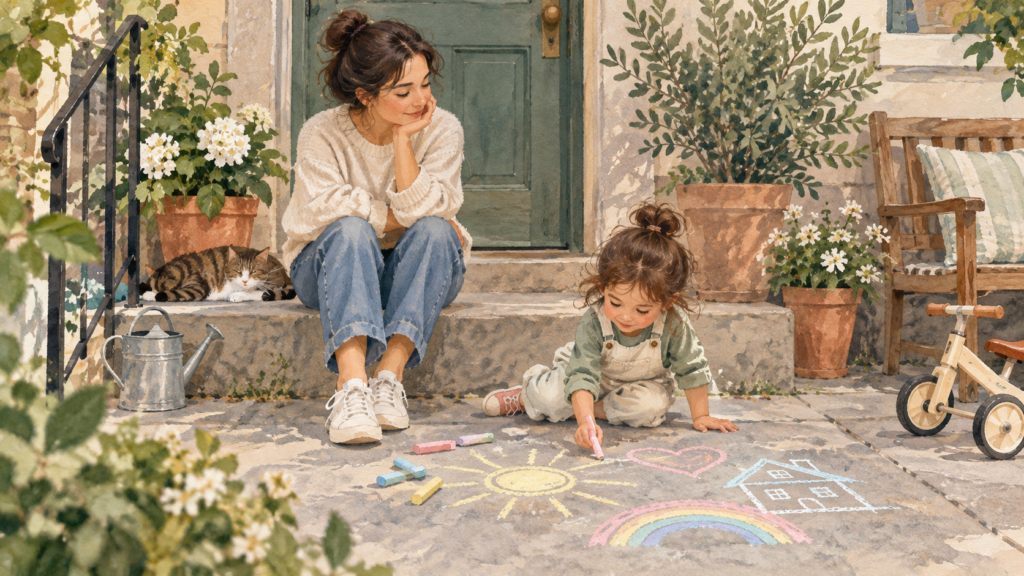
Instead of promising a long outing, try a small invitation: “Let’s step outside for a few minutes,” or “Would you like to walk to the corner with me?” A short plan can feel more manageable on a busy day, and it can always grow if everyone is enjoying it.
You can also connect outdoor time to something your family already does:
- Walk together after dinner.
- Take a snack outside when the weather is comfortable.
- Let your child help carry groceries from the car.
- Visit the same playground on one regular afternoon.
- Step outside while waiting for a sibling’s activity to finish.
These are not rules or a checklist. They are examples of how outside time can fit around real family routines rather than compete with them.
For children ages 3 to 5, the CDC recommends being physically active throughout the day. For ages 6 to 17, the guideline is at least 60 minutes of moderate-to-vigorous physical activity each day. Outdoor time can contribute to movement, but it does not have to be the only kind of activity, and a family walk is not automatically a substitute for every child’s individual needs. CDC: Child Activity—An Overview
Let the child decide what the outside time becomes
Parents do not have to lead every minute. A child may want to walk, look closely at a leaf, kick a ball, sit and watch birds, or simply talk. The same place can feel different when children have time to choose what interests them.
For a younger child, you might narrate what you notice without turning the outing into a lesson: “The sidewalk is wet,” “I hear a bird,” or “That tree has lost some leaves.” Older children may prefer to walk alongside you without many questions. Sometimes the best conversation happens when no one is expected to make eye contact or answer immediately.
If your child says, “There’s nothing to do,” you can offer one simple starting point—such as drawing with sidewalk chalk or looking for signs of the season—then give them room to take it in another direction. Outdoor time does not need to become a structured activity to be worthwhile.
Adapt to age, energy, and ability
A baby may enjoy a brief change of scenery while held or safely placed in an appropriate outdoor space with a caregiver nearby. Toddlers and preschoolers often want to stop frequently, repeat the same route, and explore at their own pace. School-age children may enjoy choosing the destination or bringing a ball, notebook, or camera. Older children may be more interested in walking and talking than in a planned game.
These are possibilities, not developmental rules. A child’s interests, health, sensory preferences, mobility, and energy can matter more than age alone. Families can adapt outdoor time to include seated play, accessible routes, quieter spaces, or shorter outings. For individualized advice about a child’s health or mobility needs, talk with their healthcare professional.
When the weather or schedule changes
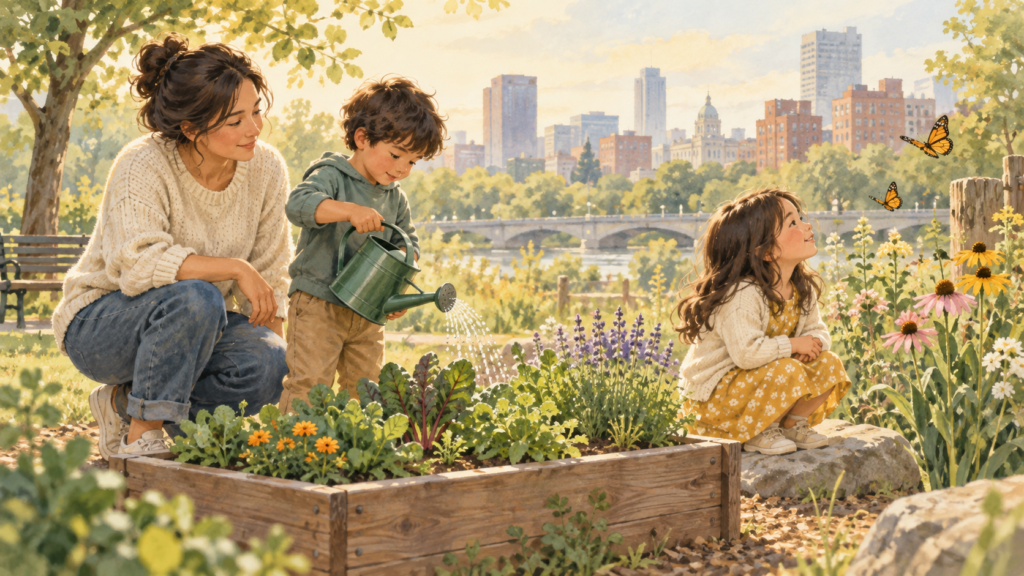
Outdoor routines will not look the same every day. Heat, cold, rain, air quality, allergies, daylight, and family schedules can all affect what feels comfortable and safe. Check local conditions, dress for the weather, bring water when appropriate, and supervise children around roads, water, and unfamiliar environments.
Some days, outside time may be a few minutes. Other days, it may not happen at all. A missed day does not erase a routine or mean you have let your child down. Consistency does not have to mean doing the same thing every day; it can mean returning to the idea when circumstances allow.
The point is connection, not performance
It is easy for family life to turn even a pleasant idea into another standard parents feel they have to meet. Outdoor time should not become one more way to measure whether a family is doing enough.
A child does not need a picturesque backyard or elaborate nature activities to share a meaningful moment outside. What helps is finding a version that fits your household: a familiar route, a nearby place, a few minutes between commitments, or a small outdoor pause at home.
Some days, your child may run ahead. Some days, they may want to be carried or go back inside. Both can be part of family life. The goal is not to make every outing magical. It is to make outside time feel possible—and to give your family a little room to move, notice, and be together.
Frequently Asked Questions
Do children need a backyard for outdoor play?
No. A backyard can be convenient, but children can spend time outside in other settings, such as parks, school playgrounds, sidewalks, community gardens, or shared outdoor areas, when these are accessible and safe for the family.
How much outdoor time should children get each day?
There is no single CDC daily outdoor-time target. The CDC’s physical-activity guidance is based on age and activity, not on outdoor time alone: children ages 3 to 5 should be active throughout the day, while children and teens ages 6 to 17 should get at least 60 minutes of moderate-to-vigorous physical activity daily. Outdoor play can be one way to move, but activity can happen in other settings too.
What if my child does not like going outside?
Start with a brief, low-pressure outing connected to something your child already enjoys, such as listening to music on a walk, bringing a favorite ball, or visiting a familiar place. Let the child help choose what to do, and keep the plan flexible.
What can families do outside when they do not have much time?
A short walk, a snack outside, a few minutes on a balcony or stoop, or a stop at a nearby playground can be a manageable beginning. The right option depends on the space, schedule, and safety needs of each family.
This article is for general informational purposes. Follow local safety guidance and seek individualized advice from your child’s healthcare professional when needed.
Sources and Further Reading
- Centers for Disease Control and Prevention. Child Activity: An Overview
- American Academy of Pediatrics / HealthyChildren.org. [Playing Outside: Why It’s Important for Kids](https://www.healthychildren.org/English/family-life/p