Halloween for Christian Families: A Values-Led, Joyful Way to Celebrate Fall
For many families in the United States, Halloween is simply part of the rhythm of autumn: pumpkins on porches, children in costumes, neighborhood walks after dark, school parties, and more candy than anyone knows what to do with.
For some Christian families, though, the season can feel more complicated.
They may not feel comfortable with themes of witchcraft, occult imagery, horror, gore, or fear. At the same time, they may not want their children to feel isolated from friends, confused about family boundaries, or as though every October celebration is something they are only allowed to watch from a distance.
The good news is that families do not have to choose between embracing every part of Halloween and withdrawing from all of the community around it.
There is a generous middle path: enjoying autumn, friendship, creativity, costumes, hospitality, and neighborhood connection while making choices that fit the values of your own home.
Start with the question: what do we want to say yes to?
A values-led approach is more useful than a list of rules.
Rather than beginning with, “What are we refusing?” try asking:
- What kind of atmosphere do we want in our home?
- Which traditions bring our family joy?
- What do we want our children to remember about this season?
- How can we stay connected to neighbors and friends?
- Which images, activities, or themes do not feel right for us?
Families will answer differently. Some may skip trick-or-treating but attend a church harvest festival. Some may enjoy costumes and neighborhood walks while avoiding frightening themes. Others may host a fall dinner, volunteer at a community event, or create a family tradition that happens entirely at home.
The goal is not to copy another family’s boundary. It is to make your own choices with clarity and warmth.
Celebrate fall as a season of abundance
Autumn offers so much that has nothing to do with fear or horror.
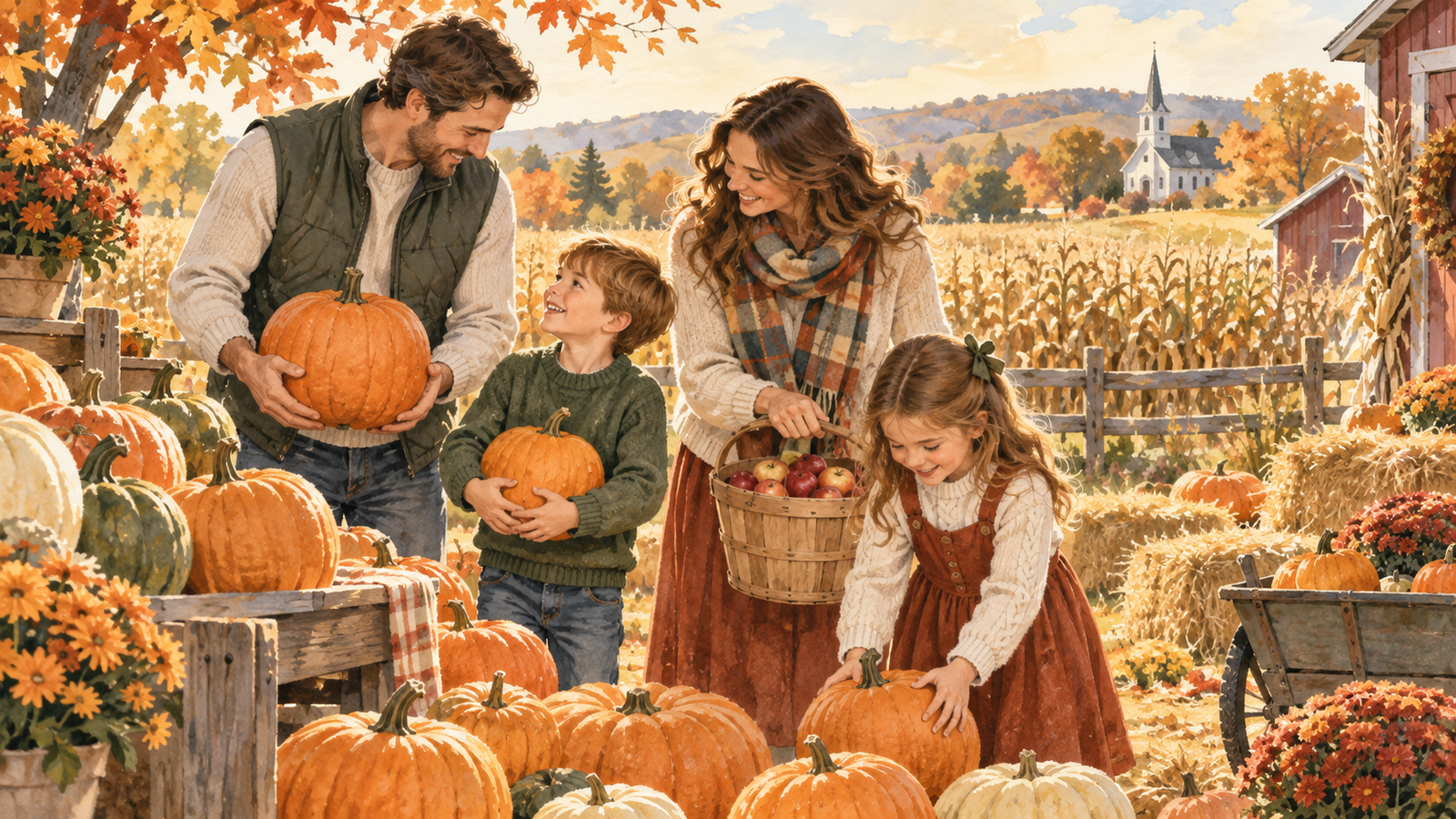
A family can visit a pumpkin patch, walk through a corn maze, take a nature hike, bake apple treats, make soup, collect colorful leaves, decorate the porch, read seasonal books, or invite friends for a simple dinner.
These are not “lesser” alternatives. They can become the traditions children look forward to most.
Try building one annual rhythm around the season:
- choose pumpkins together;
- let each child pick a fall book;
- make a simple autumn craft;
- cook a favorite meal;
- take an evening walk to see decorated houses;
- end the night with gratitude, prayer, or a family conversation.
When a family creates something meaningful of its own, children are less likely to experience a boundary as merely missing out.
Costumes can be creative without being scary
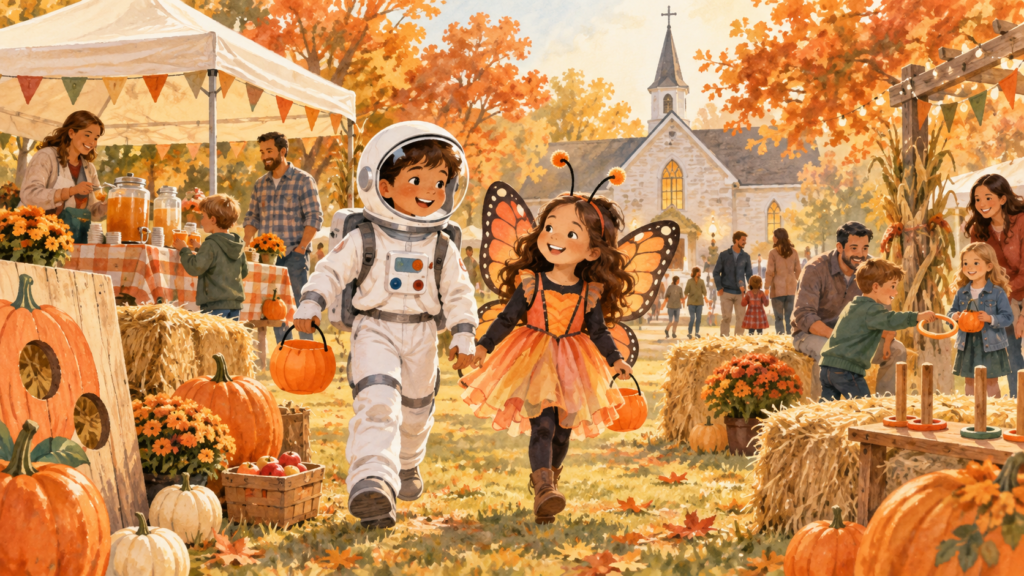
For many children, a costume is not about the meaning of Halloween at all. It is about imagination and the chance to become someone or something else for an afternoon.
Christian families who choose to participate in costumes can set a simple guideline: choose characters, animals, jobs, stories, or ideas that feel playful and appropriate for your family.
Some possibilities include:
- animals;
- astronauts, artists, chefs, firefighters, or scientists;
- favorite book characters;
- athletes or historical figures;
- superheroes;
- garden, space, or nature themes;
- family costumes built around a shared story;
- handmade costumes inspired by a child’s own idea.
You do not need to make the costume conversation heavy. A child can understand a simple explanation:
“Our family enjoys dressing up, but we choose costumes that feel fun, kind, and comfortable for us.”
That is different from criticizing children whose families choose differently.
Community participation does not have to mean total participation
A child may want to be with friends, walk through the neighborhood, or take part in a school event. Parents can decide which parts feel right.
For some families, trick-or-treating can be treated as a neighborhood activity rather than a full celebration of every Halloween theme. They may choose a cheerful costume, walk only with known friends, come home early, and set a family plan for treats afterward.
Other families may prefer a church or community event. Many churches host Fall Festivals, Harvest Festivals, or Trunk or Treat gatherings where children can dress up, play games, and enjoy the social side of the evening in an environment that aligns more closely with their family’s preferences.
If none of those options fit, host something small: invite one or two families over for pumpkin decorating, a soup supper, a scavenger hunt, or a movie night with gentle fall themes.
Belonging does not require saying yes to everything.
Make a calm plan for candy
Halloween candy can easily become the center of the night, especially when children come home with a full bag after an exciting evening.
There is no need to turn candy into a moral issue. A small amount of candy can simply be part of a special occasion. But parents can set a plan before the night begins, when nobody is tired or negotiating.
For example:
- choose a few favorites to enjoy that evening;
- save a small number for later in the week;
- let children trade some treats for a book, small toy, family game, or outing;
- use some unopened candy for a family movie night or a later celebration;
- decide together where the bag will be kept.
The American Academy of Pediatrics encourages families to make occasional sweet treats part of a balanced, mindful food culture rather than turning them into an unlimited everyday option. HealthyChildren.org: How to Tame Your Child’s Sweet Tooth
The point is not strictness. It is helping children enjoy a special evening without feeling overwhelmed by a week’s worth of candy all at once.
For babies and toddlers, remember that certain common Halloween treats can be choking hazards. The AAP specifically advises avoiding hard candy, gum, popcorn, whole nuts, small candies, and similar foods for young children. HealthyChildren.org: Halloween Tips for Babies and Toddlers
Offer something other than candy at your door
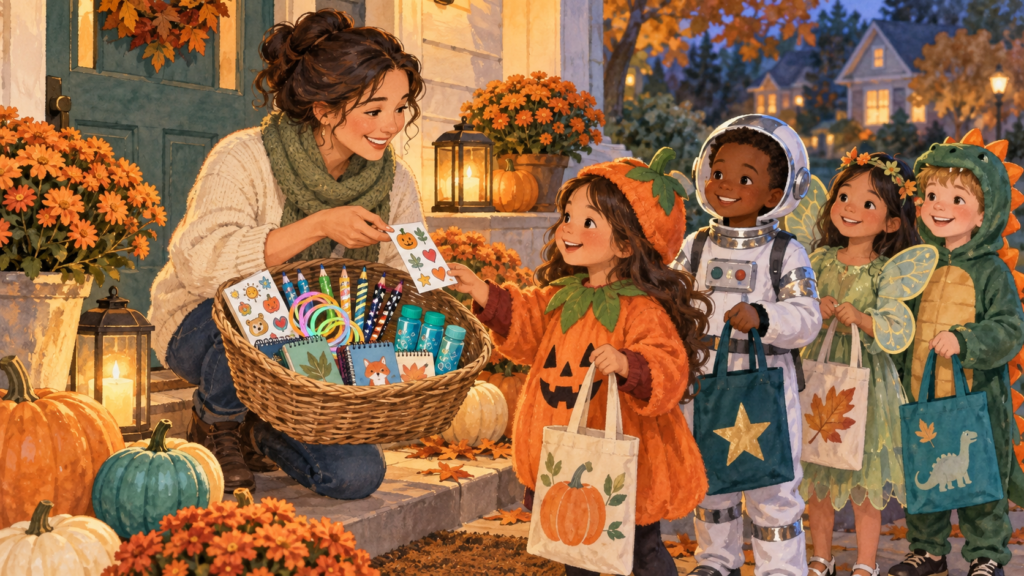
A home can welcome neighborhood children without handing out candy.
Non-food treats can be fun, affordable, and especially meaningful for children managing food allergies or other dietary restrictions. Consider:
- stickers;
- mini notebooks;
- pencils or erasers;
- temporary tattoos;
- bubbles;
- glow sticks or bracelets;
- bookmarks;
- small card games;
- child-safe novelty toys.
Food Allergy Research & Education’s Teal Pumpkin Project helps families signal that non-food treats are available. A teal pumpkin or the project’s printable sign tells trick-or-treaters that they can receive a non-food option. If you choose to offer both candy and non-food items, FARE recommends keeping them in separate bowls. FARE: Teal Pumpkin Project
This is a lovely way to make a values-led choice that is also genuinely inclusive.
When choosing non-food items, consider the ages of neighborhood children and avoid very small toys that could create a choking risk for young children. FARE also recommends checking that items are appropriate for children with allergies, including avoiding latex when possible. FARE: Ideas for Non-Food Treats
Explain family choices without creating fear
Children do not need a long lecture about every historical or cultural aspect of Halloween. They need an age-appropriate explanation that feels secure.
You might say:
“Different families celebrate this season in different ways. Our family chooses the parts that feel joyful, kind, and right for us.”
Or:
“We love autumn, costumes, friends, and generosity. We choose not to include things that feel scary or uncomfortable to our family.”
This approach teaches discernment without teaching contempt. Children can learn that convictions and kindness belong together.
Build a tradition children can claim as their own
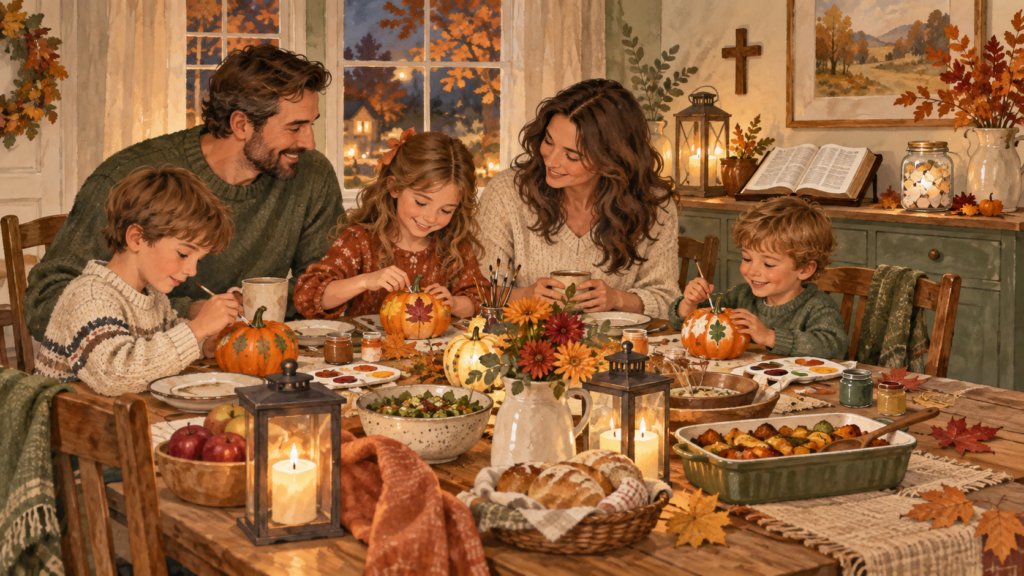
The most powerful response to “But everyone else gets to…” is not always another rule. Often, it is a meaningful tradition.
Perhaps your family has a Fall Fun Night with costumes, favorite foods, games, a gratitude jar, and a walk to see pumpkins. Perhaps each child gets a new book, a cozy pair of pajamas, or supplies for a creative project. Perhaps you volunteer at a church event or invite neighbors in for cider and non-food treats.
The details do not need to be elaborate. What matters is repetition, warmth, and the feeling that this is ours.
Children do not need their family to celebrate exactly like everyone else. They need to feel that the traditions of their own home are full of joy, belonging, and love.
Sources and further reading
- Food Allergy Research & Education: About the Teal Pumpkin Project
- Food Allergy Research & Education: Ideas for Non-Food Treats
- American Academy of Pediatrics: How to Tame Your Child’s Sweet Tooth
- American Academy of Pediatrics: Halloween Tips for Babies and Toddlers