
Starting Solids Without the Pressure to Get Everything Right
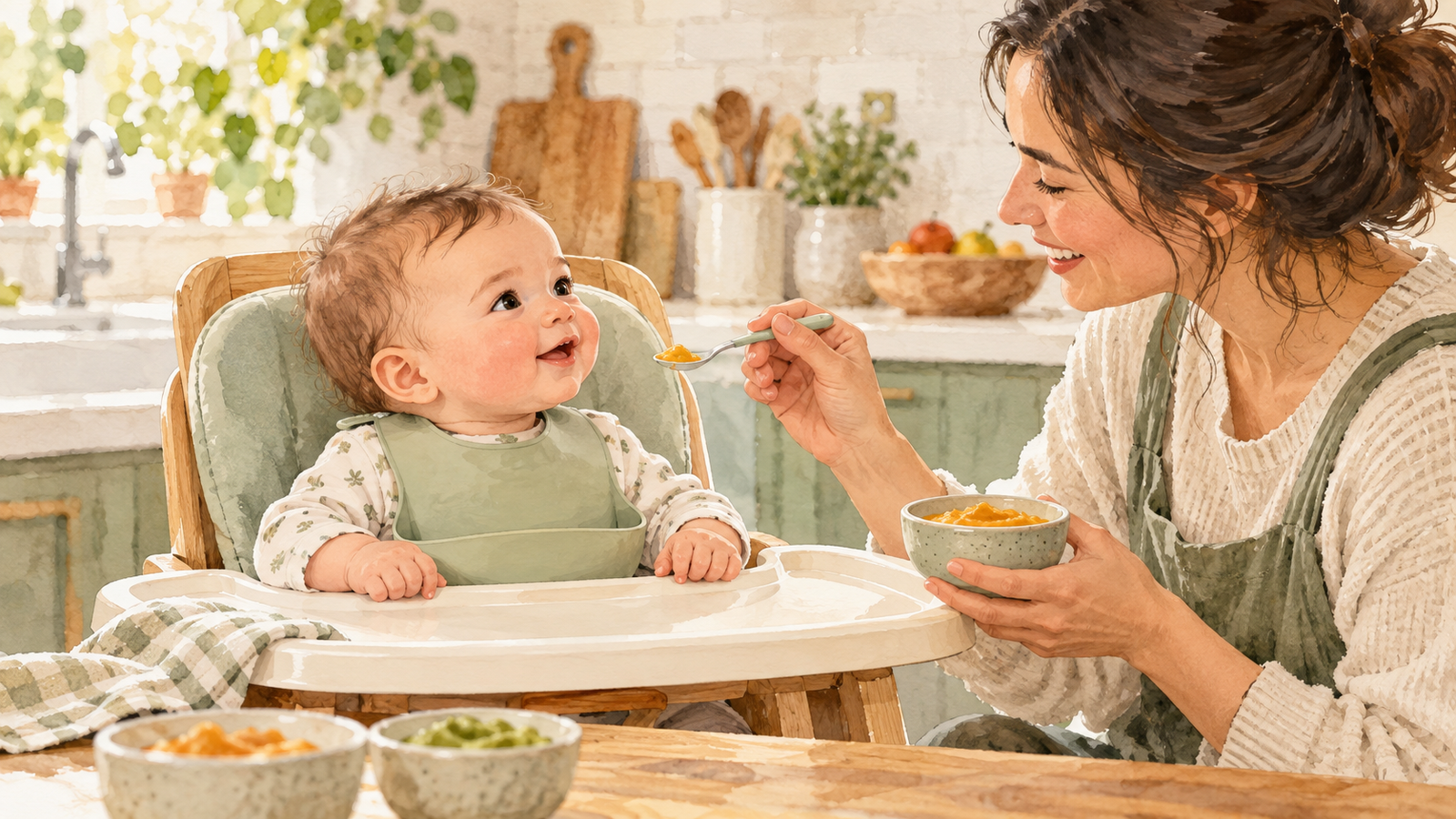
The first spoonful is often photographed as a milestone. The days after it are less tidy. A baby accepts one taste and refuses the next, grabs the spoon, smears food across the tray, or seems more interested in the bowl than what is inside it. A parent may wonder whether any of this counts as eating.
Starting solids without pressure means treating these early meals as a process of learning, not a test of how quickly a baby empties a bowl. There are important safety and nutrition decisions to make, but there is room for flexibility within them. Your baby does not need a beautiful menu or a viral feeding method. They need foods appropriate for their development, close supervision, and an adult who can notice their cues.
This article is general education for U.S. families, not individual medical advice. Ask your baby’s pediatrician about timing, growth, allergies, feeding difficulties, or a plan tailored to your child.
Start with readiness, not a calendar contest
The CDC and American Academy of Pediatrics recommend introducing foods other than breast milk or infant formula at about six months. Readiness is more than reaching a date: a baby should be able to sit with support, control their head and neck, open their mouth for food, and move food back to swallow rather than push it straight out. The CDC does not recommend introducing solids before four months. Source: CDC
Some babies show interest in the family table before they can manage food safely. Others need more time to coordinate a new skill. If you are unsure, ask the pediatrician to watch your baby’s posture and feeding readiness. Starting solids is an addition to breast milk or formula, not an overnight replacement for it. Source: CDC
What the first weeks are really for
A first meal may involve a few tastes and a great deal of observation. Babies are learning how a new texture feels, how to move food in the mouth, and how eating with the family works. Their expressions are not always reliable reviews of a food. A surprised face does not necessarily mean “never again.”
You can begin with a small portion of a soft, developmentally appropriate food, with your baby upright and supervised. There is no medically required sequence in which every family must serve fruits, vegetables, grains, and proteins. The CDC encourages variety across food groups as babies become accustomed to eating. Iron- and zinc-containing foods, including appropriately prepared meats or iron-fortified infant cereals, deserve a place in the conversation because those nutrients matter as babies grow. Sources: CDC and AAP
Try to keep your attention on the child rather than the amount left in the bowl. If they turn away, close their mouth, or lose interest, the meal can end. You can offer food again another day without turning refusal into a struggle. Families may choose spoon-feeding, carefully prepared finger foods, or a combination; the safest texture and shape depend on the baby’s current skills.
Safety matters more than a feeding trend
A baby should sit upright while eating, with an adult watching closely. Prepare food in a texture, size, and shape suited to the child’s development. Whole grapes, nuts, hard raw vegetables, thick globs of nut butter, popcorn, and other small or sticky foods can be choking hazards. The CDC also advises against eating while crawling, walking, riding in a stroller, or sitting in a car. Source: CDC choking guidance
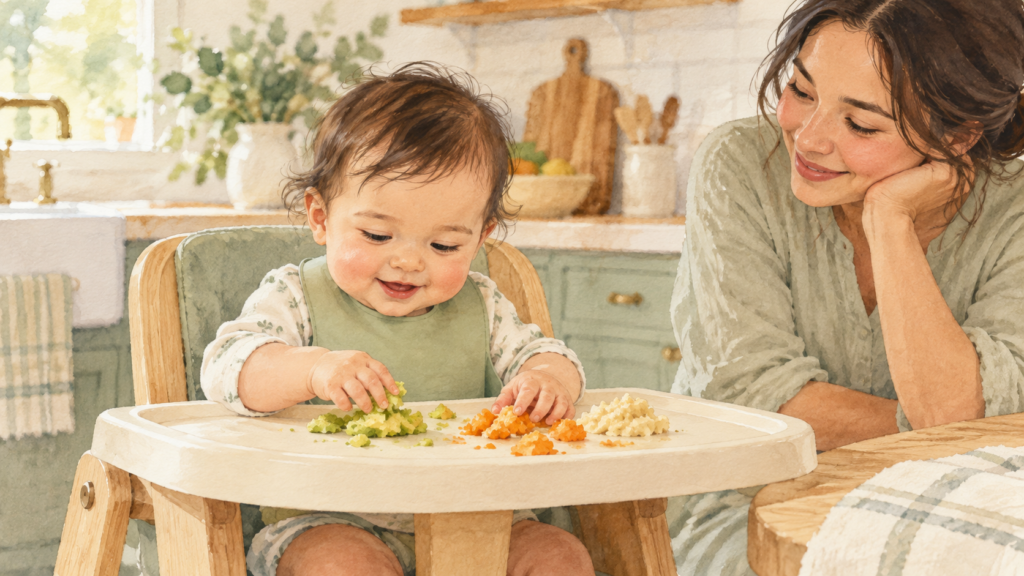
The same food can become more appropriate when prepared differently. A cooked vegetable can be softened and mashed. Nut butter can be thinned and mixed into another suitable food rather than offered as a thick spoonful. If you want to use finger foods or baby-led feeding, review safe preparation with your pediatrician rather than relying on a short social-media clip.
Do not give honey during the first year. Cow’s milk should not replace breast milk or infant formula as a drink before 12 months, although some dairy foods such as plain yogurt can be introduced earlier in an age-appropriate form. Sources: AAP and CDC
Do not postpone allergens without a reason
Many parents were once told to delay foods such as egg or peanut. Current guidance is different: for most babies, allergenic foods can be introduced once they are ready for solids, in a safe form. A baby with severe eczema or an egg allergy needs an individualized discussion with a clinician about peanut introduction. Sources: CDC and AAP
Introduce new foods in a way that lets you notice a reaction. If a food seems to cause rash, vomiting, or another concerning symptom, stop offering it and call your child’s clinician for guidance. Trouble breathing or a severe reaction requires emergency care. Do not try to work through a suspected allergy by repeatedly offering the food on your own.
A workable first-meal routine
Choose a time when the baby is awake and relatively comfortable, not when everyone is exhausted and rushing. Put a small amount of suitable food on the tray or spoon. Sit with your baby and allow pauses. Expect mess. Wash hands and equipment, and store leftovers safely.
These steps sound ordinary because they are. A baby does not need to eat a large portion for the meal to be worthwhile. Over the next weeks and months, you can gradually offer new tastes and textures, keeping safety and your child’s developmental progress in view. If feeding remains consistently distressing, your baby has difficulty swallowing, or you are worried about growth or nutrition, speak with the pediatrician.
The aim is not to prove that your baby is an adventurous eater by a certain date. It is to begin a long relationship with food in which safety, nourishment, curiosity, and connection can coexist.