
Kids Hungry Before Dinner? A Calmer Way to Handle the Late-Afternoon Snack
It is late afternoon. One child is looking through the kitchen for something to eat. Another has just come home from school or finished playing outside. Dinner is on the way, but it is not on the table yet. A parent wonders whether a snack will make dinner harder—or whether refusing one will make the next hour miserable for everyone.
This is often treated as a question of discipline: Should I let them eat now? A more useful question may be: How long has it been since they ate, when will dinner actually happen, and what would help them feel comfortably fed until then?
An afternoon snack does not have to be a bargaining chip or a miniature dinner. It can be a normal part of the family’s rhythm. The aim is not to make children arrive at dinner as hungry as possible. It is to help them move through the afternoon with enough energy and without turning food into a fight.
Notice the gap, not just the clock
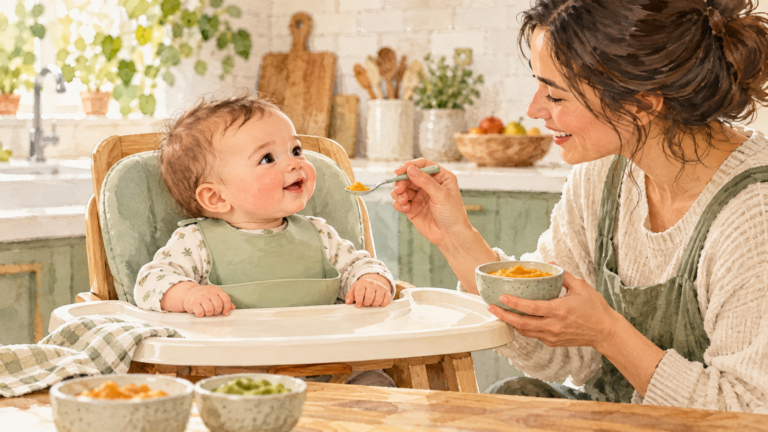
A child who says “I’m hungry” at 4:30 may have eaten lunch hours earlier. School lunch schedules, recess, sports, a long car ride, or an unusually active day all change how that afternoon feels. Younger children also have different needs from older siblings. The American Academy of Pediatrics explains that many toddlers need an afternoon snack because they may not eat enough at a meal to comfortably make it from lunch to dinner.
Before deciding that a snack will “spoil” dinner, look at the real gap. If dinner is nearly ready, a small portion of what you are preparing may be easier than opening a separate snack. If dinner is still a long way off, a more substantial snack may be appropriate. Neither situation calls for the same automatic answer every day.
The AAP also describes an after-school routine as a flexible mix of snack, movement, relaxation, and study. The order can fit the child and the day. A snack after school is not a sign that the family routine has gone wrong.
Make the snack worth sitting down for
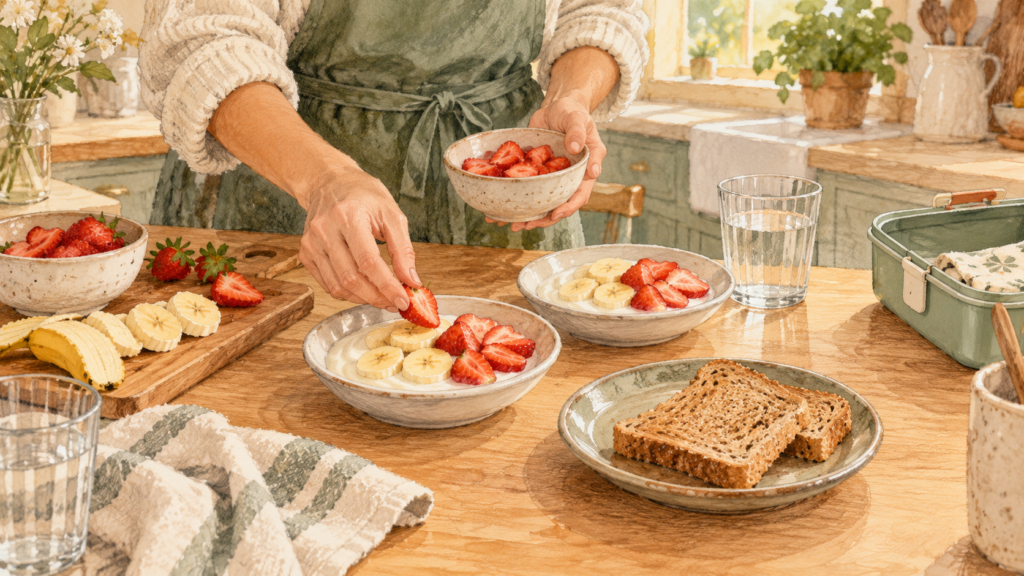
When a child needs more than a bite, try offering something that resembles regular food rather than asking the child to hold out on whatever happens to be in a package. This does not mean every snack needs three food groups or a beautiful plate. It means it can contribute to the day’s eating.
Plain yogurt with soft sliced fruit and toast is one possibility. A small portion of leftovers is another. So is a simple sandwich or tortilla with a filling your family already eats, adjusted for the child’s age and any allergies. Use what is affordable, available, and familiar. The AAP’s guidance on children’s snacks encourages families to use snack time as another opportunity to offer fruit, vegetables, whole grains, and other nourishing foods.
One detail matters more than a clever combination: let the child actually sit and eat. Constant little bites while walking around the kitchen can make it difficult to notice whether they are still hungry or finished. A brief pause at the table gives the snack a beginning and an end, even in a busy household.
The parent can provide a rhythm without policing every bite
Predictability helps. You might usually offer a snack after school, after a nap, or when the family returns from an afternoon outing. On another day, dinner may happen earlier. A rhythm is useful precisely because it can bend when the day changes.
Within that rhythm, children do not need to be persuaded to eat a prescribed amount. Start with a manageable portion and let them ask for more if they are hungry. The AAP advises parents to offer food and allow children to respond to their own appetite; not every snack has to be a mini-meal, and balance is considered across the day, not judged from one plate. The CDC likewise advises caregivers to notice children’s hunger and fullness cues rather than requiring them to finish everything served.
This is not permission to leave an endless snack buffet open. It is a way to avoid two unhelpful extremes: denying food to a child who is clearly hungry, or coaxing a child to finish a portion simply because it was served.
What if they barely touch dinner?

Sometimes a child eats a hearty snack and less dinner. That alone does not tell you the snack was a mistake. They may have needed food earlier; they may be tired; the dinner may not appeal to them; or their appetite may simply be smaller tonight. Children’s intake can vary from one day to the next, according to the CDC’s mealtime guidance.
Rather than treating dinner as a test, notice the pattern over time. If a snack is consistently happening minutes before dinner and everyone is frustrated, change the timing or make dinner earlier when possible. If dinner will be late, expect that the snack may do more of the work. At the table, offer the family meal without a speech about what the child ate at 4 p.m.
A calm response might be: “Dinner is here if you’re hungry. You can have some now, and it’s okay to stop when you’re full.” That is not a script every family must use. It is an example of separating the meal from a power struggle.
If a child has ongoing difficulty eating, pain, significant changes in appetite, concerns about growth, or a restricted range of foods, discuss the pattern with their pediatrician or a registered dietitian. A blog post cannot assess an individual child’s nutrition.
Adapt the same snack idea for different ages
The family can share the same basic foods without serving every child the same shape or portion. A preschooler and a school-age sibling may both have fruit, yogurt, and toast, while the younger child’s food needs different preparation. The CDC warns that whole grapes and cherry tomatoes, hard raw vegetables, whole nuts, popcorn, and thick spoonfuls of nut butter can pose choking risks to young children. Prepare food in age-appropriate sizes and textures, have children sit while eating, and supervise them.
Allergies and medical needs also change what belongs on the table. There is no universal “best” snack that is right for every child. The practical family snack is one that meets the child who is actually eating it.
Let the afternoon be part of family life, not another food project
No family needs a rotating menu of elaborate snack recipes to handle the hour before dinner. Often the most helpful change is simply acknowledging that late-afternoon hunger is real, keeping a few workable foods available, and adjusting the plan to when dinner will actually be served.
Some days that means a small snack. Some days it means serving part of dinner early. Some days it means a child eats more at 4 p.m. than at 6 p.m. The goal is not to win the evening’s food negotiation. It is to feed children with care and leave enough peace at the table for everyone to want to return tomorrow.
Sources and further reading
- American Academy of Pediatrics: Building Balanced Snacks to Feed to Toddlers
- American Academy of Pediatrics: Choosing Healthy Snacks for Kids
- American Academy of Pediatrics: The Importance of Family Routines
- CDC: Tips for Mealtime Routines
- CDC: Choking Hazards
This article is general educational information, not individualized medical or nutrition advice.