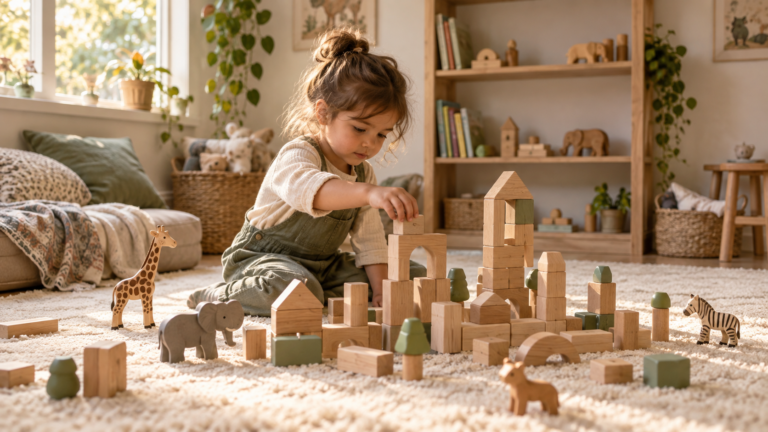

Family Lifestyle Tips for Modern Parents: Simple Ways to Build a Happier Home
A happier home does not mean a house where nobody argues, toys are always put away, and every evening goes according to plan. Family life includes rushed mornings, tired parents, changing schedules, and children who need different things at different ages.
What can make a difference is having a few ways to return to each other when the day gets complicated: a place for the things you use every morning, a routine your children can understand, and moments when everyone feels heard. These are not projects to complete all at once. Choose the part of daily life that feels hardest right now and begin there.
1. Make the Home Feel Welcoming to the People Who Live in It
It is easy to think a warmer home begins with decorating. But before changing the room, consider what happens when your family comes together in it. Can a child find a comfortable place to sit beside you? Is there time to talk without immediately moving to the next task? Does everyone have somewhere to put their belongings?
A small arrival ritual can help after school or work. One family might share a snack; another might spend ten quiet minutes apart before talking. Neither is the “correct” routine. The useful question is whether the transition gives people a chance to settle instead of carrying the pressure of the day straight into the evening.
The same applies when things go badly. A supportive atmosphere does not require parents to be endlessly patient. If you speak sharply, you can return and say, “I was frustrated, and I raised my voice. I’m sorry. Let’s try that conversation again.” Repair teaches children something more realistic than the idea that caring families never make mistakes.
Try this: Notice one point in the day when everyone seems to be at odds—perhaps getting home, starting dinner, or preparing for bed. Change just that transition for a week before trying to reorganize the whole household.
2. Look for Connection in Ordinary Moments
Family bonding does not have to be another event on the calendar. A child may open up while helping wash vegetables, walking to the mailbox, or sitting beside you as you fold laundry. For young children especially, attentive back-and-forth exchanges are meaningful. Harvard’s Center on the Developing Child describes how responding to a child’s words, gestures, and interests supports their developing relationships and communication.
That does not mean turning every chore into a lesson. Sometimes connection is simply noticing what has your child’s attention and joining them for a moment. If they want to show you a drawing, ask what is happening in it before offering praise or suggestions. If they are building something, let them explain their plan.
Children in the same family may seek connection differently. One may want to talk; another may prefer a shared activity. If you have more than one child, even a brief moment alone with each can give them room to speak without competing for attention. It need not be identical or perfectly scheduled to matter.
Try this: Pick one activity already in your day—setting the table, walking the dog, reading before bed—and put your phone away for that time. See whether being available changes the conversation.
3. Build Routines That Help, Not Rules That Exhaust Everyone
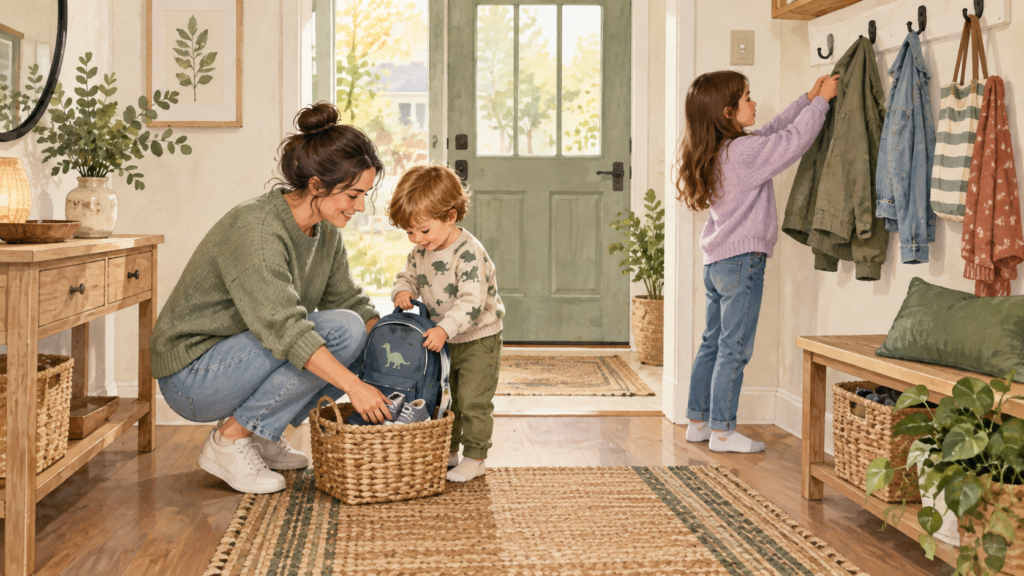
Predictability can make everyday tasks easier for children to understand. The American Academy of Pediatrics notes that family routines work best when they offer structure without becoming so rigid that there is no room for choice or change.
Start with an anchor, not a timetable for every minute. A morning anchor might be: get dressed, eat breakfast, brush teeth, then pick up the backpack. An evening anchor might be: put away active toys, prepare for tomorrow, then read together. What happens between those steps can vary.
When a routine keeps failing, look at its design before assuming your child is refusing to cooperate. Is the backpack stored where they can reach it? Are there too many instructions to remember? Is bedtime beginning after everyone is already exhausted? A picture sequence may help a younger child; an older child might prefer helping decide the order.
Routines should also be realistic for the adults maintaining them. A complicated weekly schedule that works for three days and then collapses is less useful than two dependable habits that fit your family’s actual life.
Try this: Choose one recurring point of stress. Write down the steps it requires, remove any unnecessary ones, and put the materials needed for the first step in an obvious place.
4. Organize for Participation, Not Perfection
The purpose of organizing a family home is not to keep it looking untouched. It is to make ordinary tasks easier for the people who do them.
A basket near the door may help if shoes repeatedly disappear. Low shelves can make it easier for a young child to choose a book and return it. A single spot for school papers can prevent a form from being lost under yesterday’s mail. These are small systems, but each addresses a real problem.
Before buying organizers, sort what is already there. Group similar belongings and ask: Who uses this? How often? Where does it usually end up? The answer may show you that an item needs to move closer to where it is used—or that there are simply more toys available than the space can hold comfortably.
Invite children to help maintain systems they can understand. A three-year-old may be able to put blocks into a clearly labeled bin; an older child can help decide where school supplies belong. Expect practice, reminders, and some mess. According to the American Academy of Pediatrics, age-appropriate household responsibilities are a way for children to learn skills and contribute to family life; perfection is not the goal.
Try this: Fix one “drop zone” this week. It might be the entryway, a toy shelf, or the kitchen counter where papers collect. Use containers you already own before purchasing anything new.
5. Make Communication Possible During the Hard Moments

“How was your day?” is a kind question, but it can be difficult for a child to answer after a long day. More specific openings sometimes work better: “What made you laugh today?” “Was anything frustrating?” or “Do you want to tell me about it now or later?”
If your child does share a problem, pause before solving it. You can acknowledge what you heard—“That sounds disappointing”—and then ask whether they want help thinking through what to do. Listening does not mean agreeing with every request or removing every boundary. It means making space to understand the child before deciding on a response.
This matters during conflict too. A boundary can be clear without becoming a long argument: “I won’t let you hit. I’m going to help us take a break.” Once everyone is calmer, there may be room to talk about what happened and what to try next time. The CDC’s parenting guidance emphasizes attentive listening and communication that shows children they have been understood.
Parents also need a way to repair conversations with one another. If every disagreement about chores or schedules happens in front of an already upset child, move the planning conversation to another time when possible. Children do not need adults who agree on everything; they benefit from seeing respectful ways to work through differences.
Try this: In your next difficult conversation, ask one question and listen to the entire answer before offering advice. It is a small change, but it can reveal what your child actually needs.
6. Share the Work of Family Life
A home cannot feel supportive if one person must remember, plan, and complete everything. The work includes visible tasks such as meals and laundry, but also noticing that the school needs a form, the children have outgrown their shoes, or an appointment must be scheduled.
If you share parenting with a partner or another caregiver, talk about ownership rather than asking someone to “help” with individual tasks. Who will keep track of school communications? Who plans meals? Which responsibilities can children take on? If you parent on your own, consider which routines can be simplified and where trusted relatives, friends, or community support may be available.
Children can contribute without carrying adult responsibilities. The task should match their abilities, and an adult still provides guidance. A younger child might put napkins on the table; an older child might pack their school bag using a checklist. Participation can help a child feel that they belong to a household where everyone has a role.
Be willing to change the plan when life changes. A routine that worked last season may not fit a new school schedule, a new baby, illness, or a particularly demanding period at work. Adjusting it is not failure—it is how a family system stays useful.
Start With One Change, Then Notice What Happens
You do not need to make your home calmer, closer, and more organized by next Monday. Choose one problem that shows up repeatedly and make a change small enough to sustain. After a week, ask: Did this make daily life easier? Did it create more room for connection? What needs adjusting?
A happier family home is not a finished picture. It is a place where people can participate, rest, disagree, repair, and keep learning how to live well together.
Sources and Further Information
CDC: Tips for Connecting and Communicating
Harvard Center on the Developing Child: Serve and Return
American Academy of Pediatrics: The Importance of Family Routines
American Academy of Pediatrics: Age-Appropriate Chores for Children