Fine Motor Activities for 4-Year-Olds: 25 Easy Ideas to Try at Home
Four-year-olds are wonderfully busy little people. They want to zip, cut, twist, build, draw, pour, and do grown-up jobs all by themselves. Fine motor activities give those small hands something purposeful to do while making an ordinary afternoon feel more playful.
You do not need a craft cupboard full of supplies. Most of these ideas use things you may already have at home. Pick one or two, keep it light, and let your child lead the fun.
A quick note: Every child develops at their own pace. These are play ideas, not a test or a substitute for professional advice. Stay nearby with small items and choose materials that are appropriate for your child.
What are fine motor activities?
Fine motor activities use the small muscles in hands, fingers, and wrists. For preschoolers, that can look like squeezing play dough, picking up pom-poms, opening containers, or holding a crayon.
Hands On Building and Threading Activities
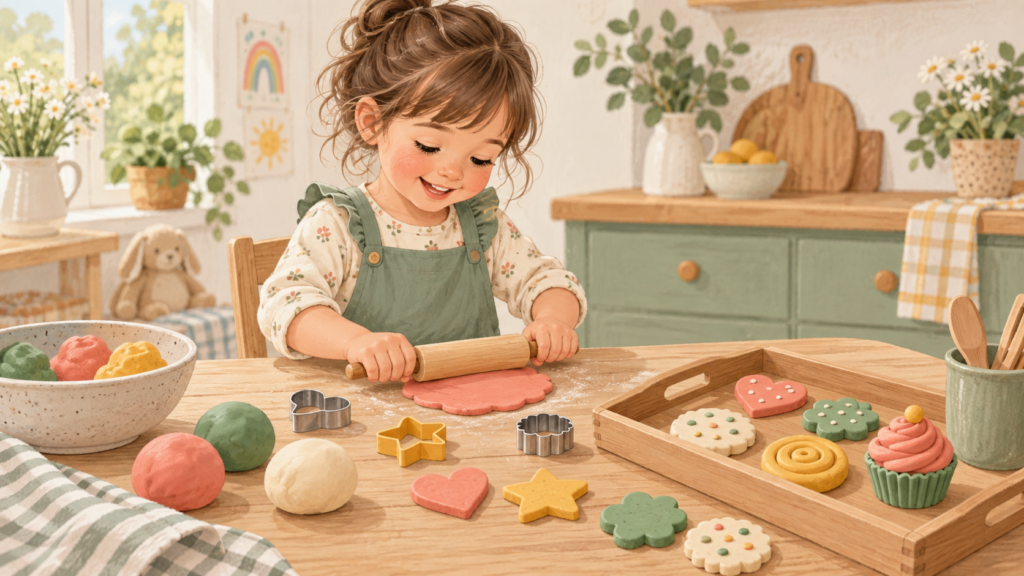
1. Play dough bakery
Set out play dough, a child-safe rolling pin, cookie cutters, plastic cups, and a tray. Invite your child to open a pretend bakery, then roll, pinch, flatten, and decorate their own creations.
What it encourages: Hand strength, finger control, imagination, and independent play.
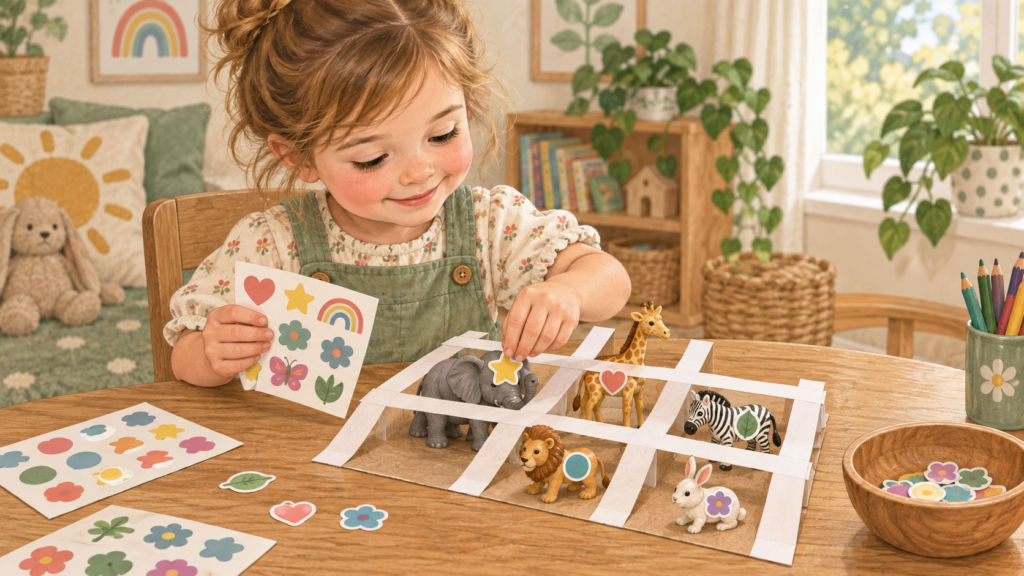
2. Sticker rescue
Draw a simple road, garden, zoo, or ocean scene on paper. Your child can peel stickers, move them, and place them where they belong; small dot stickers add a gentle extra challenge.
What it encourages: Pincer grasp, hand-eye coordination, creativity, and concentration.
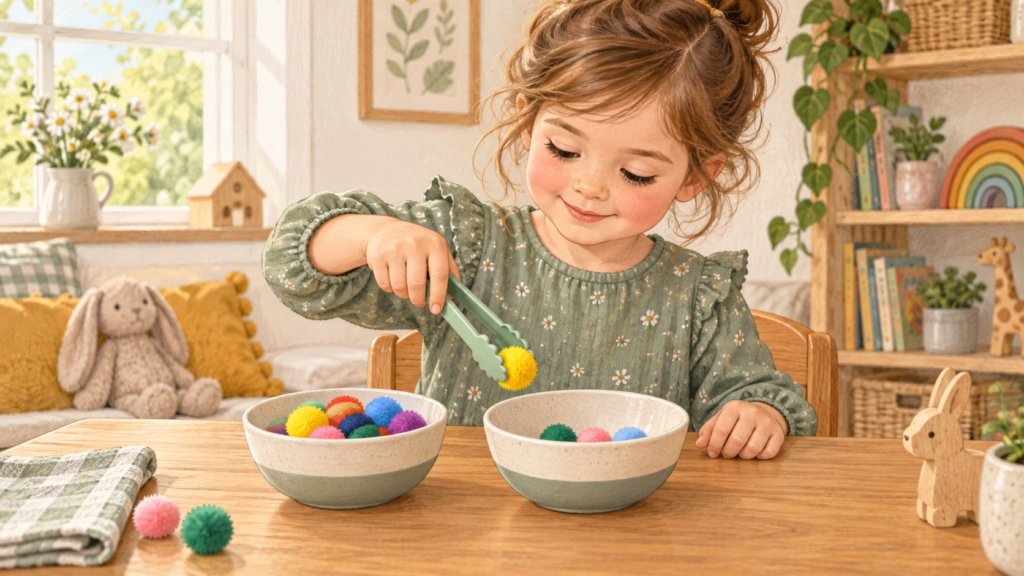
3. Pom-pom transfer
Place large pom-poms in one bowl and an empty bowl beside it. Move them with kitchen tongs, a scoop, clothespins, or fingertips, then try sorting by color.
What it encourages: Grip strength, coordination, color recognition, and focus.
Safety note: Choose large pom-poms, stay nearby during play, and put them away afterward—especially if younger siblings are at home.
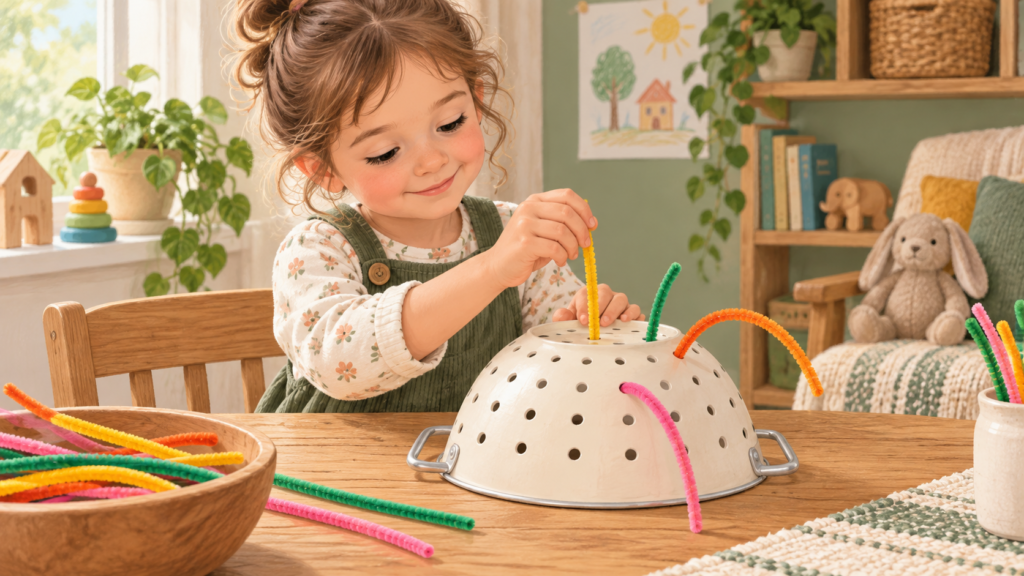
4. Pipe-cleaner threading
Turn a colander upside down and push pipe cleaners through the holes. Bend and twist the ends to make a colorful sculpture, or use a cardboard box with safely punched holes.
What it encourages: Bilateral coordination, finger strength, planning, and creativity.
Safety note: Fold any sharp wire ends inward. An adult should prepare holes in the cardboard before the child begins.
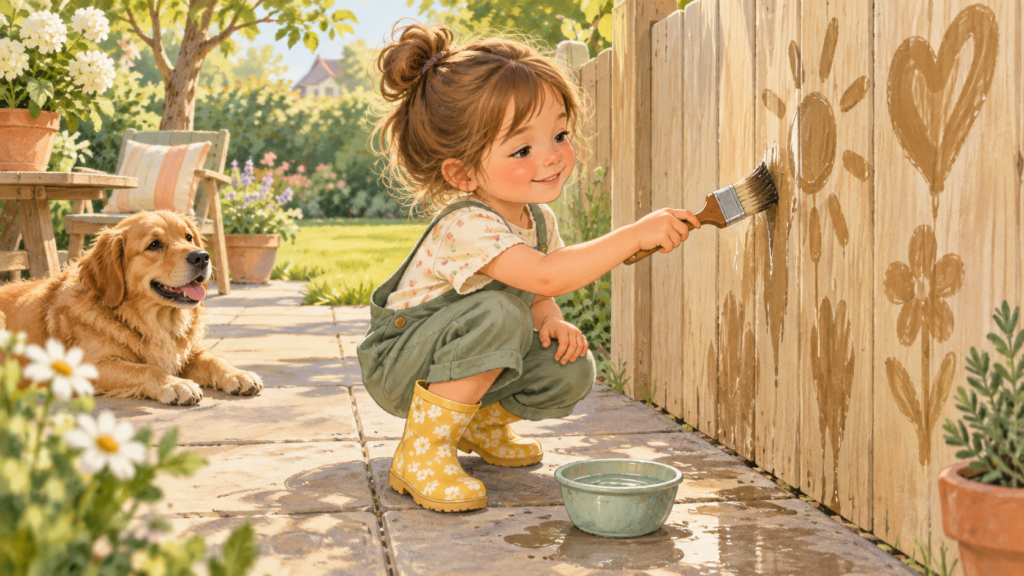
5. Water painting outside
Give your child a cup of water and a paintbrush to paint a fence, patio, cardboard box, or outdoor wall. The temporary brush marks make this an easy, low-mess activity.
What it encourages: Brush control, wrist movement, observation, and calm sensory play.
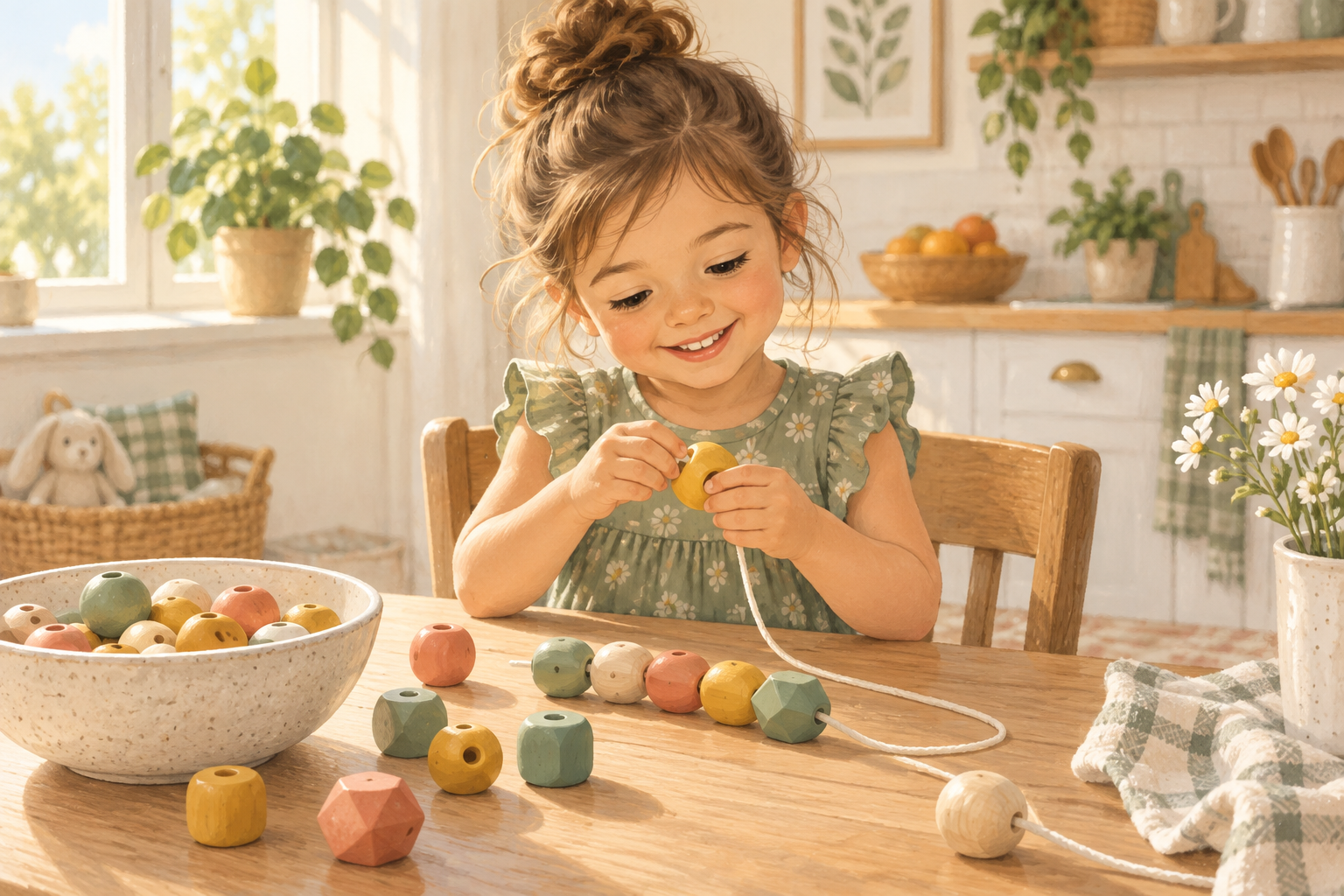
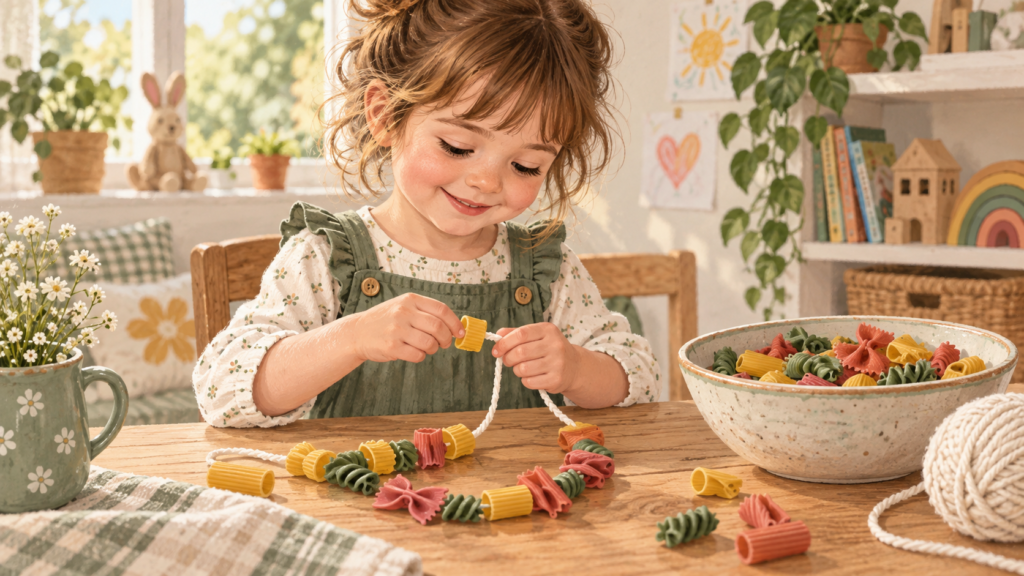
6. Make a necklace from pasta
Thread large dry tube pasta onto yarn with tape wrapped around one end. Your child can create a pattern, make a necklace for a stuffed animal, or simply fill the whole string.
What it encourages: Hand-eye coordination, pattern awareness, patience, and finger control.
Safety note: Use large pasta shapes and supervise threading. Put away loose pasta and yarn when the activity ends, particularly if younger children share the space.
Creative Fine Motor Activities
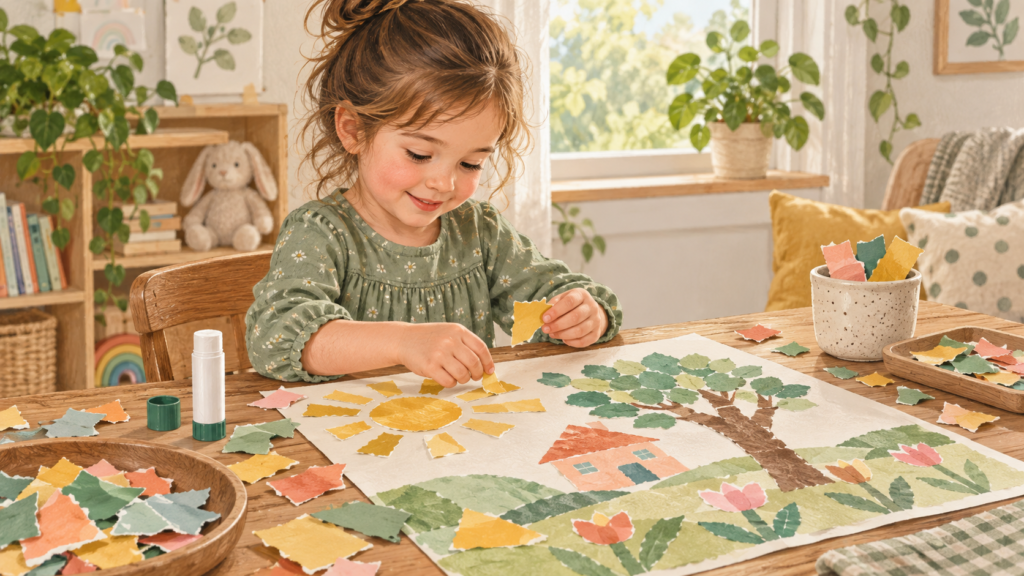
7. Tear-and-glue collage
Offer old magazines, colored paper, a glue stick, and a large sheet of paper. Tear pieces into strips or shapes, then turn them into a rainbow, garden, monster, or abstract picture.
What it encourages: Hand strength, creativity, planning, and visual expression.
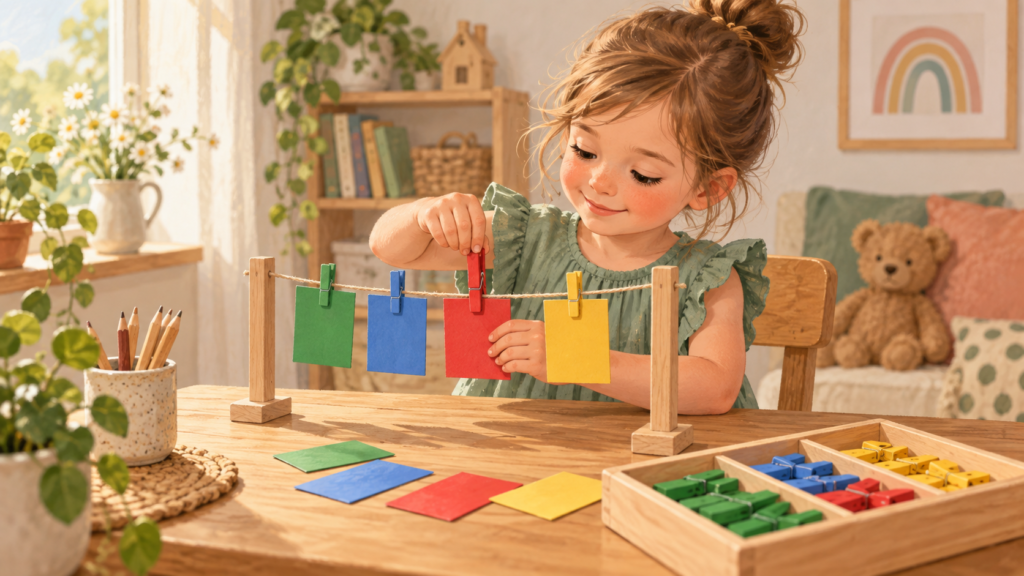
8. Clothespin color match
Color sections around a paper plate or strip of cardboard. Clip matching clothespins in the right places, beginning with only a few colors if opening the clips feels difficult.
What it encourages: Pinch strength, color matching, concentration, and problem-solving.
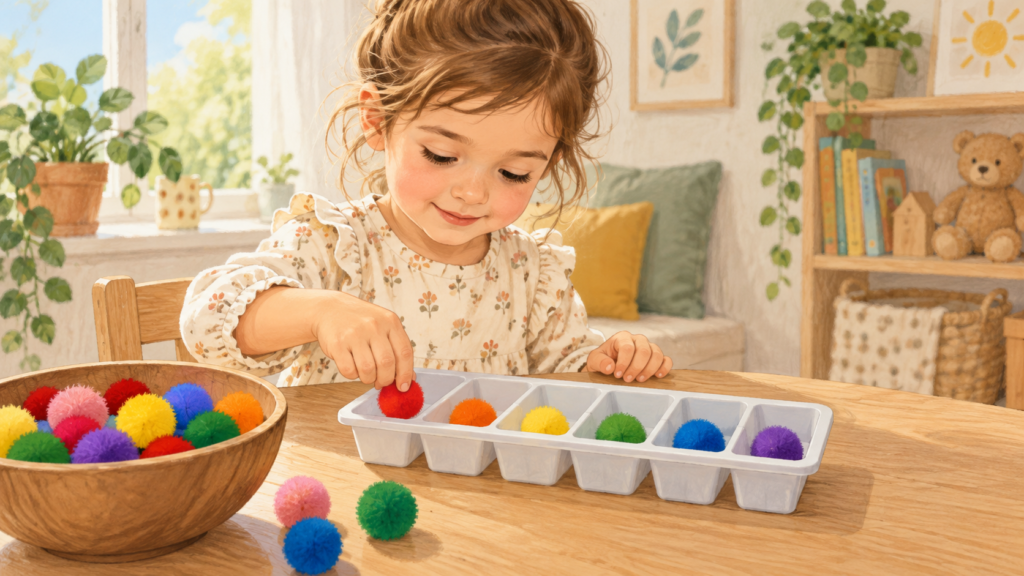
9. Ice-cube tray sorting
Fill a bowl with large pom-poms, chunky toy animals, or sturdy cardboard shapes. Invite your child to place one item in each section of an ice-cube tray, then sort the pieces by color, type, or size.
What it encourages: Pincer grasp, classification, counting, and attention to detail.
Safety note: Avoid small buttons or other pieces that a child might put in their mouth. Stay nearby and put the materials away after play.
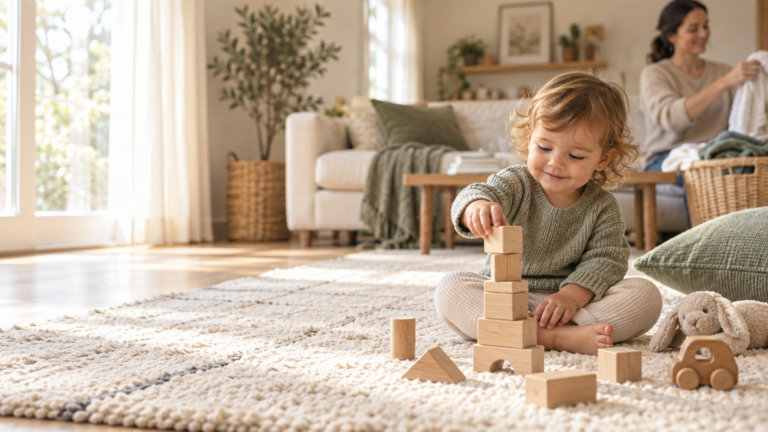
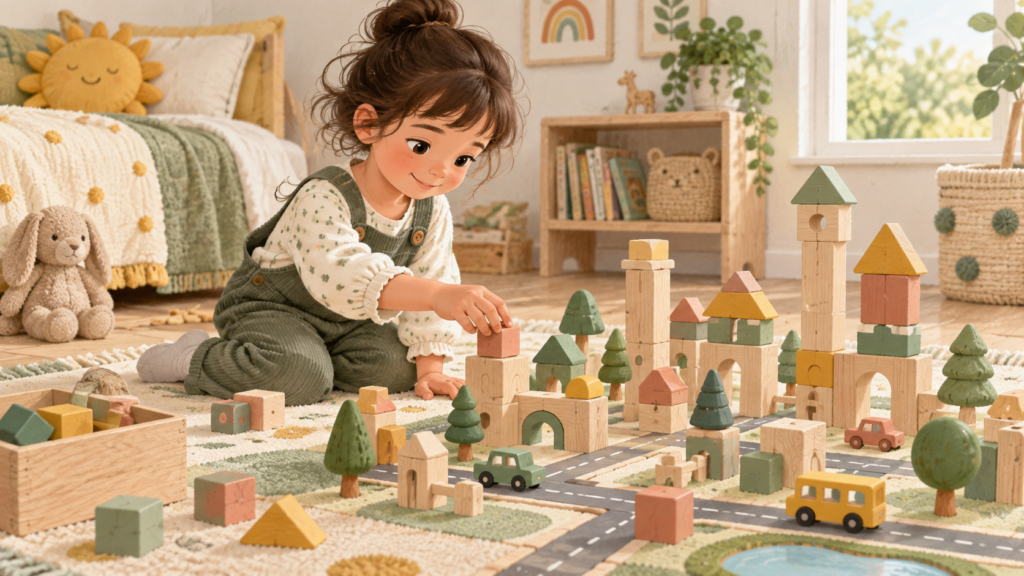
10. Build a block city
Bring out blocks, cups, recycled boxes, and toy cars or animals. Build towers, bridges, houses, parking spaces, or a whole tiny neighborhood together.
What it encourages: Finger control, spatial thinking, planning, and imaginative play.
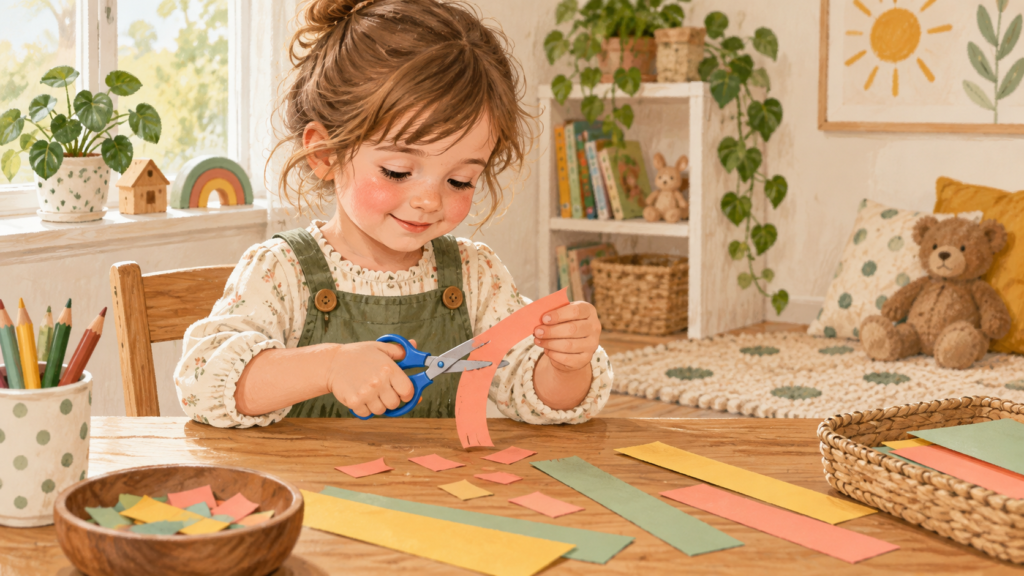
11. Scissor snips
Draw thick lines on paper strips and use child-safe scissors for simple snips. When ready, try zigzags, curves, or easy shapes; save the cut pieces for a collage.
What it encourages: Hand strength, bilateral coordination, focus, and early cutting skills.
Safety note: Use child-safe scissors and stay beside your child while they cut. An adult should handle any harder materials.
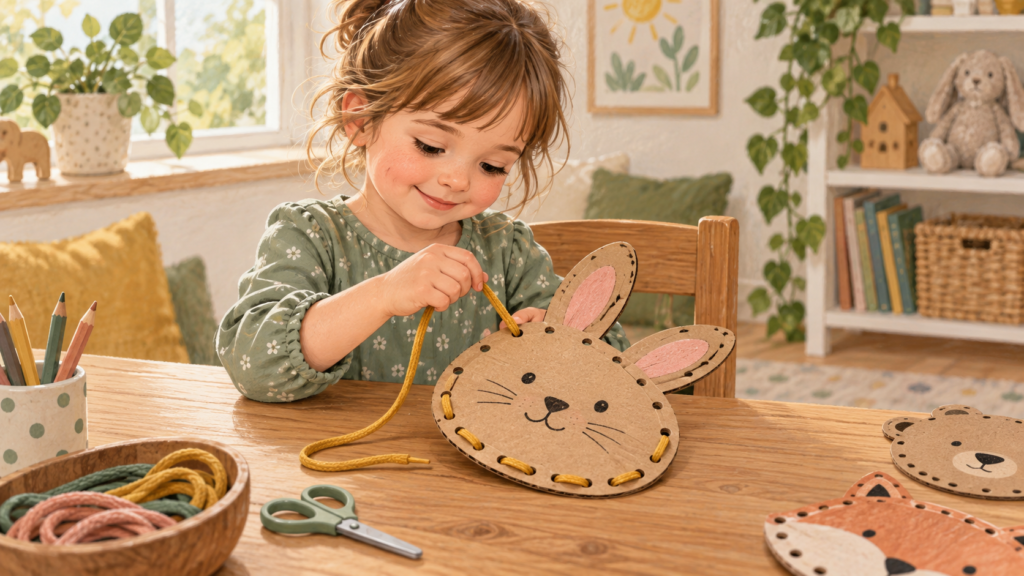
12. Homemade lacing card
Make holes around a sturdy cardboard shape or paper plate. Thread a shoelace, ribbon, or yarn with a taped end in and out to make patterns or a friendly animal face.
What it encourages: Hand-eye coordination, bilateral coordination, patience, and pattern-making.
Everyday Skill Builders
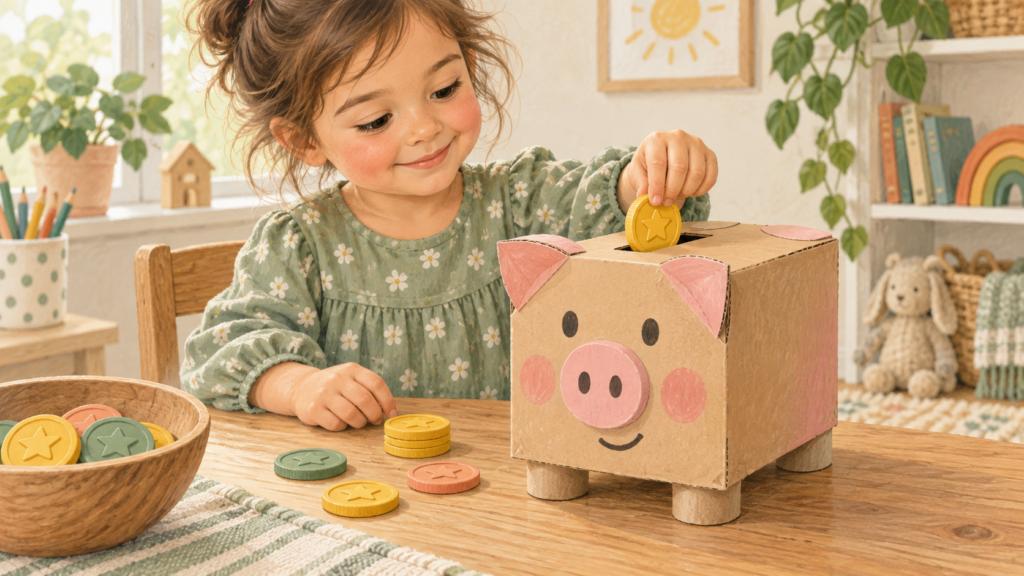
13. Coin bank drop
An adult can cut a wide slot in the lid of a clean container and make large circles from sturdy cardboard. Invite your child to drop the circles through the slot, then turn the container into a pretend shop or treasure chest.
What it encourages: Pincer grasp, wrist control, coordination, and cause-and-effect learning.
Safety note: Use cardboard circles instead of real coins, poker chips, or buttons. An adult should cut the lid and check that no sharp edges remain.
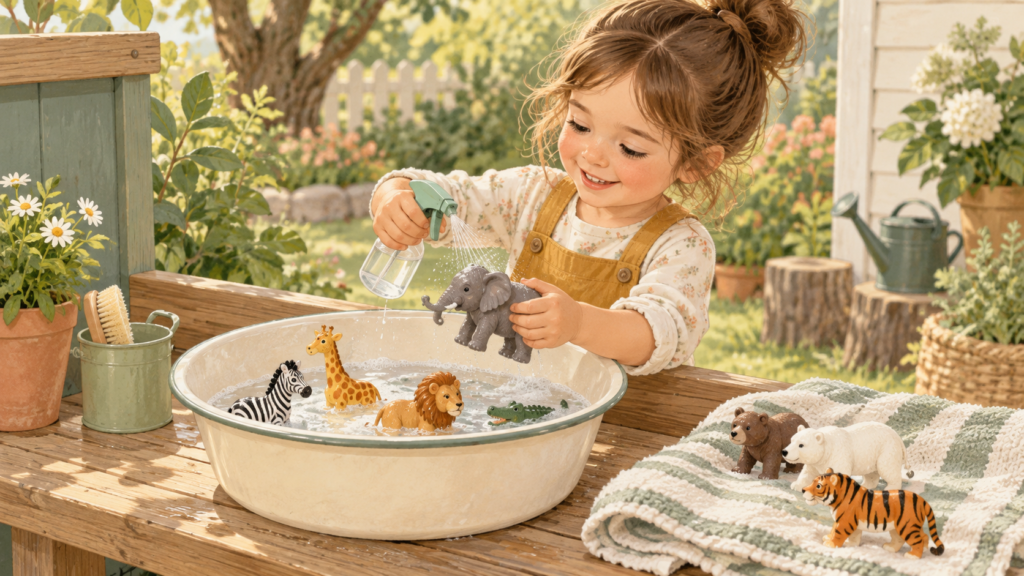
14. Spray-bottle wash station
Place washable plastic toys on a tray with a small spray bottle filled with water, a sponge, and a towel. Your child can spray, scrub, wipe, and dry each toy as an important pretend job.
What it encourages: Hand strength, coordination, responsibility, and sensory play.
Safety note: Use water only, stay nearby, and wipe up any spills so the floor does not become slippery.
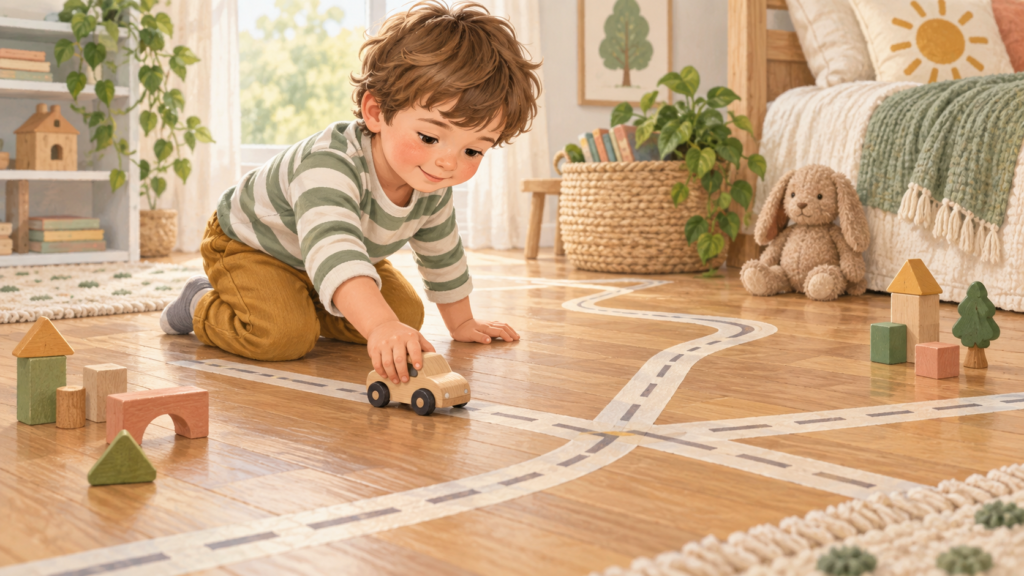
15. Tape road for toy cars
Use painter’s tape to make a road on the floor with curves, parking spots, and a box tunnel. Your child can press down the tape, drive cars along the route, and redesign it later.
What it encourages: Fine motor control, planning, imaginative play, and problem-solving.
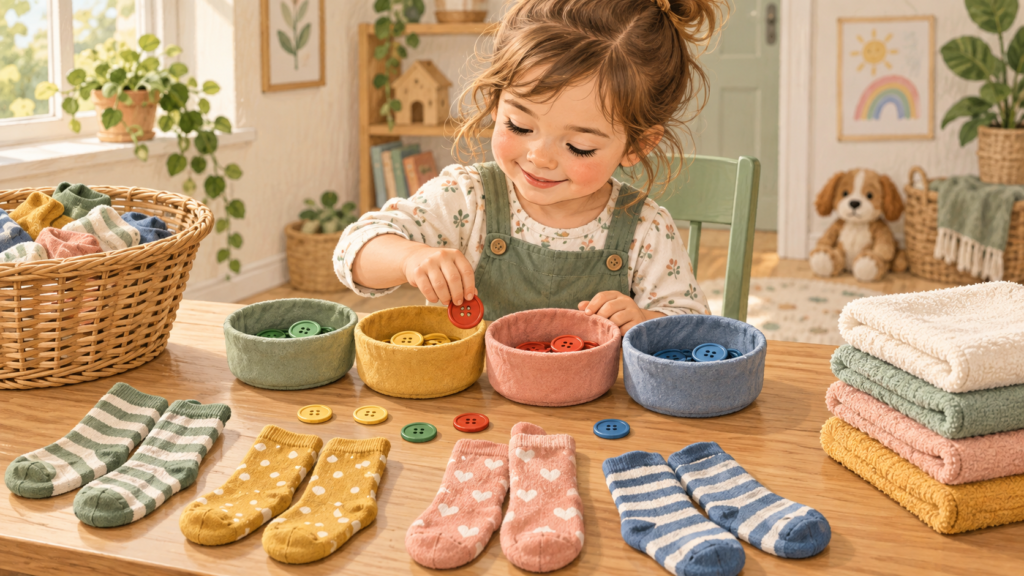
16. Button-and-sort laundry day
Match socks, button doll clothes, sort washcloths by color, or clip clean items to a low line. A small household job can feel especially meaningful to a preschooler.
What it encourages: Finger strength, matching, independence, and practical life skills.
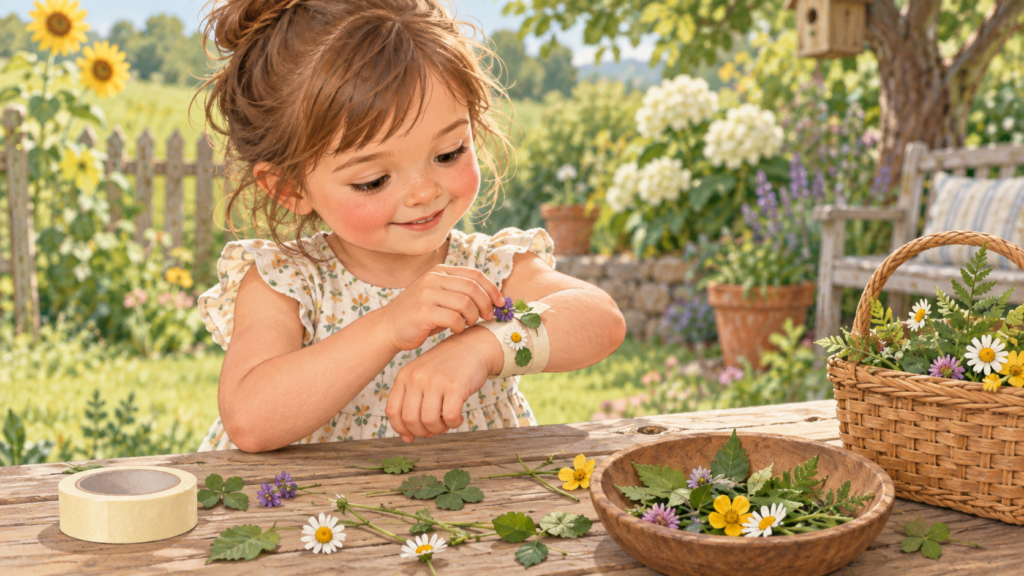
17. Nature bracelet
Wrap masking tape around a wrist with the sticky side out. On a walk or in the garden, press on leaves, petals, grass, and tiny feathers while talking about their colors and textures.
What it encourages: Pincer grasp, observation, language, and curiosity about nature.
Calm Table Activities
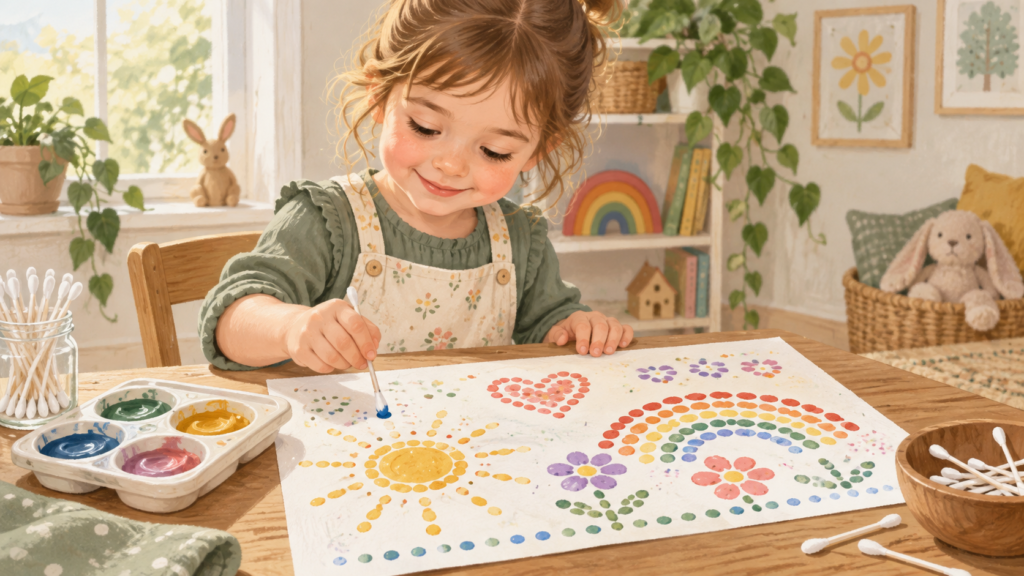
18. Q-tip painting
Use cotton swabs as tiny paintbrushes with washable paint. Make dot flowers, raindrops, fireworks, ladybug spots, or a whole picture made of dots.
What it encourages: Precision, hand-eye coordination, creativity, and color exploration.
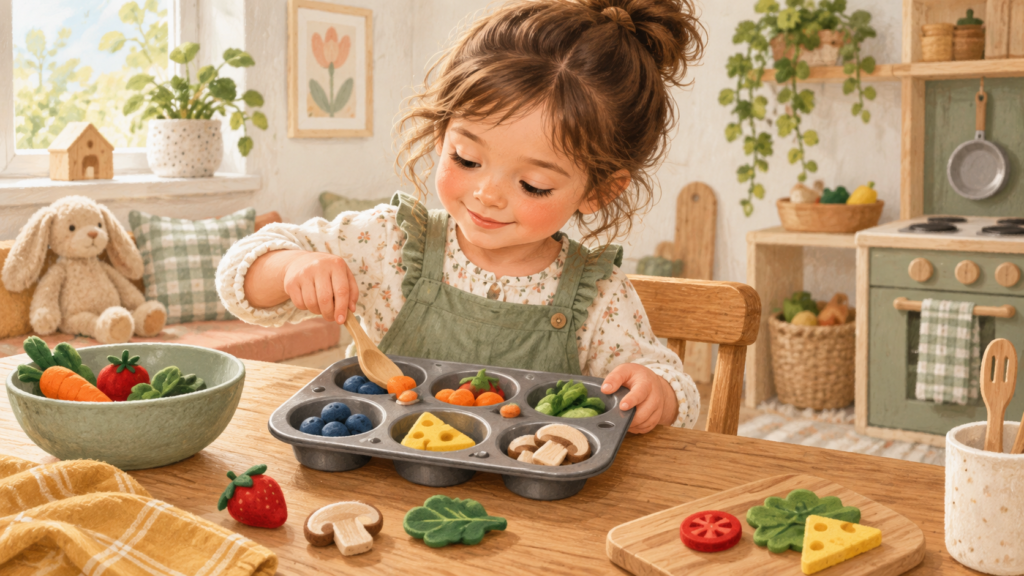
19. Muffin-tin kitchen
Set out a muffin tin, a spoon, cups, and large pretend-food pieces or sturdy cardboard shapes. Your child can scoop, sort, stir, and serve an imaginary meal to stuffed animals.
What it encourages: Scooping skills, wrist control, pretend play, and sequencing.
Safety note: Choose pieces appropriate for your child’s age and keep the materials out of reach of younger siblings when playtime is over.
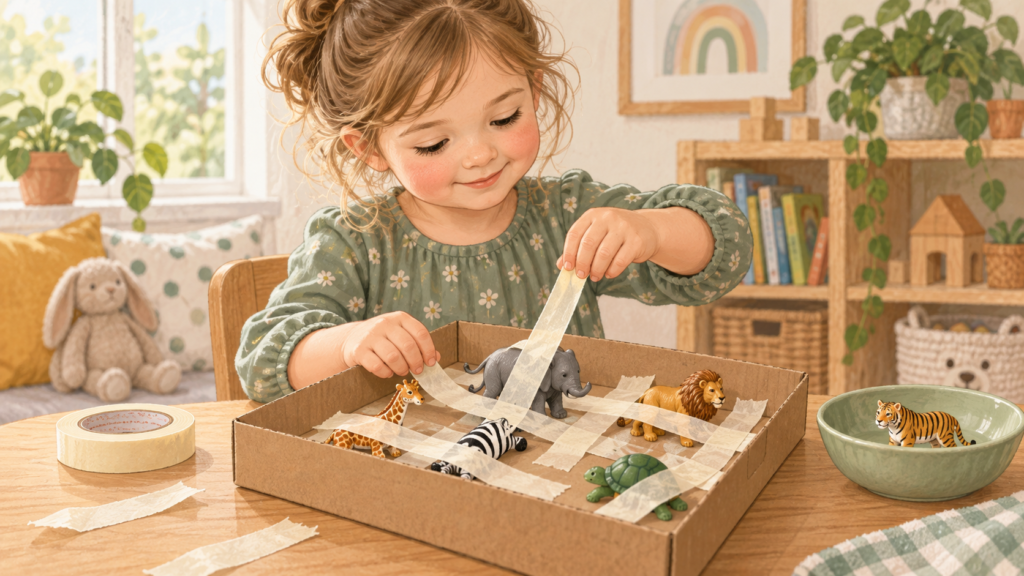
20. Rescue toys from masking tape
Lightly tape a few toys to a tray or table with painter’s tape. Invite your child to free each animal, car, or figure by peeling the tape away slowly.
What it encourages: Finger strength, persistence, coordination, and problem-solving.
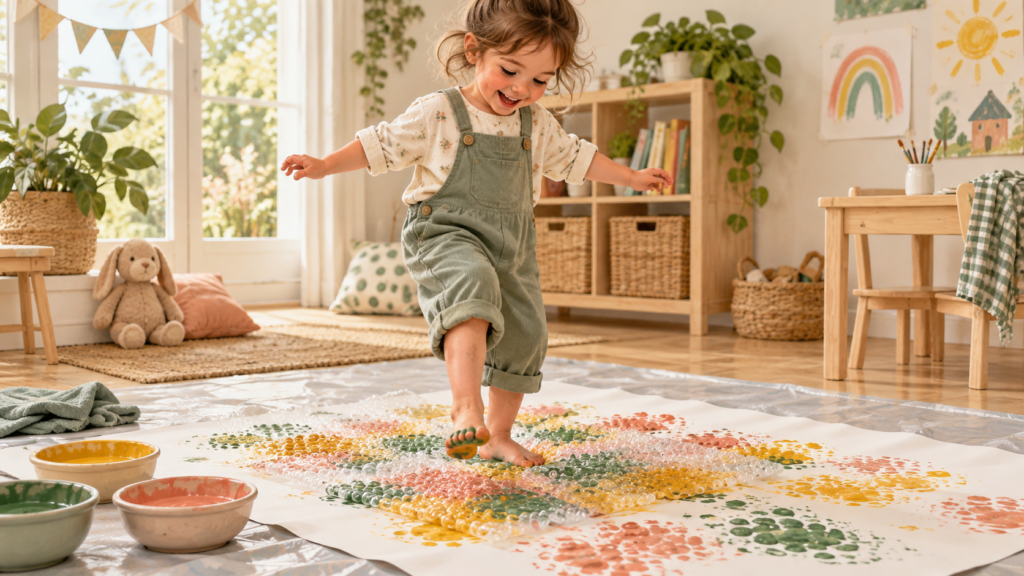
21. Bubble-wrap stomp painting
Use a small piece of bubble wrap with washable paint in a protected play area. Your child can make dotted footprints and interesting patterns, then wash hands and feet afterward.
What it encourages: Sensory exploration, creativity, balance, and body awareness.
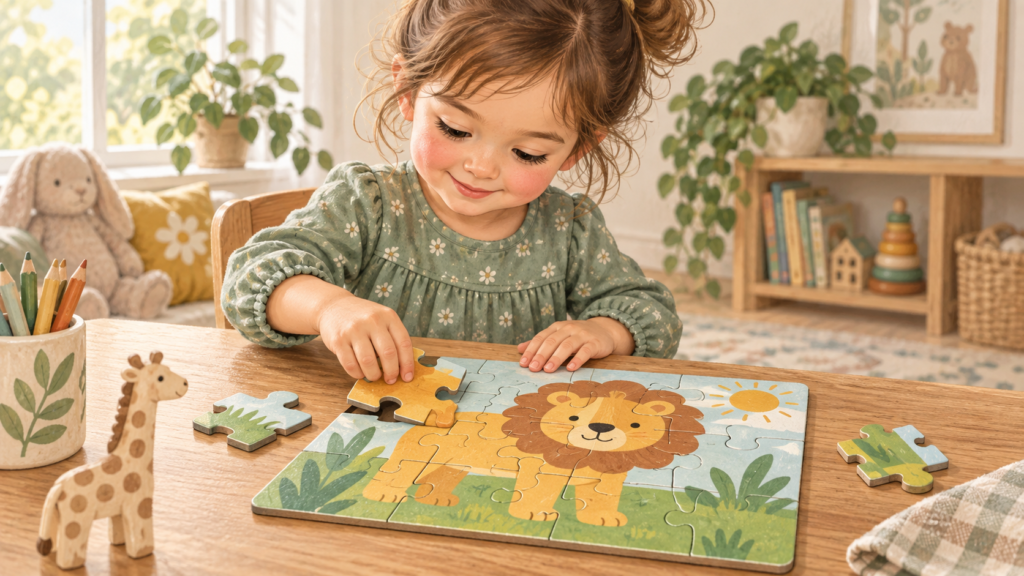
22. Puzzle time
Choose a puzzle that feels achievable. Turn pieces picture-side up and look for edges, colors, and familiar parts of the picture, allowing time to test and try again.
What it encourages: Fine motor control, visual scanning, patience, and problem-solving.
Playful Projects With a Purpose
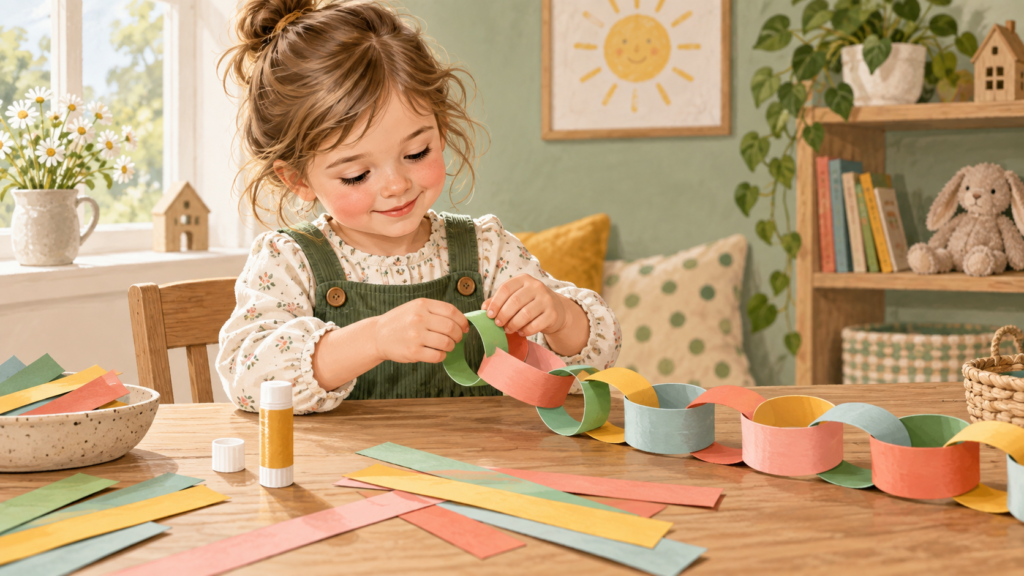
23. Make a paper-chain countdown
Create a paper chain for a birthday, holiday, family visit, or movie night. Choose colors, make loops, add glue, and remove one link each day.
What it encourages: Folding, gluing, sequencing, patience, and anticipation.
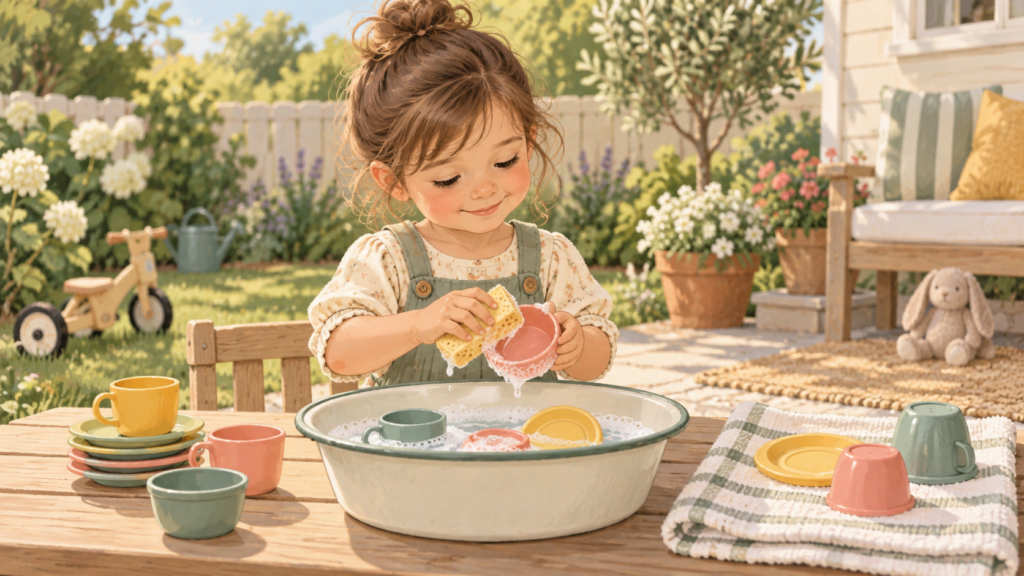
24. Wash toy dishes
Use a shallow basin with a little soapy water, plastic cups, toy dishes, a sponge, and a towel. Wash, rinse, dry, and put everything away like a real kitchen helper.
What it encourages: Squeezing, scrubbing, coordination, independence, and practical life skills.
Safety note: Stay with your child throughout water play, even when using only a shallow basin. Empty and put away the water as soon as the activity ends.
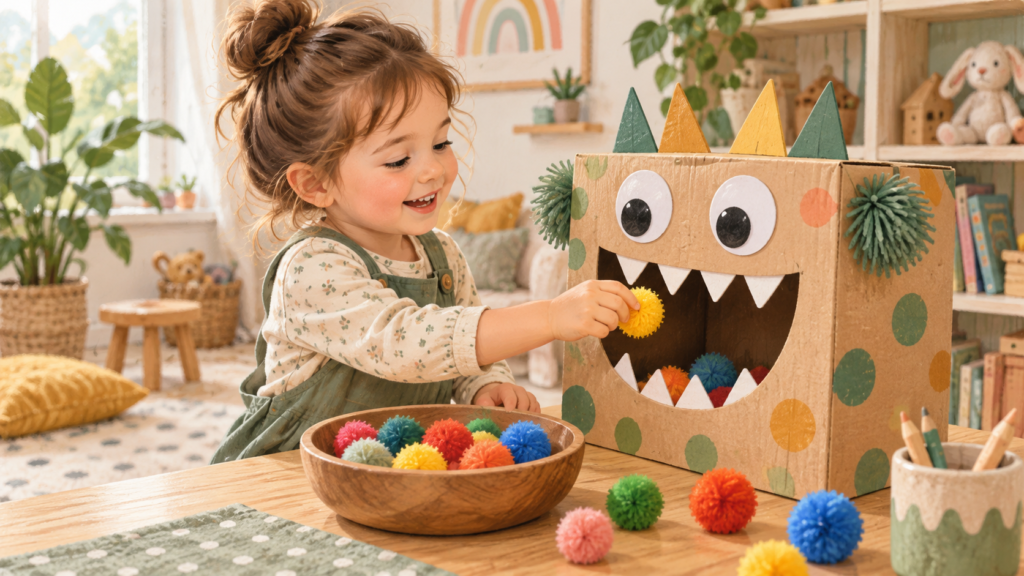
25. Feed the cardboard monster
Draw a friendly monster on a box and cut a wide mouth-shaped opening. Feed it large pom-poms, paper balls, or blocks, then make it hungry for a certain color or number.
What it encourages: Pincer grasp, hand-eye coordination, counting, and imaginative play.
Safety note: An adult should cut the opening in the box. Use large pieces for “food” and put them away after play.
How to choose the right fine motor activity
Not every activity will feel right every day. A child with lots of energy may enjoy a tape road or bubble-wrap painting, while a child who needs a quieter moment may prefer lacing, puzzles, or Q-tip painting. Offer two choices, begin together, and then step back as your child takes ownership of the play.
Safety note
Every child develops at their own pace. Stay nearby with small items, scissors, and water play. Choose materials that are appropriate for your child and use shallow water for washing activities.
Frequently asked questions
What are good fine motor activities for 4 year olds
Play dough, sticker play, threading, child-safe cutting, puzzles, simple crafts, sorting games, and everyday helper jobs are all useful options.
How can I help my 4 year old strengthen their hands
Offer playful activities that involve squeezing, pinching, rolling, clipping, scooping, threading, and peeling. Repetition through play is more valuable than a perfect result.
Do fine motor activities need special supplies
No. Cardboard boxes, paper, tape, cups, a colander, water, a muffin tin, and clean laundry can all become useful play materials.
Final thoughts
A piece of tape, a bowl of pom-poms, a cardboard box, or a small job at the sink can become a meaningful opportunity for a child to practice and play. Start small, stay nearby, and enjoy the moments of concentration, creativity, and growing confidence.
Safety references
- U.S. Consumer Product Safety Commission — Toy Safety: guidance on age-appropriate toys and small parts.
- American Academy of Pediatrics — Water Safety and Young Children: guidance on close supervision around water and emptying containers after use.