What Toddlers Really Need From Play at Home
Parents are surrounded by ideas about toddler play.
There are sensory bins, themed activities, developmental toys, elaborate craft setups, color-coded playrooms, and an endless stream of suggestions for keeping little children “engaged.”
It can make everyday parenting feel like a performance.
But toddlers do not need a home filled with planned activities to learn, grow, and feel connected. They do not need a parent who is constantly entertaining them. And they do not need every moment of play to have a visible educational outcome.
What toddlers need most is much simpler: time, movement, repetition, responsive adults, a manageable environment, and permission to explore.
Toddler Play Is Not Supposed to Look Productive
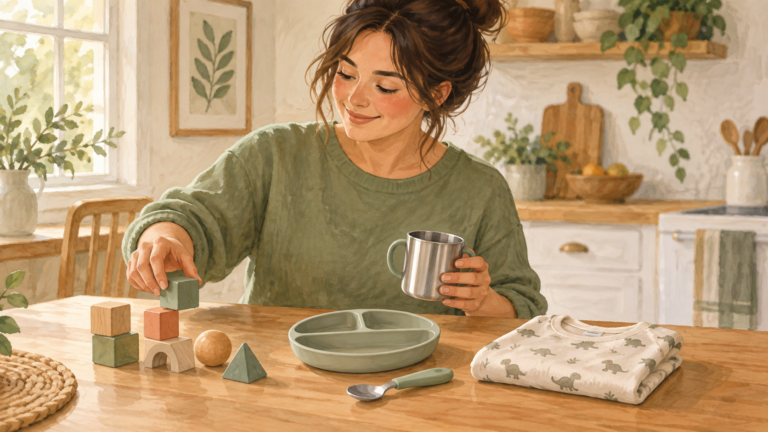
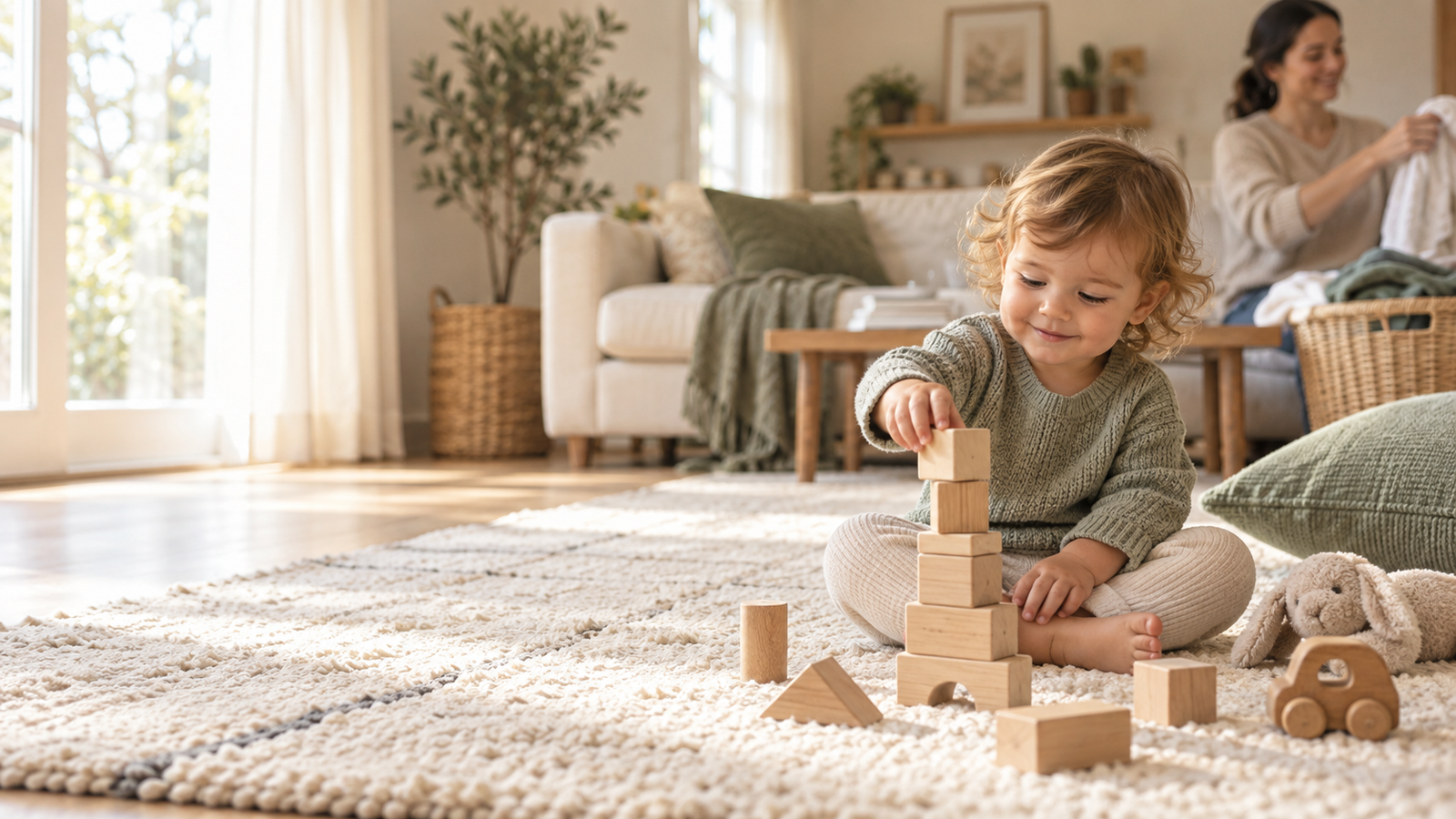
A toddler may carry the same cup from room to room for twenty minutes. They may stack blocks, knock them down, and repeat the process again. They may insist on putting every toy into a basket, then immediately emptying it.
To an adult, this can look repetitive or pointless.
To a toddler, it is play.
Toddlers learn by doing things over and over. They are testing what happens when an object falls, how a lid fits, what sound a spoon makes on the floor, or whether a tower can become taller than before.
The value is not in creating a finished product. The value is in the process.
When parents feel pressure to move a child quickly from one activity to another, toddlers may lose the chance to stay with an idea long enough to explore it fully.
Repetition Is a Feature, Not a Problem
Many adults become tired of repetition long before toddlers do.
The same book. The same song. The same puzzle. The same request to pour water from one cup into another.
But familiarity gives young children a sense of confidence. When they know what to expect, they can focus on small changes: a new word in a book, a different way to stack blocks, a new ending to a pretend game.
Repetition also helps toddlers feel capable.
They do not need to master a new activity every day. They need enough time with a few simple things to notice, practice, and make choices.
A child who returns to the same toy or game is not “stuck.” They may be doing exactly what their developing mind needs.
Movement Comes Before Sitting Still
Toddlers are built to move.
They climb, carry, push, pull, jump, roll, squat, reach, and run because movement is one of the main ways they learn about themselves and their environment.
The CDC encourages children ages 3 to 5 to be physically active throughout the day. This does not mean families need a formal exercise routine. It can include walking, dancing, playground time, chasing bubbles, carrying laundry, helping in the garden, or moving through a simple obstacle path at home.
For toddlers, everyday movement counts.
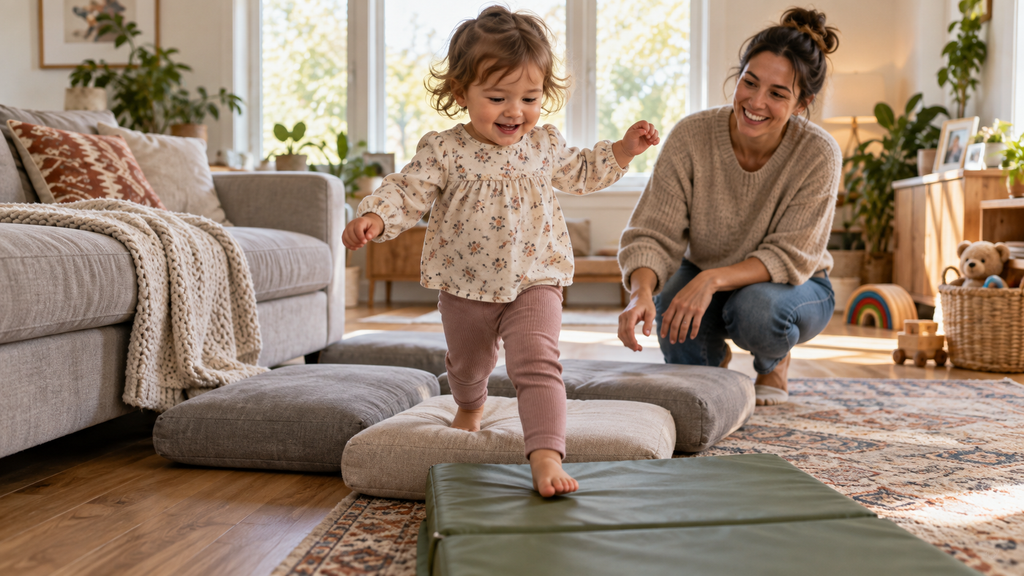
A hallway can become a place to march. A couch cushion can become a safe stepping challenge with adult supervision. A walk to the mailbox can become an adventure. A basket of soft balls can invite rolling, throwing, and carrying.
The goal is not to tire children out. The goal is to let them use their bodies naturally and safely.
Toddlers Need Fewer Toys Than We Think
A room overflowing with toys can sometimes make play harder, not easier.
When too many things are available at once, toddlers may move quickly from one toy to the next without settling into an idea. They may dump everything out, feel overwhelmed, or rely on an adult to decide what to do.
A smaller number of accessible, open-ended items often works better.
Think about materials that can be used in more than one way:
- Blocks
- Cups and containers
- Crayons and paper
- Dolls or stuffed animals
- Toy animals
- Simple vehicles
- Scarves or fabric pieces
- Child-safe kitchen items
- Balls
- Books
The point is not to buy more “educational” products. It is to make a few useful things easy for a child to reach, use, and put away with help.
A simple rotation can also help. Put some toys away for a few weeks, then bring them back later. Familiar toys often feel interesting again after a break.
Everyday Life Is Already Full of Play
Toddlers want to participate in real life.
They may want to help wash fruit, carry socks to a basket, wipe a table, press a button, water a plant, stir ingredients, feed a pet with supervision, or put groceries away.
These are not distractions from learning. They are part of it.
Helping with everyday tasks gives toddlers opportunities to use language, practice coordination, make small choices, and feel included in family life.
The task may take longer. It may be messier. The result may not be efficient.
But participation matters.
Instead of asking, “What activity should I set up today?” it can be helpful to ask, “What am I already doing that my toddler could safely do alongside me?”
That question often leads to more meaningful play than another elaborate craft.
Connection Matters More Than Constant Entertainment
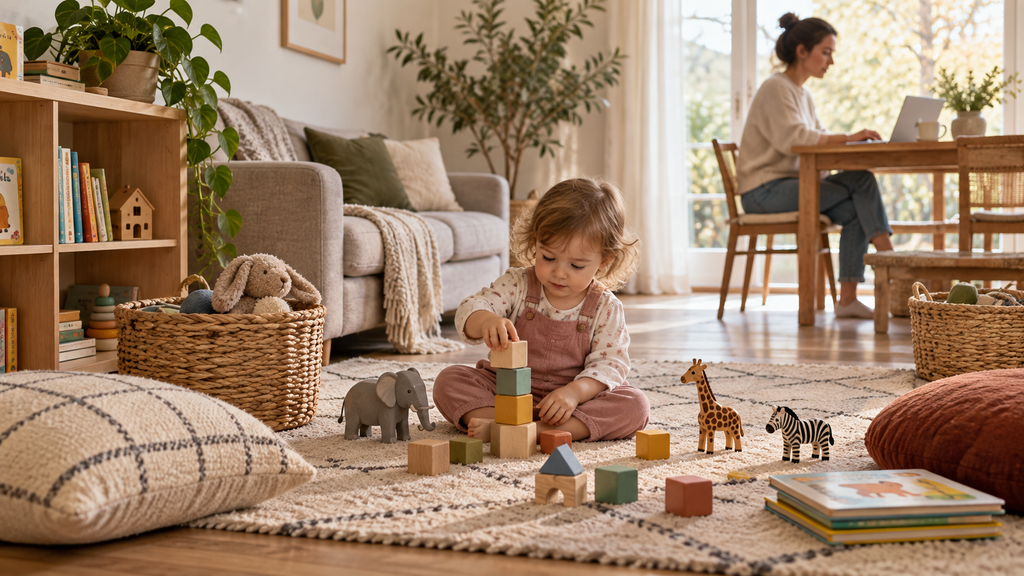
Toddlers do not need adults to join every game. Independent play is valuable, and caregivers need space to do everyday tasks too.
But connection still matters.
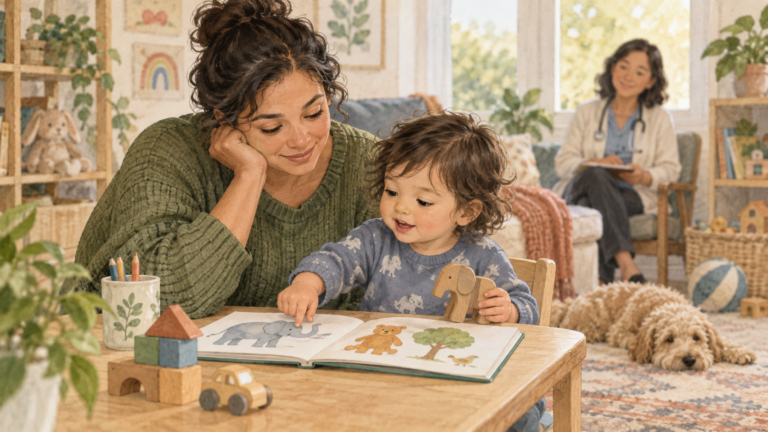
The Center on the Developing Child at Harvard describes “serve and return” interactions as responsive back-and-forth exchanges between a child and a caring adult. When a toddler points, babbles, brings over a toy, or shows you something they made, a warm response helps build language, social skills, and connection.
This does not require a lesson plan.
It can sound like:
- “You found the red car.”
- “You worked hard to get that lid on.”
- “You are putting all the animals to sleep.”
- “I hear you singing.”
- “You look excited about that.”
Small moments of attention can matter more than a perfectly planned hour of play.
Boredom Is Not an Emergency
When a toddler says, “I’m bored,” or follows a parent around the house asking for attention, it is tempting to immediately offer a screen, a new toy, or a complicated activity.
Sometimes a child genuinely needs connection, food, rest, movement, or help getting started. But sometimes they simply need a little time before their own play begins.
Boredom can be the space between being entertained and becoming curious.
A parent might say:
- “You are looking for something to do. Let’s look around and choose one thing.”
- “You can play with blocks while I finish this.”
- “Would you like to help me, or would you like to make something with your animals?”
- “I will sit with you for two minutes, then you can keep playing.”
This is not about forcing independence too early. It is about giving toddlers a gentle bridge into their own ideas.
A Home Does Not Need to Be Perfectly Designed for Play
Many parents see beautiful playrooms online and assume their home needs a dedicated, highly organized space.
It does not.
Toddlers can play well in a small corner of a living room, at the kitchen table, on a blanket, on a porch, or on the floor beside a parent folding laundry.
What matters more than a perfect space is a predictable one.
A few accessible toys, a clear place to sit or build, and a reasonable amount of freedom can be enough. Children do not need every room to belong to them. They need to feel that there is a place for them in family life.
What Toddlers Do Not Need From Us
Toddlers do not need:
- A different planned activity every day
- Constant praise for every small action
- Expensive toys to learn
- A parent who is available for play every minute
- A perfect playroom
- Pressure to perform skills before they are ready
- Screens as the default solution to every difficult moment
They need adults who are present enough, patient enough, and realistic enough.
That is a much more achievable standard.
A Gentle Rhythm for Play at Home
Rather than planning an entire day around toddler activities, it can help to think in rhythms.
A toddler’s day may naturally include:
- Active movement
- Quiet play
- Meals and participation in family tasks
- Outdoor time when possible
- Reading together
- Rest
- Connection with a caregiver
- Unstructured time to explore
The exact schedule will vary from family to family. There is no universal routine that works for every child.
But when toddlers have a mix of movement, repetition, connection, and rest, play does not need to be constantly invented.
It is already happening.
Final Thoughts
The best toddler play is often less impressive than parents expect.
It may be a child carrying spoons, lining up cars, helping wash vegetables, building the same tower again, or watching bubbles float through the air.
These moments may not look like much from the outside. But for toddlers, they are full of discovery.
You do not need to create a more elaborate childhood for your toddler.
You only need to make enough room for them to participate in the one they already have.