Why Unstructured Outdoor Play Still Matters for Kids — and How to Make Room for It
For many families, getting children outside can start to feel like another item on an already crowded to-do list.
There are school schedules, meals, laundry, activities, appointments, weather, work, screens, and the constant feeling that family life should somehow be more organized than it really is. In the middle of all that, outdoor play can become something parents believe they need to “do correctly.”
But children do not need a perfectly planned nature activity, a large backyard, or a picture-perfect afternoon to benefit from being outside.
They need room to move. They need time to notice things. They need opportunities to get bored, invent, climb, collect, ask questions, and make up games that do not have a clear purpose.
That is the value of unstructured outdoor play.
Outdoor Play Is Not Just Exercise
Movement is an important part of childhood, of course. The CDC recommends that children ages 3 to 5 stay active throughout the day, while children and adolescents ages 6 to 17 should get 60 minutes or more of physical activity daily.
But outdoor time can offer something that is harder to measure.
Outside, children often use their bodies differently. They walk uneven paths, carry sticks, run toward something interesting, crouch down to watch an insect, balance along a curb, or turn a patch of grass into an imaginary world.
There is no single “right” way to play.
A tree can become a hideout. A rock can become treasure. A sidewalk can become a city, a race track, or a map. A few puddles can become the most important part of the day.
The American Academy of Pediatrics notes that outdoor play can support children’s physical health, curiosity, creativity, focus, and emotional well-being. Just as importantly, it reminds us that nature can be found close to home: in a backyard, at a playground, on a walk, in a garden, or in a public green space.
The Problem Is Not That Parents Do Not Care
Most parents already know that outdoor time is good for kids. The challenge is making it fit into real life.
Sometimes there is no yard. Sometimes the weather is difficult. Sometimes parents are tired. Sometimes it feels easier to keep everyone indoors after school. And sometimes families worry that children will be bored outside unless an adult arrives with a plan.
These are real barriers. Outdoor play should not become another standard parents feel they are failing to meet.
A more helpful question is not, “How can I create the perfect outdoor experience?”
It is, “What small amount of outdoor freedom can fit into our family’s day?”
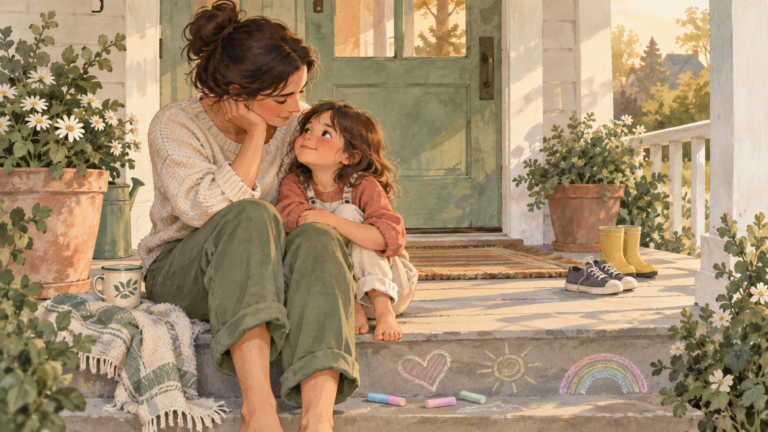
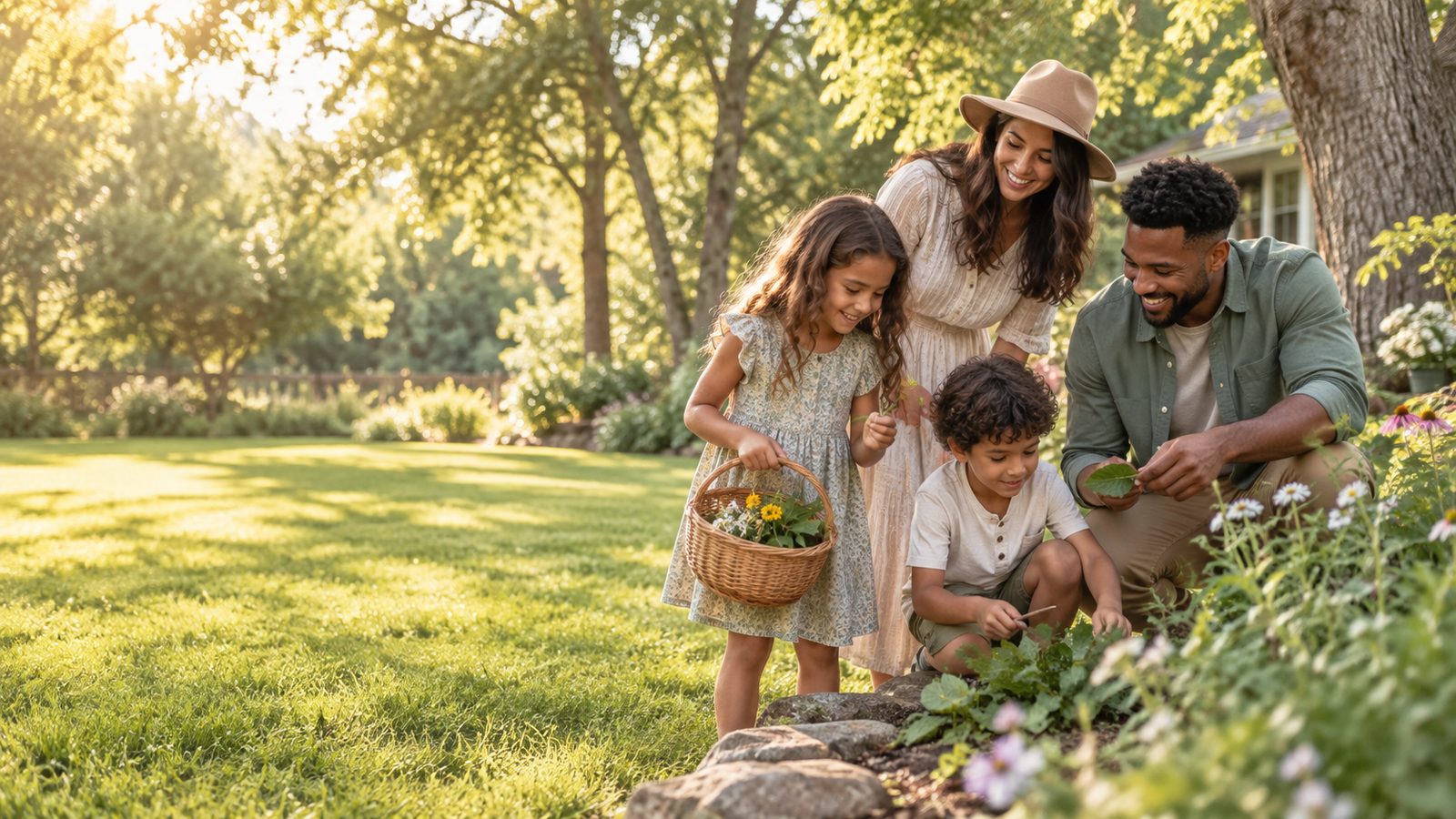
For one family, that might be ten minutes on the front steps after dinner. For another, it may be a Saturday morning at a local park. For a toddler, it may be watching leaves move in the wind from a blanket on the grass. For an older child, it may be walking the dog, riding a bike, or sitting outside with a friend.
Small moments count.
What Unstructured Play Actually Looks Like
Unstructured play does not mean leaving children without support or ignoring safety. It means allowing the child—not the adult—to shape much of what happens.
It may look like:
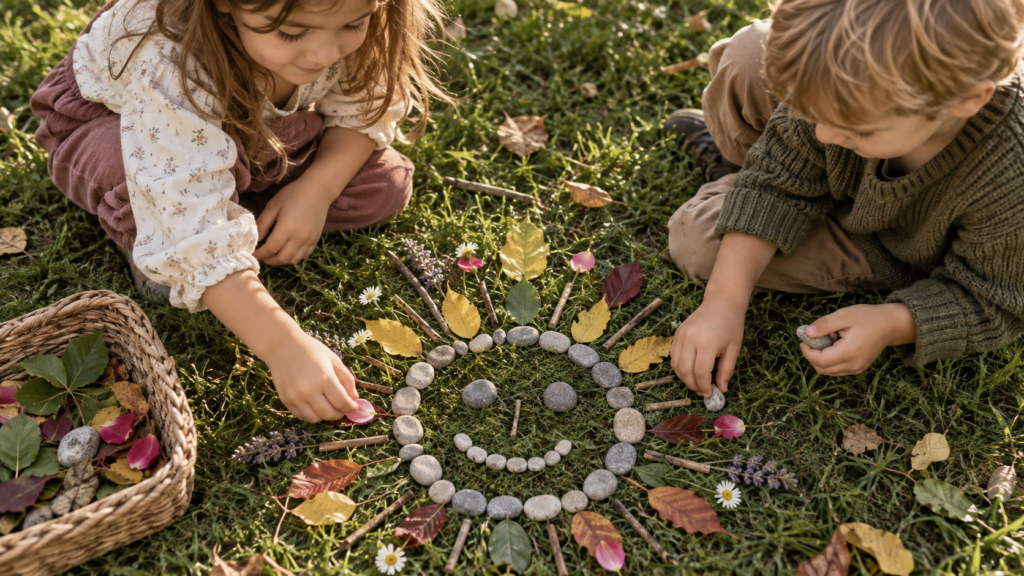
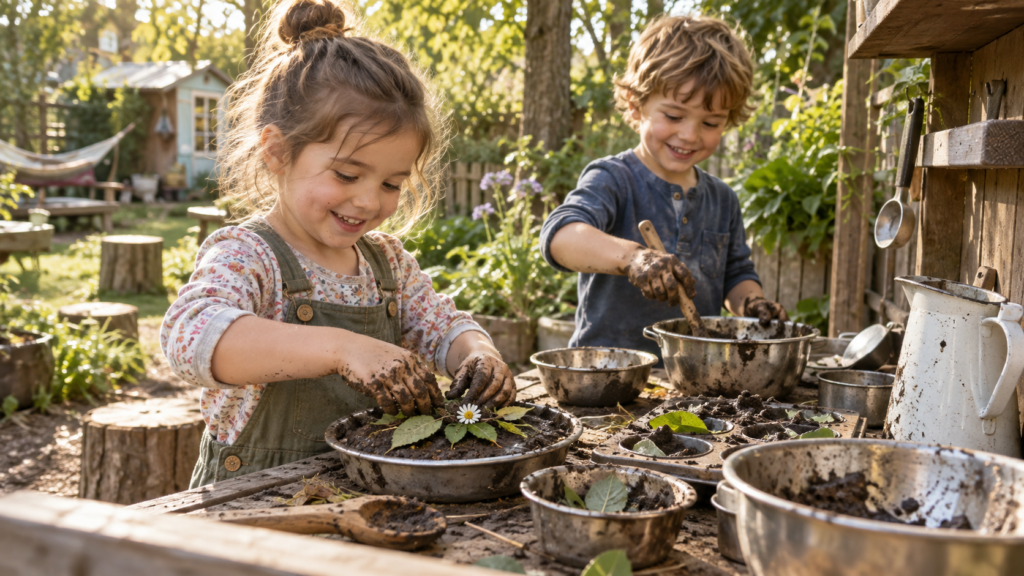
- A child gathering leaves and deciding they are ingredients for a pretend soup.
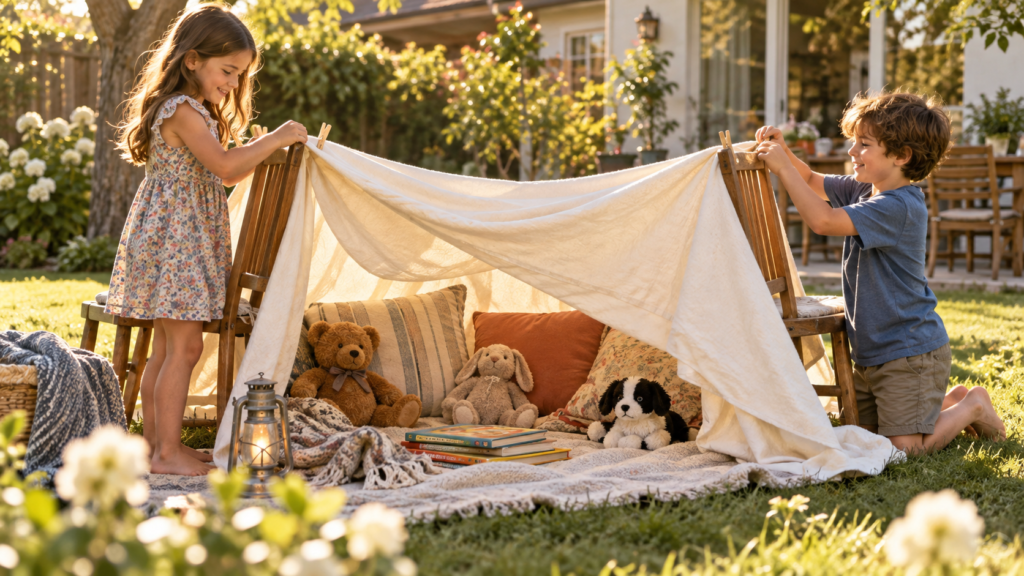
- Siblings turning a blanket into a fort, then changing the game five times.
- A child drawing a giant chalk path with no instructions about what it should become.
- A family taking a walk without a destination or lesson plan.
- Children spending twenty minutes watching bugs, clouds, puddles, or birds.
None of these moments needs to become a formal activity. The play does not need an educational objective printed at the top.
Children learn through the experience of making choices, testing ideas, adapting when something does not work, and deciding what to do next.
That is one reason open-ended play matters: it gives children a chance to be active participants rather than following a set of adult instructions.
Outside Changes the Rhythm of Play
Indoor play often comes with limits that make sense: space, noise, furniture, cleanup, and other family routines.
Outside can offer a different rhythm.
There may be more room to run, more objects to investigate, and fewer worries about making a mess. Children can speak louder, move faster, build bigger, and stay with an idea longer.
That does not mean every outdoor moment will be peaceful. Children may argue, get dirty, complain, or ask to go back inside after five minutes. That is normal too.
The goal is not to create a magical afternoon every time. It is to make outdoor space familiar enough that children know it is available to them.
When outdoor time becomes part of family life, it stops needing to be a special occasion.
The Adult’s Role: Present, Not in Charge
Parents do not need to become activity directors.
Often, the most helpful role is to create the conditions for play and then step back a little. That may mean bringing out chalk, opening the back door, walking to a park, sitting nearby with a book, or saying, “What do you notice out here today?”
It can also mean responding when a child invites you in.
The Center on the Developing Child at Harvard describes responsive back-and-forth interactions between children and caring adults as “serve and return.” When a child points, asks a question, shows something, or shares an idea, a simple response can support connection, communication, and learning.
You do not need to turn every outdoor moment into a lesson.
Sometimes it is enough to say:
- “You found something interesting.”
- “Tell me about your game.”
- “That branch is much bigger than I expected.”
- “Where do you think that bird is going?”
- “You seem proud of what you made.”
Those small exchanges show children that their ideas matter.
Outdoor Play Does Not Need More Stuff
It is easy to believe that children need special toys, elaborate climbing structures, or a carefully designed backyard in order to play outside well.
They do not.
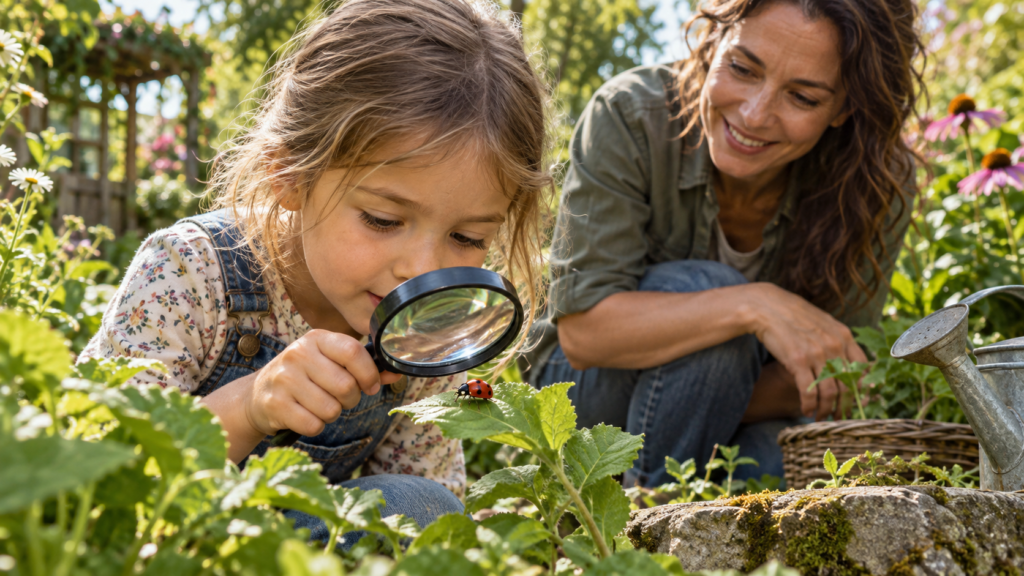
Some useful things can help, such as a ball, sidewalk chalk, bubbles, a jump rope, buckets, or a magnifying glass. But none of them is required for meaningful outdoor time.
The most valuable ingredients are usually:
- A reasonably safe space
- Time without a tight agenda
- A little freedom to explore
- Appropriate adult supervision
- Permission to be imperfect, noisy, curious, and occasionally messy
A local sidewalk, community park, shared courtyard, apartment balcony, school playground, or small patch of grass can be enough.
Families without easy access to private outdoor space should not be made to feel excluded from this conversation. Outdoor play is not only about backyards. It is about finding accessible moments of movement and connection in the environment available to your family.
How Outdoor Play Changes by Age
Babies and toddlers
For babies and toddlers, outside can be full of sensory experiences: breeze, birdsong, grass, shadows, leaves, different sounds, and changing light.
They do not need elaborate activities. A short walk, supervised blanket time on the grass, bubbles, rolling a ball, or watching people and dogs at the park can be plenty.
The adult’s job is mostly to stay close, name what the child notices, and keep the experience safe.
Preschoolers
Preschoolers often thrive when they can mix movement with imagination.
They may turn sticks into tools, dirt into food, rocks into treasure, and a small hill into a mountain. This age often enjoys pretend play, collecting, climbing, simple obstacle courses, and making up rules.
Try not to correct the game too quickly. If the “restaurant” only serves leaf soup, that is not a problem to solve.
School-age children
Older children may enjoy more challenge and independence. They may want to build, ride, explore, play sports, create a secret route, care for plants, or spend time with friends outdoors.
This is also an age when side-by-side activities can make conversation feel easier. A walk, bike ride, backyard game, or simple project can create opportunities for connection without forcing a serious talk.
Tweens and teens
Outdoor time still matters as children get older, but it may look different.
They may prefer walking with a friend, shooting hoops, biking, helping in the garden, visiting a skate park, taking photos, or simply sitting outside while talking. The important part is not making outdoor play feel childish. It is making room for fresh air, movement, privacy, and low-pressure connection.
A Gentle Way to Make More Room for Outside
Instead of setting an ambitious goal, try choosing one repeatable moment in your family’s week.
It could be:
- A short walk after dinner twice a week
- Ten minutes outside after school
- Saturday morning at a local park
- Lunch or a snack outdoors when weather allows
- Watering plants together
- A no-phone family walk on Sunday
- Reading one book outside before bedtime
The routine does not need to be impressive. It only needs to be possible.
When families make outdoor time small and repeatable, it is more likely to become a real part of life instead of another good intention.
Safety Still Belongs in the Picture
Unstructured play is not the same as unsupervised play.
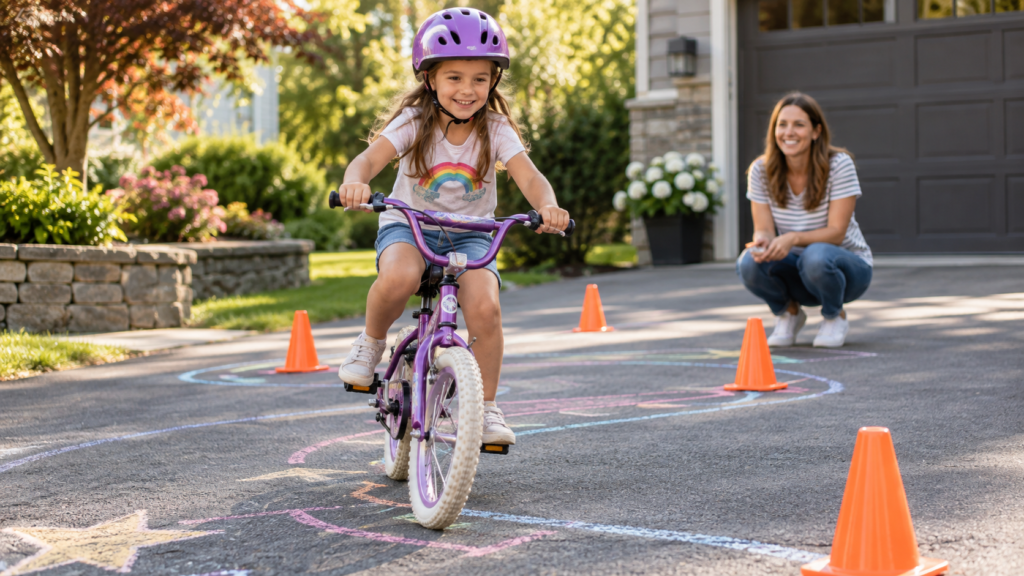
Adults should consider children’s ages, abilities, the setting, weather, traffic, water, equipment, and local conditions. Helmets and appropriate protective gear matter for bikes, scooters, skateboards, and similar activities. Children should also have age-appropriate supervision near water, roads, heights, and unfamiliar environments.
The CDC recommends making activity enjoyable, age-appropriate, and safe. That balance matters: children need freedom to explore, and adults need to create a setting where that exploration can happen responsibly.
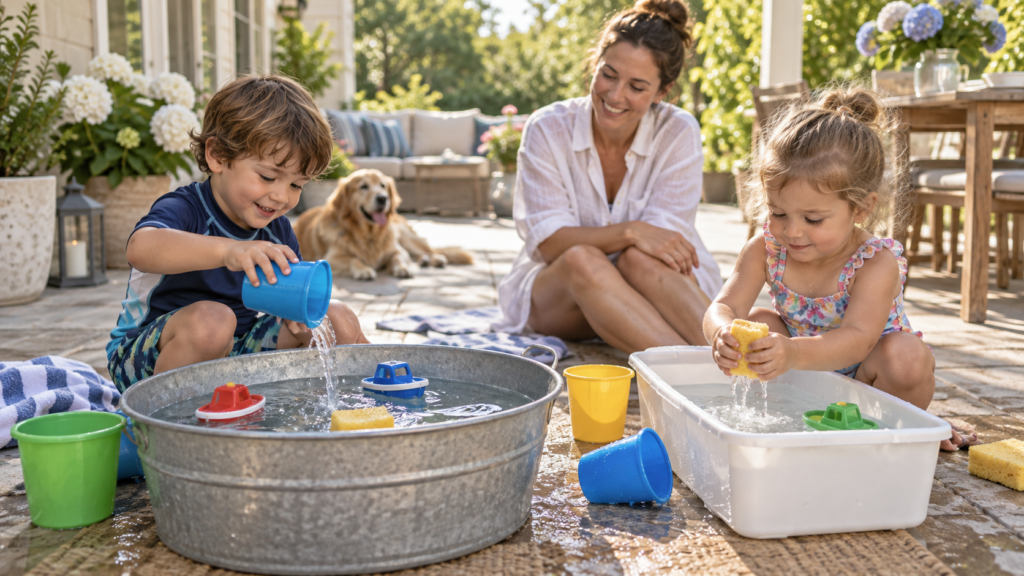
A More Realistic Definition of a Good Family Day
A good family day does not need to include a perfect outing, coordinated snacks, or a full schedule of activities.
It may be a child coming home with dirty shoes. It may be five minutes of chalk on the driveway. It may be a walk where nobody talks much. It may be a picnic that ends early because someone is tired.
Those moments can still be meaningful.
Outdoor play gives children an invitation to slow down, move their bodies, follow their curiosity, and make something out of what is already around them. It gives adults a chance to step out of the role of organizer and simply notice their children.
That is enough.