

Why 3-Year-Olds Have Tantrums—and What Helps During a Big Meltdown
A small “no” can suddenly turn into a full-body protest. Your three-year-old may scream because it is time to leave the playground, collapse when the wrong cup is offered, or become furious over a toy that will not do what they want.
If this is happening in your home, you are not alone—and it does not automatically mean you are doing something wrong. Three-year-olds are learning to be more independent, but their ability to manage frustration, wait, change plans, and explain what they need is still developing. When feelings move faster than words and self-control, a meltdown can be how that frustration shows up.
That does not mean every behavior is okay. It means a young child needs an adult to keep the moment safe, hold clear limits, and help them return to calm.
Why age three can bring such big reactions
At three, children want to do more for themselves. They may have strong preferences and plenty to say, but still struggle when the answer is no, a transition comes unexpectedly, or their body is tired or hungry.
The CDC’s guidance on toddlers ages two to three describes this as a period of major growth in thinking, learning, social skills, and emotions. A child can express a wide range of feelings while still needing help to manage them.
A tantrum is not always a deliberate attempt to manipulate a parent. Sometimes a child is overwhelmed; sometimes they are protesting a limit; sometimes several things have built up at once. The trigger may look small to an adult, but the frustration feels real to the child.
Common contributing factors include:
- hunger, tiredness, or being overstimulated;
- stopping a fun activity or moving to a new one;
- wanting independence but needing help;
- difficulty communicating a need or disappointment;
- changes in routine or an unfamiliar situation.
Noticing patterns does not mean you can prevent every meltdown. It can help you anticipate the hardest moments and make a few of them easier.
Before a meltdown: look for patterns and make transitions clearer
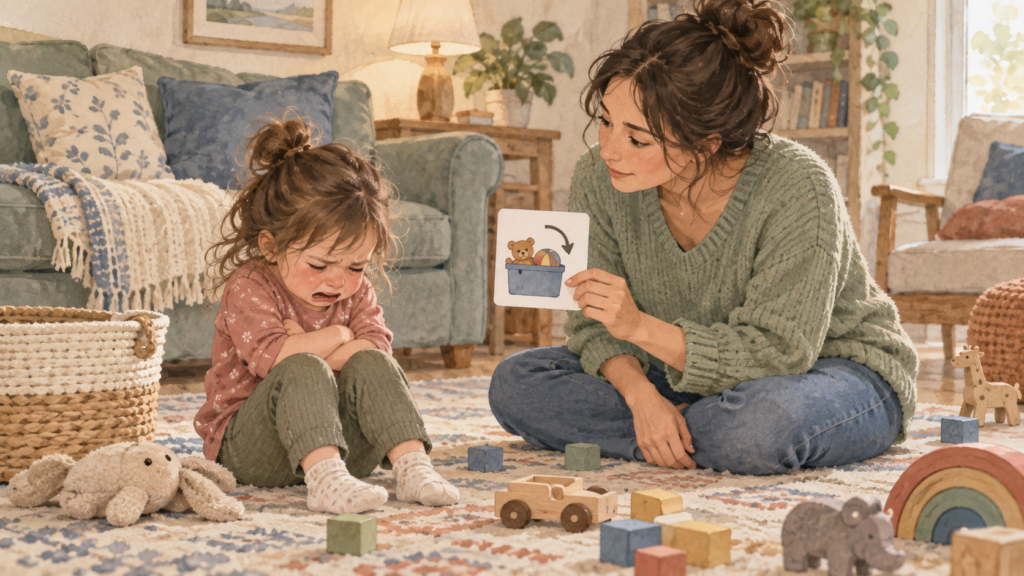
You do not need a perfect schedule or a tantrum-free home. A little preparation can reduce avoidable friction.
If leaving the park is a frequent flashpoint, give a clear warning and a simple next step: “Two more trips down the slide, then we’re walking to the car.” A visual cue, a familiar song, or letting your child carry something to the car may help make the transition more predictable.
Offer small choices when both options work for you: “Do you want the blue shoes or the sneakers?” This gives your child some control without making a necessary boundary sound optional.
It may also help to keep a brief mental note of what happened before a difficult episode. Was it close to nap time? Did plans change? Was your child asked to stop playing without warning? Patterns can guide practical adjustments, such as bringing a snack or leaving an event before everyone is depleted.
These strategies are supports, not guarantees. A well-rested child can still have a hard moment; a parent can do everything thoughtfully and still hear a loud “No!”
During the tantrum: safety first, fewer words
When a child is already overwhelmed, a long explanation usually will not land. Keep your voice low, use short sentences, and focus first on keeping everyone safe.
You might say:
- “You’re mad. I’m here.”
- “It’s hard to stop playing.”
- “I won’t let you hit.”
- “You can be upset. I’ll keep you safe.”
The CDC’s emotion-coaching guidance recommends noticing and naming feelings, listening, and validating the emotion while still setting limits on behavior. “You’re angry” does not mean “You can throw the toy at your brother.” You can acknowledge the feeling and stop the unsafe action at the same time.
If your child is hitting, kicking, biting, throwing objects, or moving toward danger, calmly block or move them away. Use as few words as possible: “I won’t let you hit. I’m moving the blocks.” Do not hit, threaten, or shame a child for losing control.
If they are in a safe place and not hurting anyone, you can stay nearby without demanding that they stop crying immediately. Some children want a quiet adult close; others need a little space while knowing you are still there. You can offer comfort, but do not force a hug.
The American Academy of Pediatrics’ tantrum guidance also emphasizes anticipating a child’s limits, using small choices, and stopping unsafe behaviors. During a public meltdown, the same priorities apply: protect your child, keep your words simple, and do not make the audience your focus.
After the storm: reconnect before you teach
When your child is calmer, reconnect. You do not need to conduct a long post-meltdown interview. A simple “That was hard. I’m glad we’re together now” can help restore a sense of safety.
Later, when both of you are settled, briefly name what happened and practice what your child could do next time:
“Leaving the playground made you angry. Next time you can say, ‘I want one more turn,’ and I’ll tell you whether we have time.”
A three-year-old may need many repetitions before a new response becomes easier to use. Practice when your child is calm: name basic feelings in books, use pretend play, or model words such as “help,” “break,” “my turn,” and “I’m mad.”
If something was broken or someone was hurt, help your child participate in a simple repair once they are ready—such as helping pick up the blocks or checking whether their sibling is okay. The purpose is learning responsibility, not making a child feel ashamed.

When you feel yourself reaching your limit
Parents have nervous systems, too. A child’s screaming can be intensely stressful, especially when you are tired, managing other children, or worried about what people nearby think.
If you feel close to yelling or reacting physically, first make sure your child is in a safe place. Take a brief pause, breathe, or ask another trusted adult to take over. If another caregiver is available, agree on a simple handoff phrase before a difficult moment happens.
If you do yell, you can repair afterward: “I got too loud. I’m sorry. It’s my job to keep us safe, and I’m going to try again.” An apology does not remove the boundary. It models how people take responsibility and reconnect.
Needing a pause does not make you a bad parent. It is a way to protect both you and your child when emotions are high.
When should I talk with the pediatrician?
Tantrums are common in early childhood, but you know your child and your family’s daily life best. Bring it up with your child’s pediatrician if the episodes feel unusually intense or persistent, regularly involve someone getting hurt, substantially disrupt daily routines, or come with other concerns about your child’s communication, development, mood, or behavior.
Also talk with the doctor if your child has lost skills they previously had or if you are worried about how they play, learn, speak, act, or move. The CDC’s developmental guidance for age three encourages families to discuss concerns and ask about developmental screening. A milestone checklist is not a diagnosis, but sharing what you see can help the pediatrician decide whether more support would be useful.
You do not need to wait until a problem feels severe to ask for guidance. A pediatrician can help you think through what is typical for your child’s age, what patterns to watch, and what support may help your family.
You and your child are learning together
A three-year-old’s meltdown can feel enormous, and it may happen again tomorrow. Progress often looks less like “no more tantrums” and more like small changes: your child accepts comfort sooner, finds a word for frustration, or recovers more quickly with your support.
You are allowed to find this stage hard. Your child is not giving you a report card on your parenting, and you do not have to respond perfectly every time. Keep the boundary, protect safety, reconnect when you can, and reach out for help when you need it.
References
- American Academy of Pediatrics, HealthyChildren.org. Top Tips for Surviving Tantrums
- Centers for Disease Control and Prevention. Positive Parenting Tips: Toddlers (2–3 years old)
- Centers for Disease Control and Prevention. Tips for Noticing and Naming Emotions
- Centers for Disease Control and Prevention. Milestones by 3 Years