

Indoor Activities for 5-Year-Olds Using Things You Already Have: 25 Easy Ideas
Keeping a 5-year-old entertained indoors doesn’t have to mean buying new toys, preparing complicated crafts, or turning on a screen. Sometimes the simplest activities are the ones that capture a child’s imagination the most.
Whether you’re looking for something to do on a rainy afternoon, a screen-free activity for a quiet day at home, or an easy way to keep kids moving indoors, these ideas require little or no preparation.
From movement games and pretend play to simple learning challenges and science activities, here are 25 indoor activities for 5-year-olds that you can try at home using things you already have — or nothing at all.
1. Animal Walks
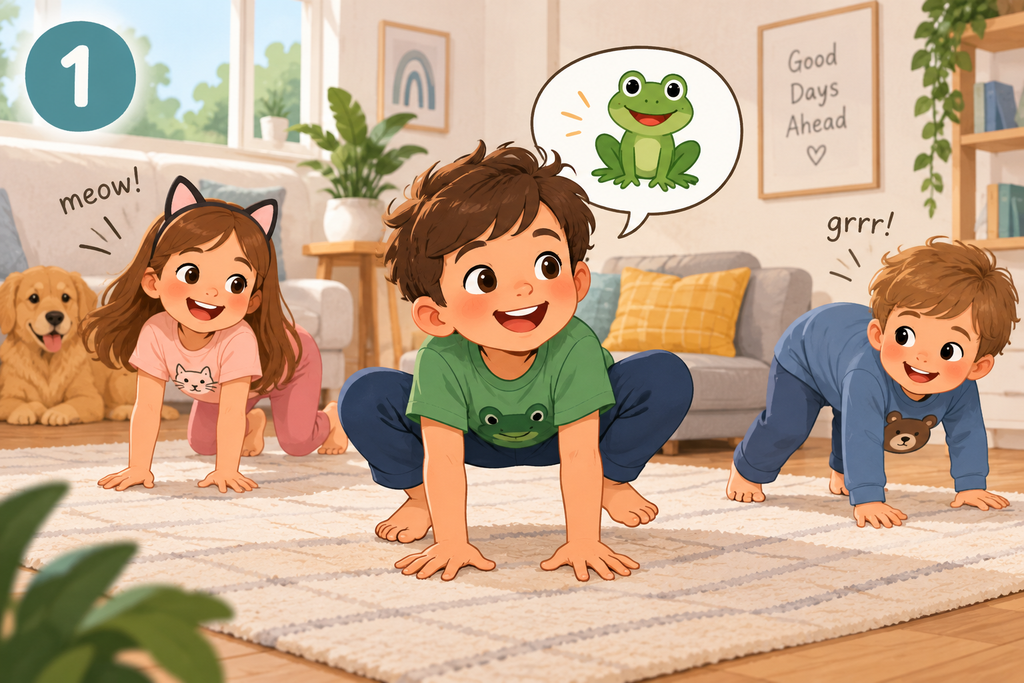
Turn your living room into a mini animal adventure.
Call out an animal and have your child move around the room like that animal. Try hopping like a frog, waddling like a penguin, crawling like a bear, or stretching like a cat.
For an extra challenge, let your child choose the next animal.
What it encourages: Movement, coordination, imagination, and listening skills.
2. Freeze Dance
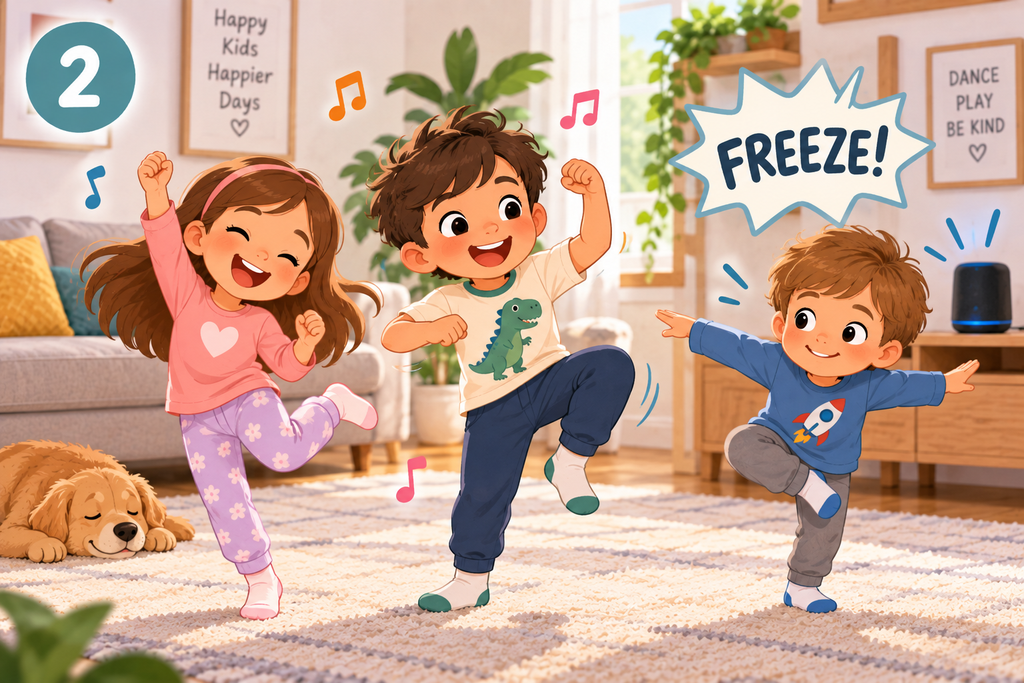
Put on a favorite song and let your child dance however they like.
When the music stops, everyone has to freeze.
Make it more fun by giving each round a different challenge:
- Freeze like a statue.
- Freeze like an animal.
- Freeze with one foot up.
- Freeze in a silly pose.
This is an easy activity when your child has plenty of energy to burn.
What it encourages: Gross motor skills, balance, rhythm, and self-control.
3. Build an Indoor Obstacle Course
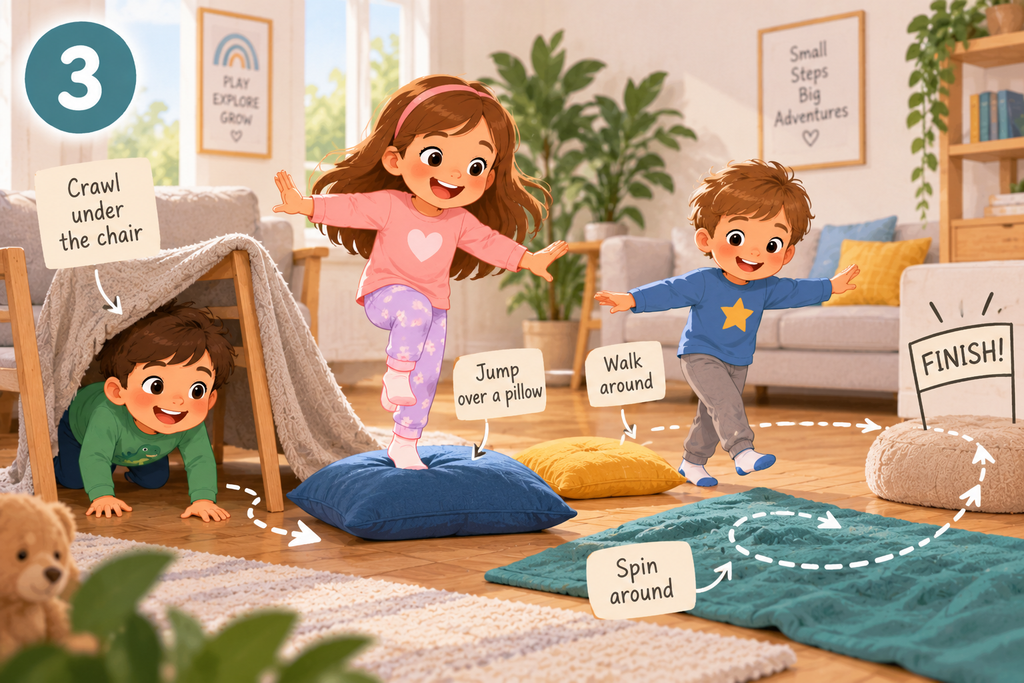
You don’t need special equipment to create an obstacle course.
Use pillows, cushions, chairs, blankets, or other safe household objects to create a simple path.
For example:
Crawl under the chair → walk around a pillow → jump over a blanket → spin around → reach the finish line.
Let your child help design the next course.
Safety tip: Keep the course away from sharp corners, stairs, and fragile objects.
What it encourages: Coordination, balance, problem-solving, and physical activity.
4. Follow the Leader
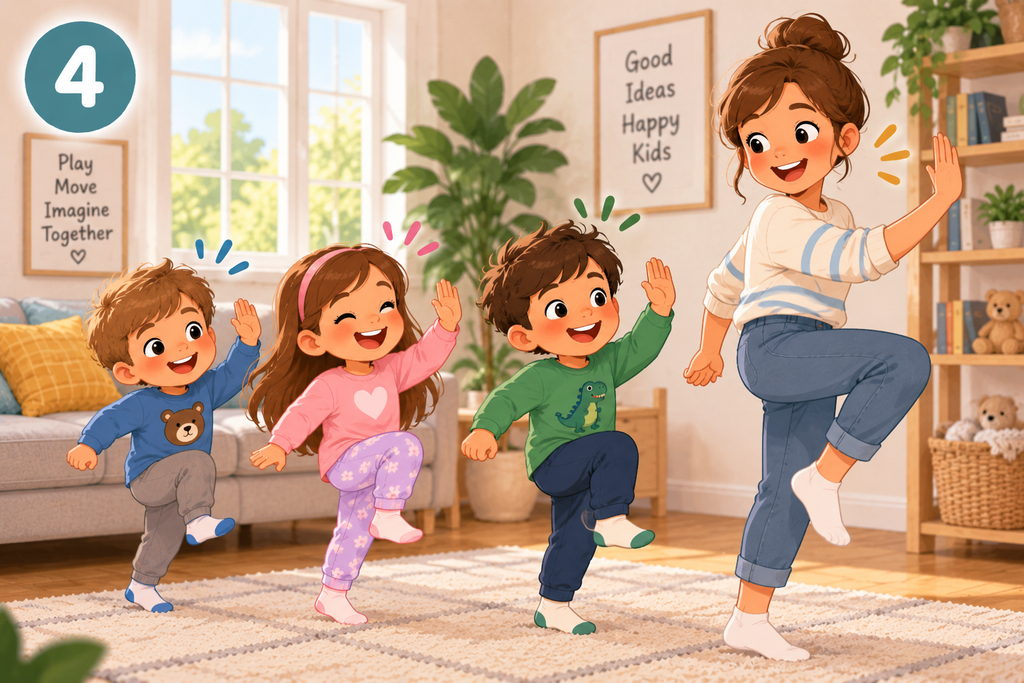
Take turns being the leader.
The leader performs an action while everyone else copies:
- Jump three times.
- Walk backward.
- Touch your toes.
- Spin around.
- Walk like a dinosaur.
- Pretend to swim.
After a few rounds, let your child become the leader.
What it encourages: Listening, memory, coordination, and confidence.
5. Balloon Keep-Up
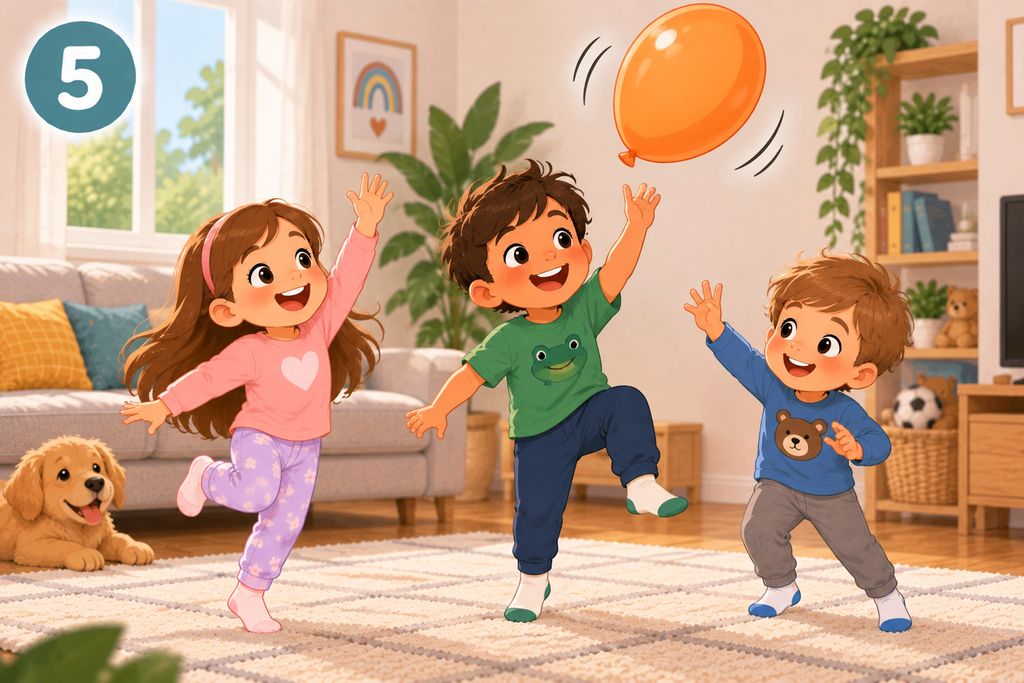
If you have a balloon at home, try to keep it from touching the floor.
Start with a simple challenge: how many times can you tap it before it falls?
Then add rules:
- Only use your hands.
- Only use your head.
- Take turns.
- Try using one hand.
What it encourages: Hand-eye coordination, movement, concentration, and counting.
Creative & Imaginative Activities
6. Build a Fort
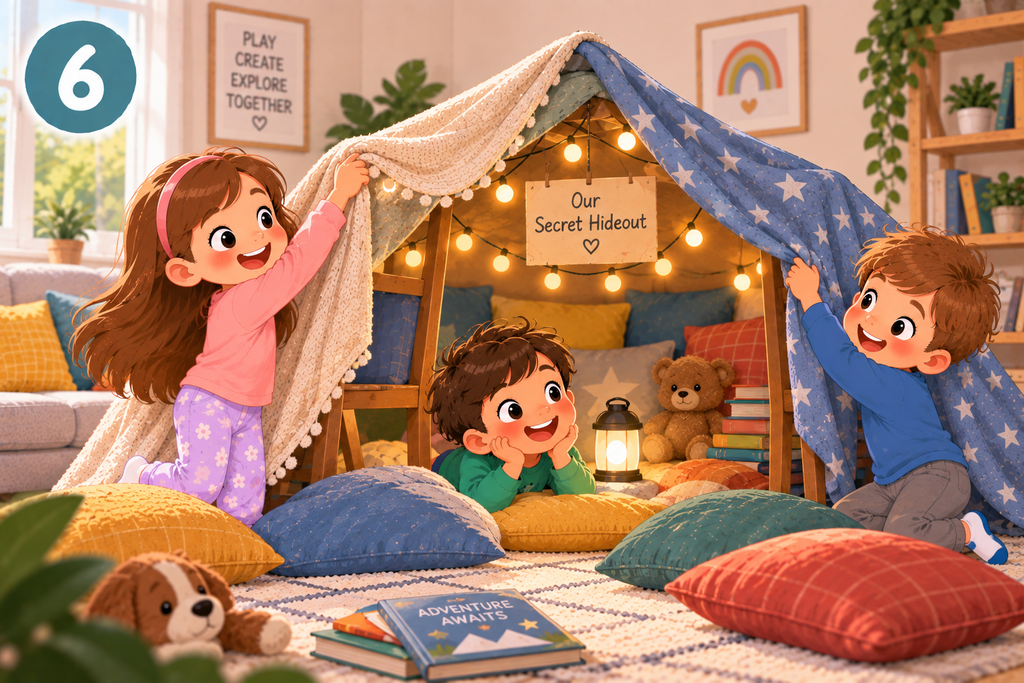
A few blankets and cushions can become a castle, spaceship, secret hideout, or jungle base.
The best part is allowing your child to decide what the fort is supposed to be.
Once it’s finished, use the space for reading, pretend play, storytelling, or simply relaxing.
What it encourages: Imagination, planning, creativity, and independent play.
7. Pretend Restaurant
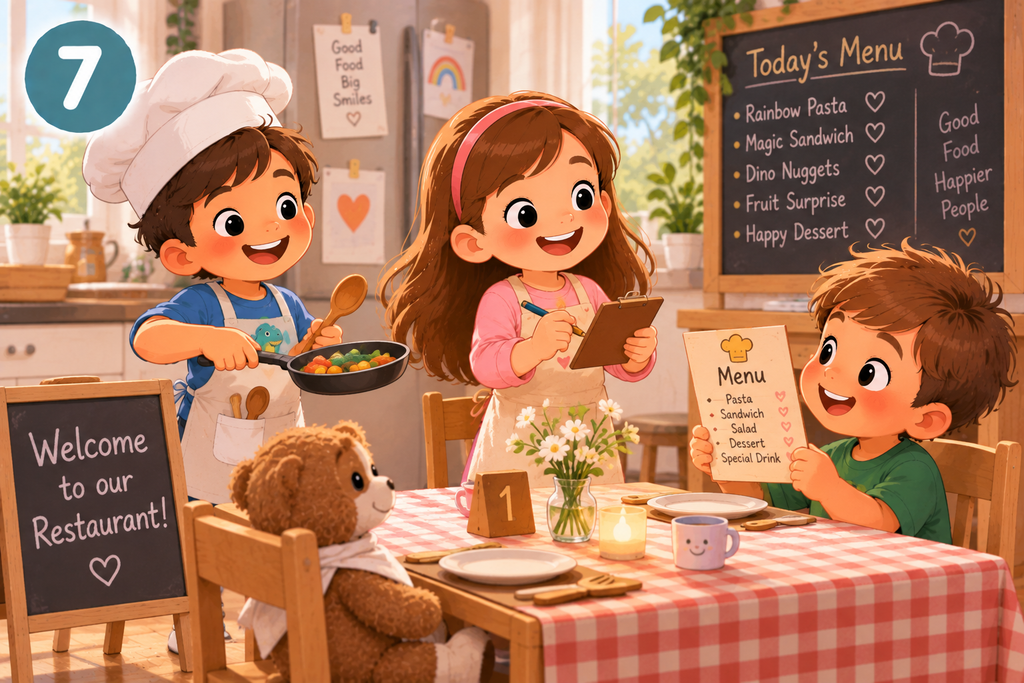
Turn your kitchen or dining room into a pretend restaurant.
Your child can be the chef, waiter, customer, or restaurant owner.
Create an imaginary menu and let them “serve” the family.
You can even pretend to order unusual meals such as dinosaur soup or astronaut pizza.
What it encourages: Imaginative play, communication, social skills, and creativity.
8. Make-Believe Adventure
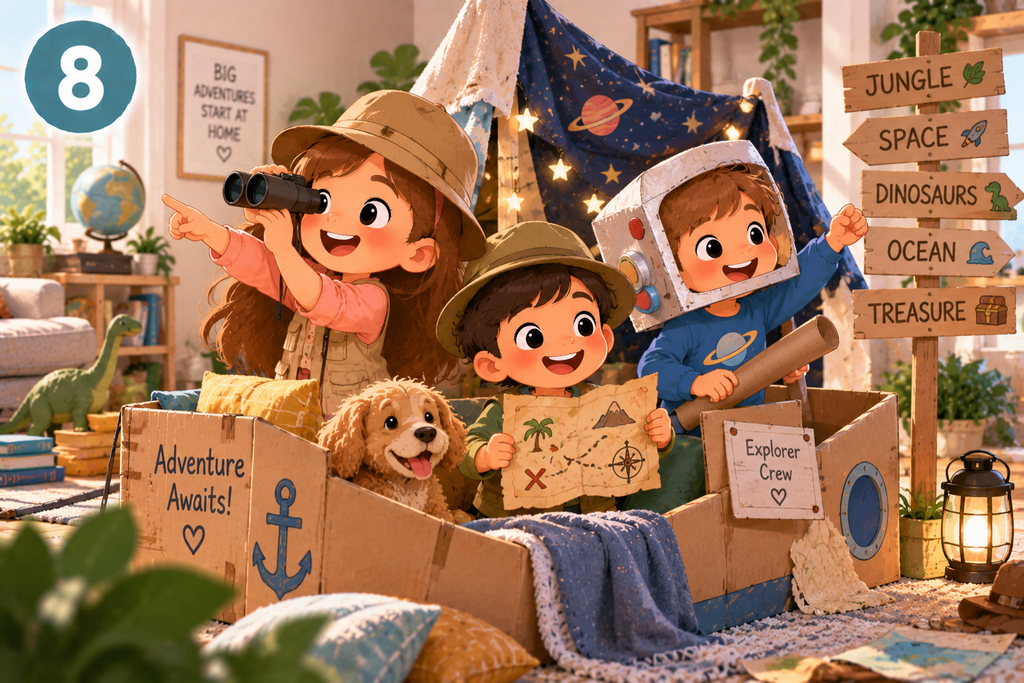
Choose a destination and pretend you’re going there together.
You might be:
- Exploring a jungle
- Traveling to space
- Searching for dinosaurs
- Exploring the ocean
- Looking for hidden treasure
Encourage your child to describe what they see and what happens next.
What it encourages: Language, storytelling, imagination, and creative thinking.
9. Family Show

Give your child the stage.
They can create a short performance involving:
- A song
- A dance
- A puppet show
- A magic trick
- A funny story
- A pretend news report
You can even make tickets and let your child announce when the show begins.
What it encourages: Creativity, communication, confidence, and self-expression.
10. Tell a Story Together
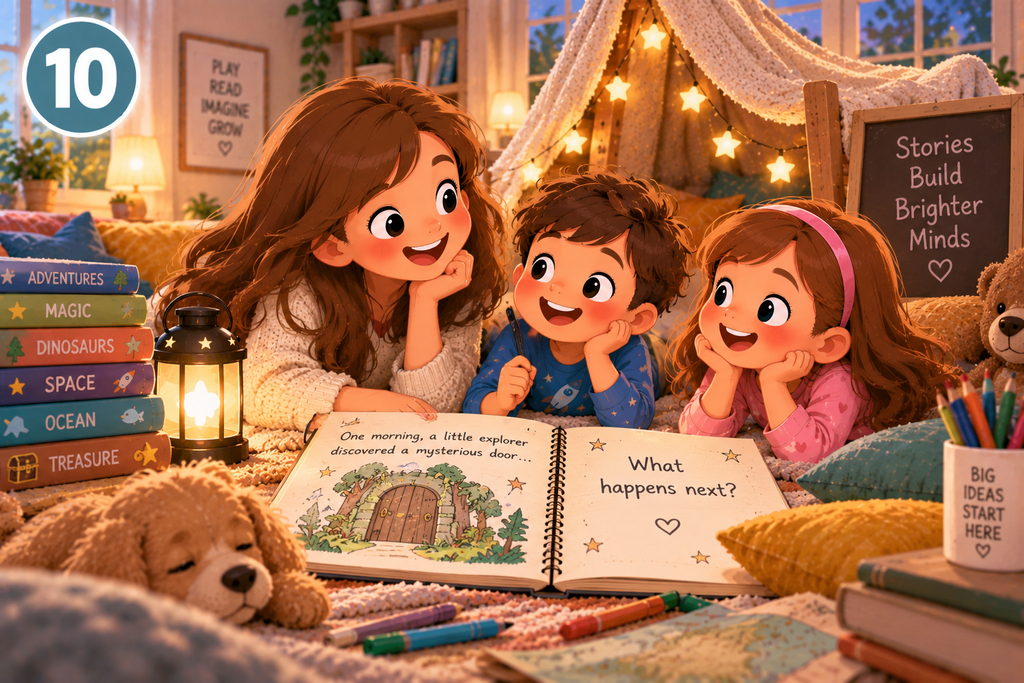
Start a story with one sentence:
“One morning, a little explorer discovered a mysterious door…”
Then let your child decide what happens next.
Take turns adding one sentence at a time.
If your child enjoys it, introduce unexpected characters or problems that the story’s hero has to solve.
What it encourages: Language development, imagination, memory, and storytelling.
Simple Learning Activities
11. Letter Hunt
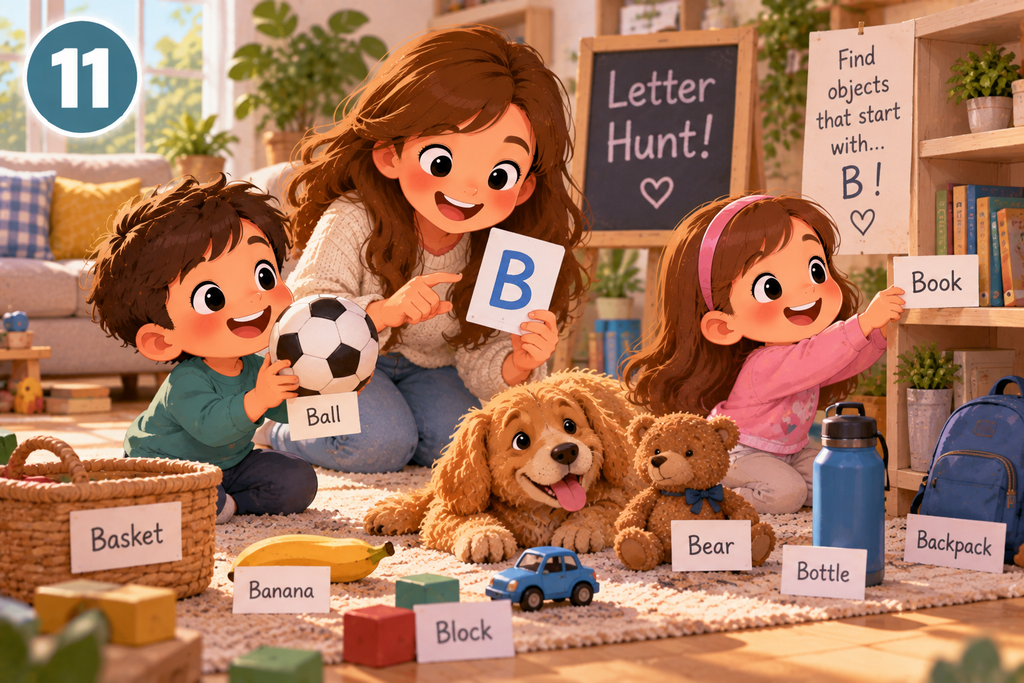
Choose one letter and look around the house for objects that begin with that sound.
For example, for the letter B:
- Book
- Box
- Ball
- Blanket
For an extra challenge, choose a new letter every few minutes.
What it encourages: Letter recognition, vocabulary, phonological awareness, and observation.
12. Number Hunt
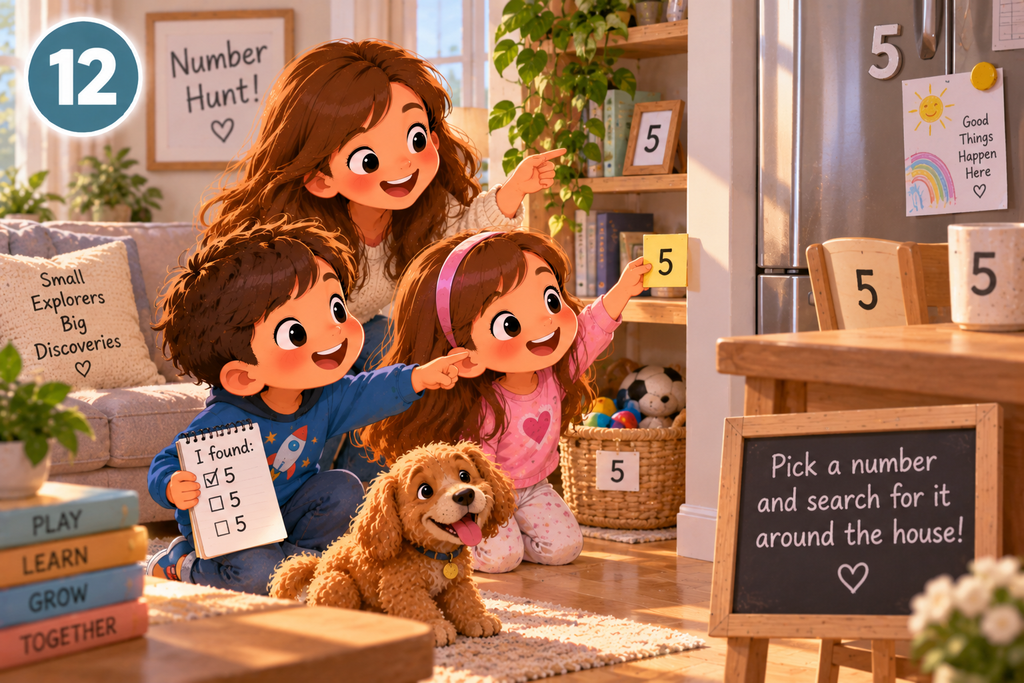
Pick a number and search for it around the house.
Look at clocks, books, calendars, packaging, labels, or other safe objects.
You can also challenge your child to find:
3 things that are blue, 5 things that are soft, or 4 objects that are round.
What it encourages: Number recognition, counting, observation, and classification.
13. Shape Hunt
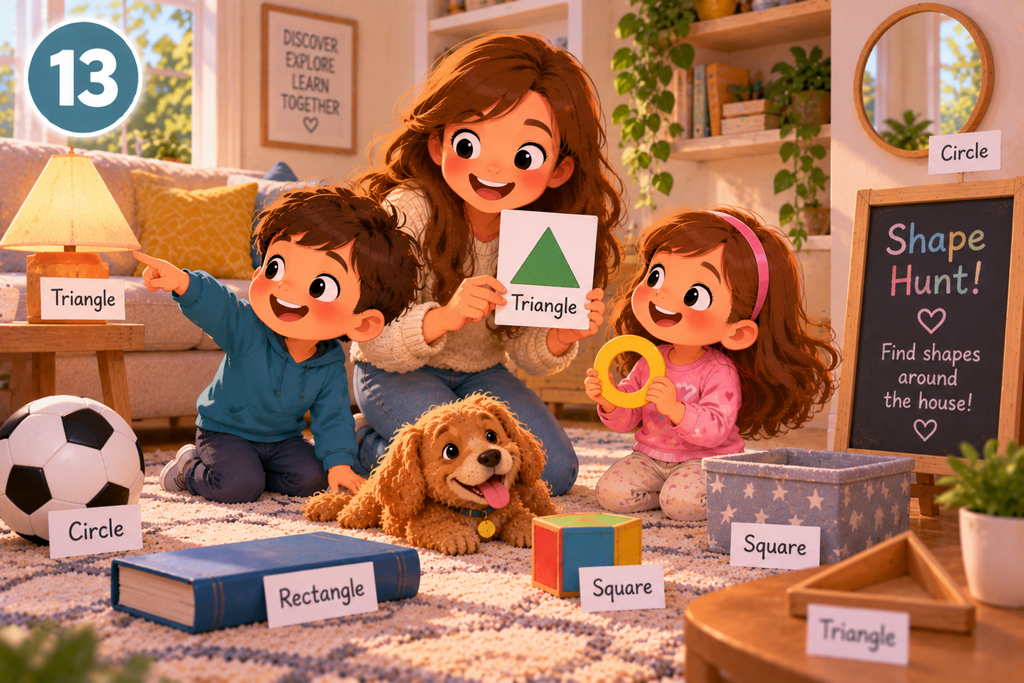
Choose a shape and search for examples around the house.
Try:
- Circles
- Squares
- Rectangles
- Triangles
Ask your child to find as many examples as possible.
A clock might be a circle, a door might be a rectangle, and a picture frame might be a square.
What it encourages: Shape recognition, visual observation, and early math skills.
14. Memory Challenge
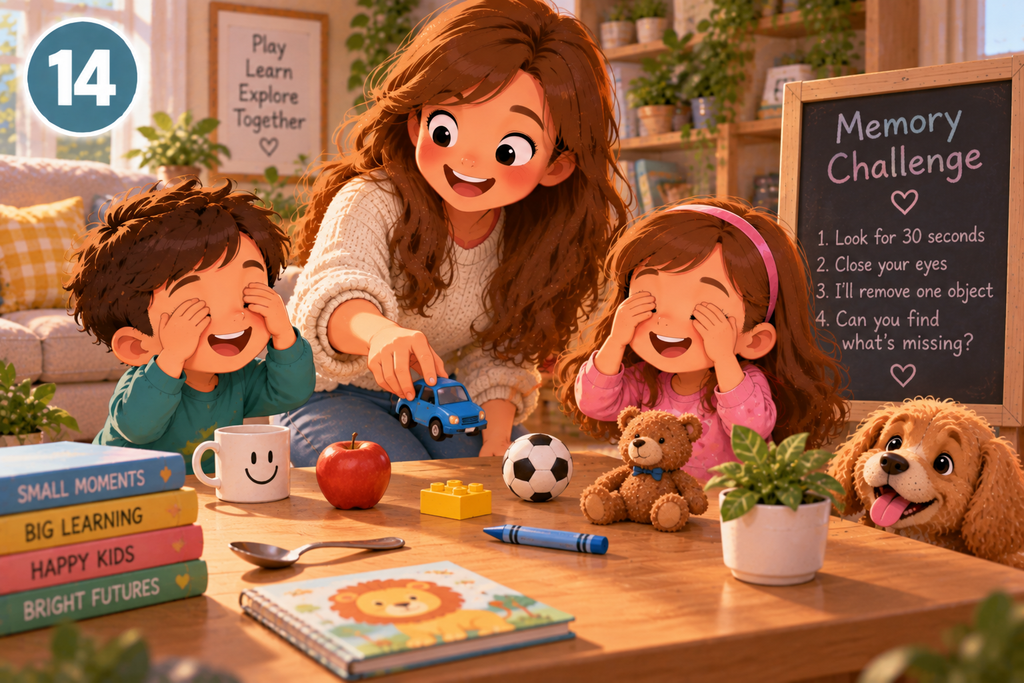
Place several familiar objects on a table.
Let your child look at them for about 30 seconds.
Then ask them to close their eyes while you remove one object.
Can they figure out what’s missing?
As your child improves, add more objects.
What it encourages: Memory, attention, observation, and concentration.
15. Category Game
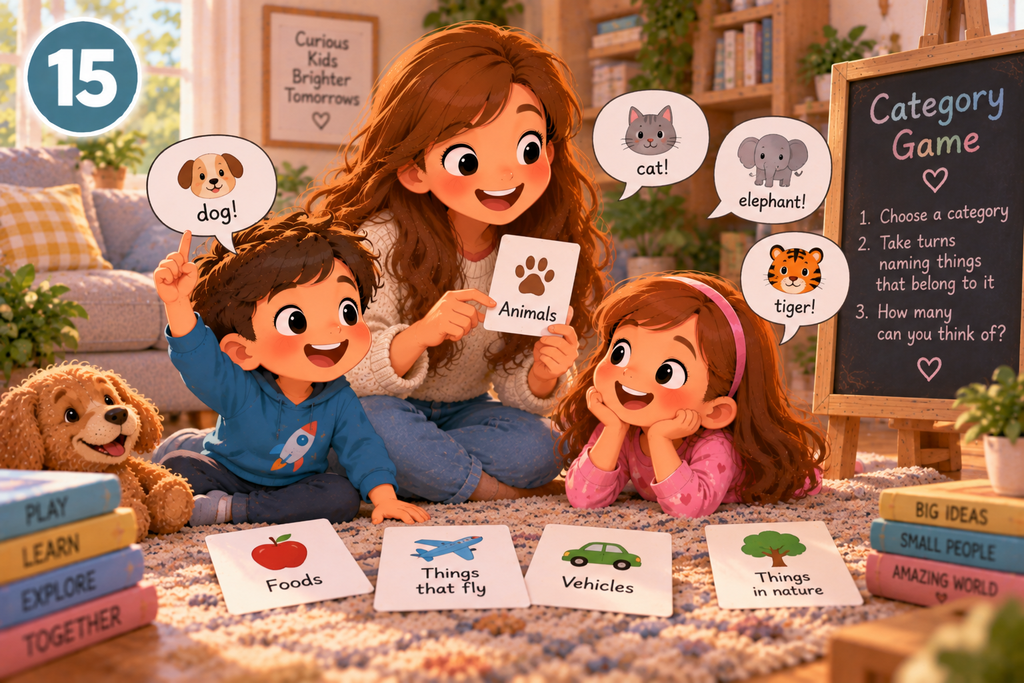
Choose a category and take turns naming things that belong to it.
For example:
Animals: dog, cat, elephant, tiger…
Foods: apple, pizza, banana, rice…
Things that fly: airplane, bird, helicopter…
For younger children, start with familiar categories. For older or more advanced children, make the categories more specific.
What it encourages: Vocabulary, memory, classification, and flexible thinking.
Science & Discovery Activities
16. Sink or Float
Fill a container with water and collect a few safe household objects.
Before putting each object in the water, ask:
“Do you think it will sink or float?”
Then test the prediction.
You can create two groups afterward: objects that sank and objects that floated.
What it encourages: Prediction, observation, comparison, and early scientific thinking.
Adult supervision: Always supervise children around water.
17. Shadow Investigation
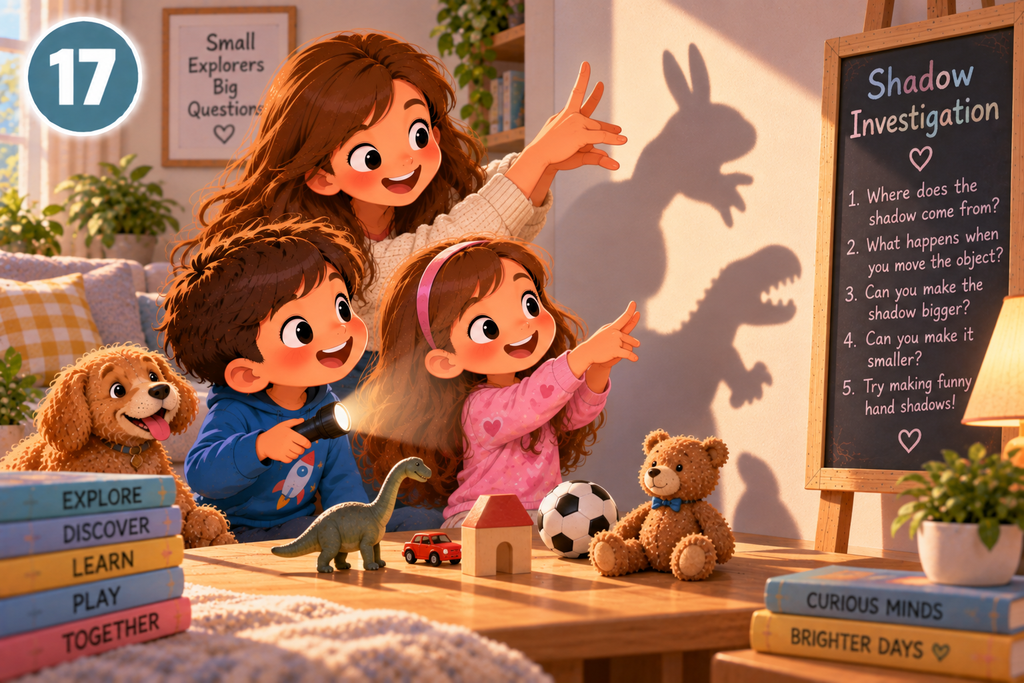
Look for shadows inside your home or near a sunny window.
Ask your child:
- Where does the shadow come from?
- What happens when you move the object?
- Can you make the shadow bigger?
- Can you make it smaller?
You can also make funny hand shadows on a wall.
What it encourages: Observation, curiosity, experimentation, and basic science concepts.
18. Make a Simple Weather Station
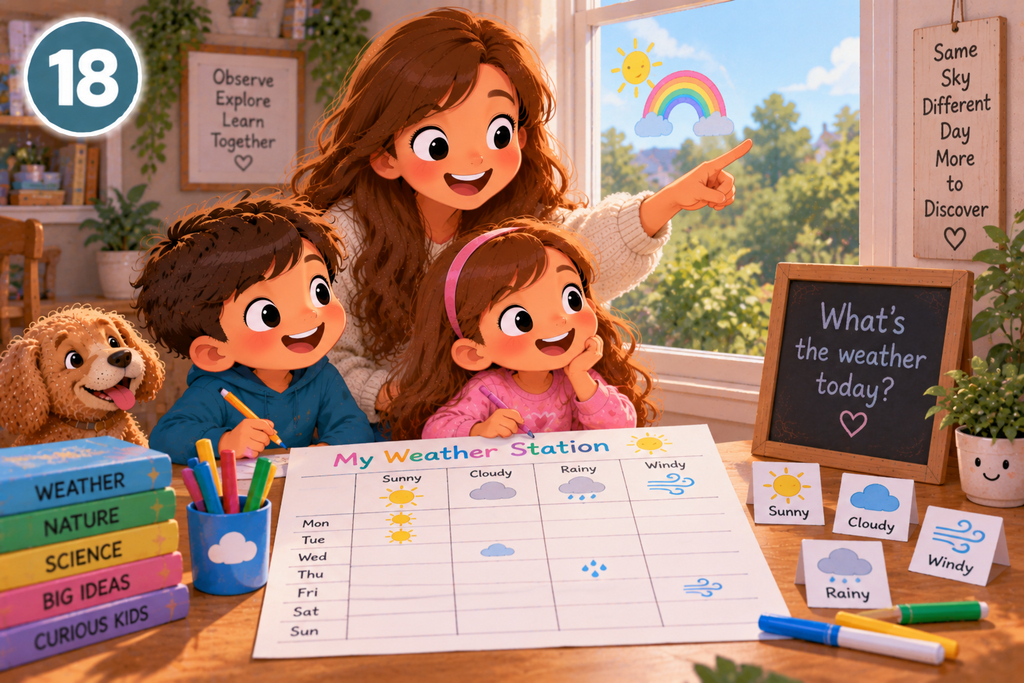
You don’t need special equipment to start observing the weather.
Look outside together and record what you see:
☀️ Sunny
☁️ Cloudy
🌧️ Rainy
💨 Windy
Your child can keep track of the weather for several days and compare the results.
What it encourages: Observation, recording information, vocabulary, and early data skills.
19. Nature Detective
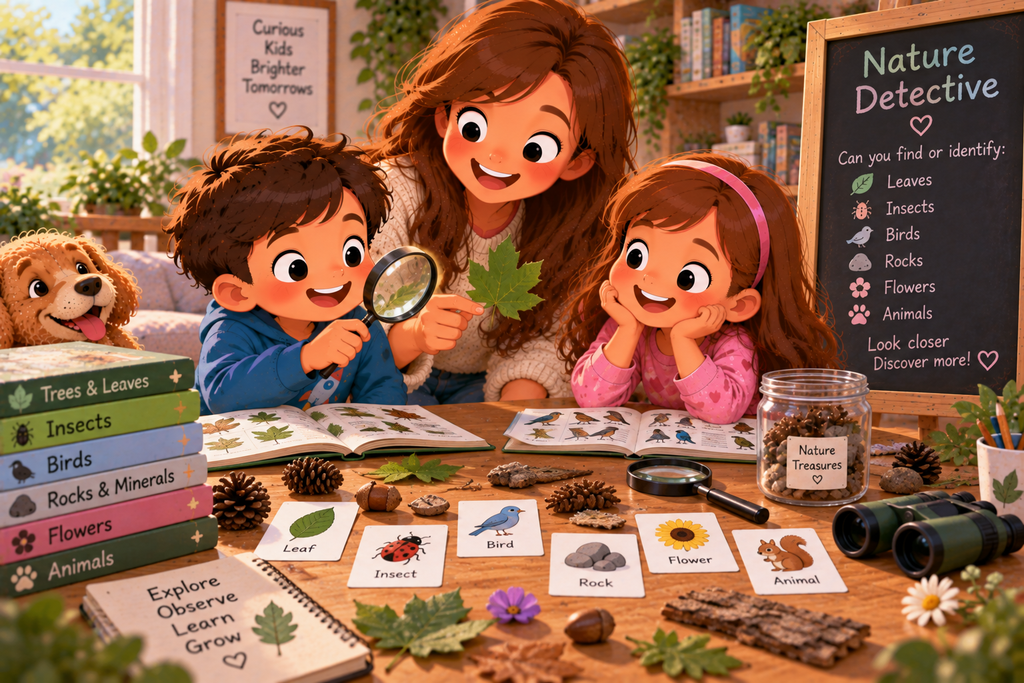
Even indoors, you can turn nature into a discovery activity.
Look through books, photographs, or things you have collected from previous outdoor adventures.
Ask your child to identify:
- Different types of leaves
- Insects
- Birds
- Rocks
- Flowers
- Animals
If your child loves bugs and nature, this can become a longer investigation.
What it encourages: Observation, classification, vocabulary, and curiosity about the natural world.
20. Observation Challenge
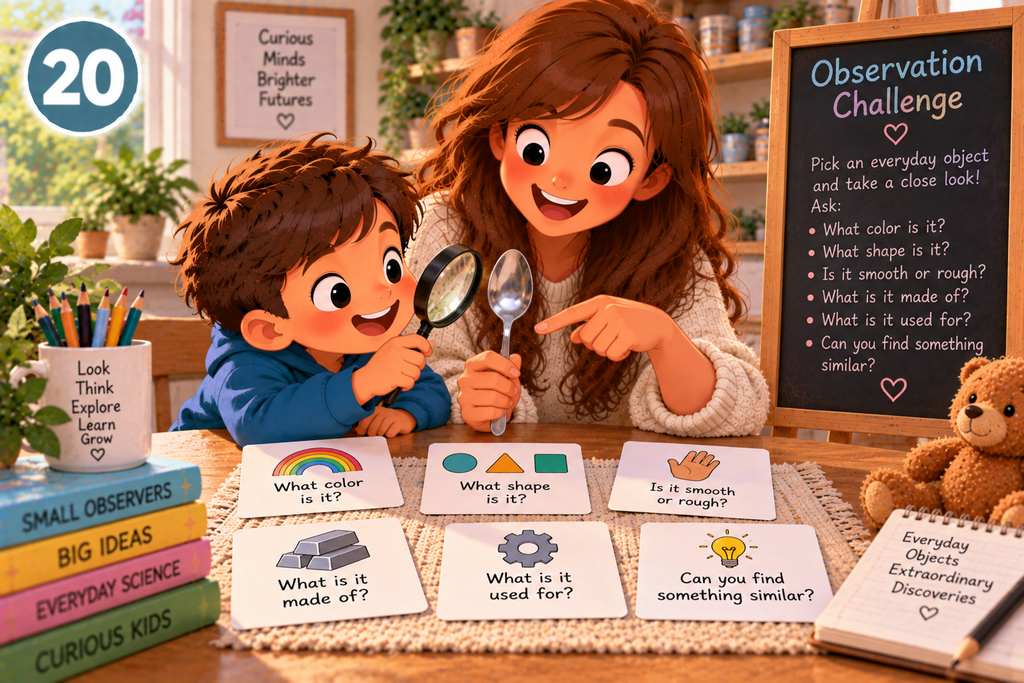
Choose an everyday object and ask your child to examine it carefully.
For example, use a spoon, leaf, toy, shoe, or piece of fruit.
Ask:
- What color is it?
- What shape is it?
- Is it smooth or rough?
- What is it made of?
- What is it used for?
- Can you find something similar?
The goal isn’t to get every answer right. It’s to encourage your child to look closely and ask questions.
What it encourages: Observation, descriptive language, critical thinking, and curiosity.
Quiet Indoor Activities
21. I Spy
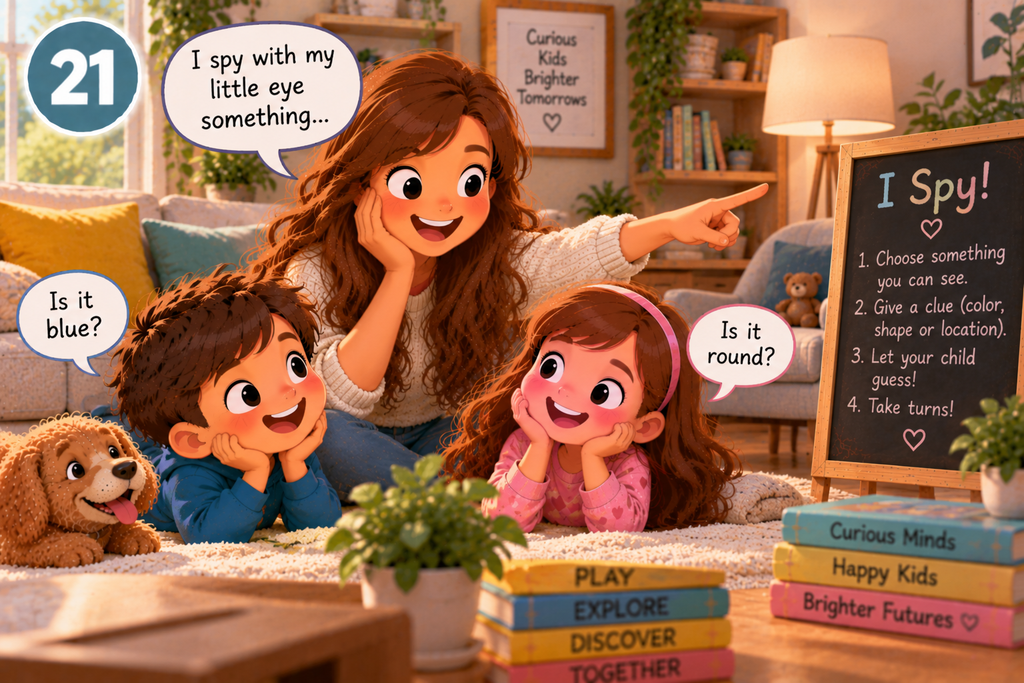
Choose an object that your child can see and say:
“I spy with my little eye something…”
Give a clue such as its color, shape, or location.
Then let your child take a turn.
This simple game can be played almost anywhere.
What it encourages: Observation, vocabulary, attention, and communication.
22. Draw From Memory
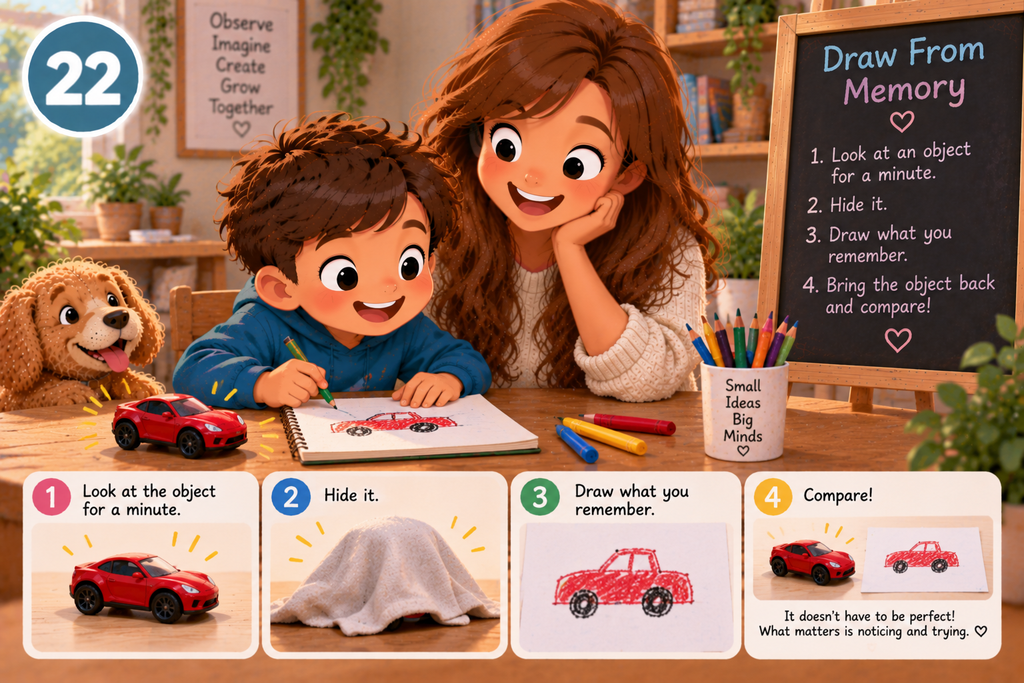
Ask your child to look at an object for a minute.
Then hide it and ask them to draw what they remember.
It doesn’t matter whether the drawing looks realistic.
Afterward, bring the object back and compare the drawing with the real thing.
What it encourages: Memory, observation, creativity, and visual representation.
23. Paper Airplane Challenge
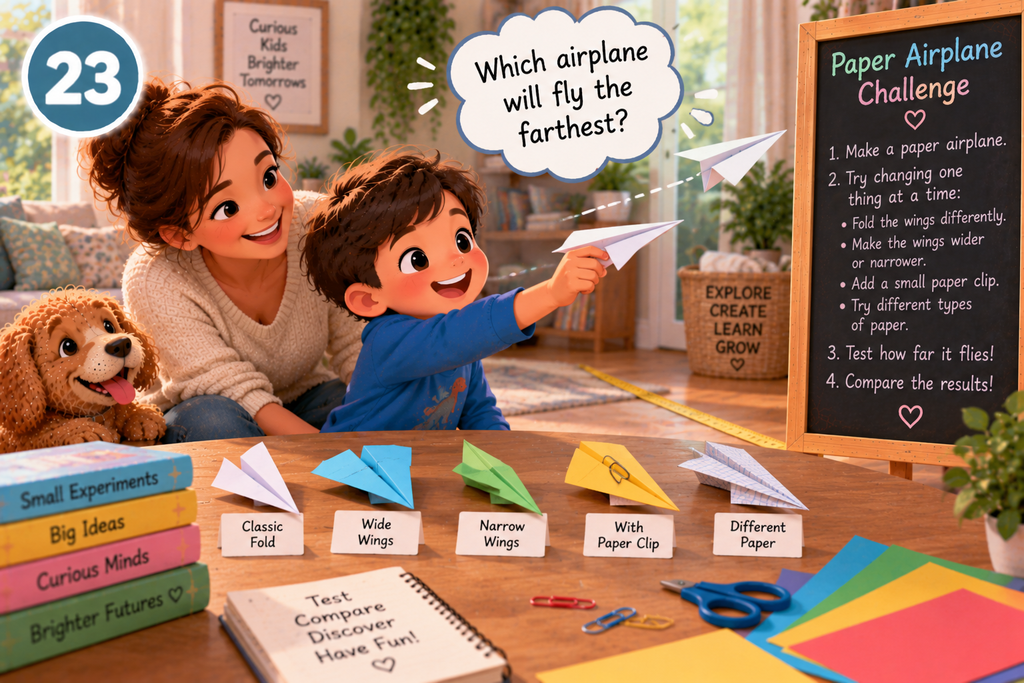
Turn a simple sheet of paper into a fun indoor experiment.
Help your child make a paper airplane and test how far it can fly.
Try changing one thing at a time:
- Fold the wings differently
- Make the wings wider or narrower
- Add a small paper clip
- Try different types of paper
Ask your child:
“Which airplane will fly the farthest?”
Then test each version and compare the results.
Why it’s great: combines creativity, building, prediction, and simple STEM concepts without needing special supplies.
24. Indoor Scavenger Hunt
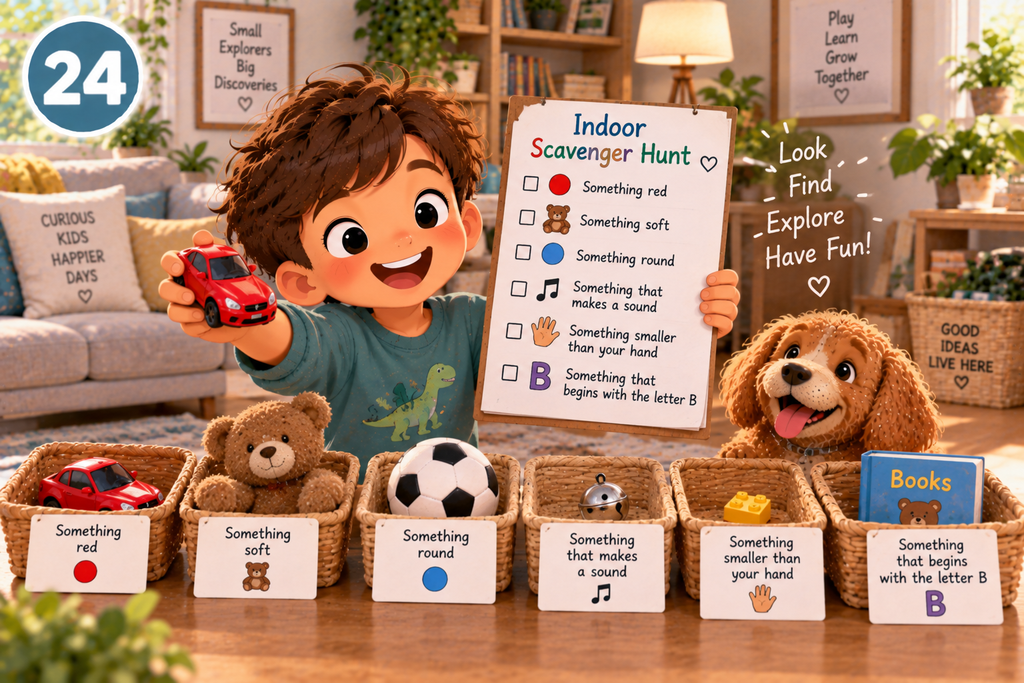
Give your child a list of things to find around the house.
For example:
- Something red
- Something soft
- Something round
- Something that makes a sound
- Something smaller than your hand
- Something that begins with the letter B
For children who enjoy challenges, don’t tell them exactly where to look.
What it encourages: Problem-solving, observation, movement, and independent thinking.
25. Make Up a Story From Objects
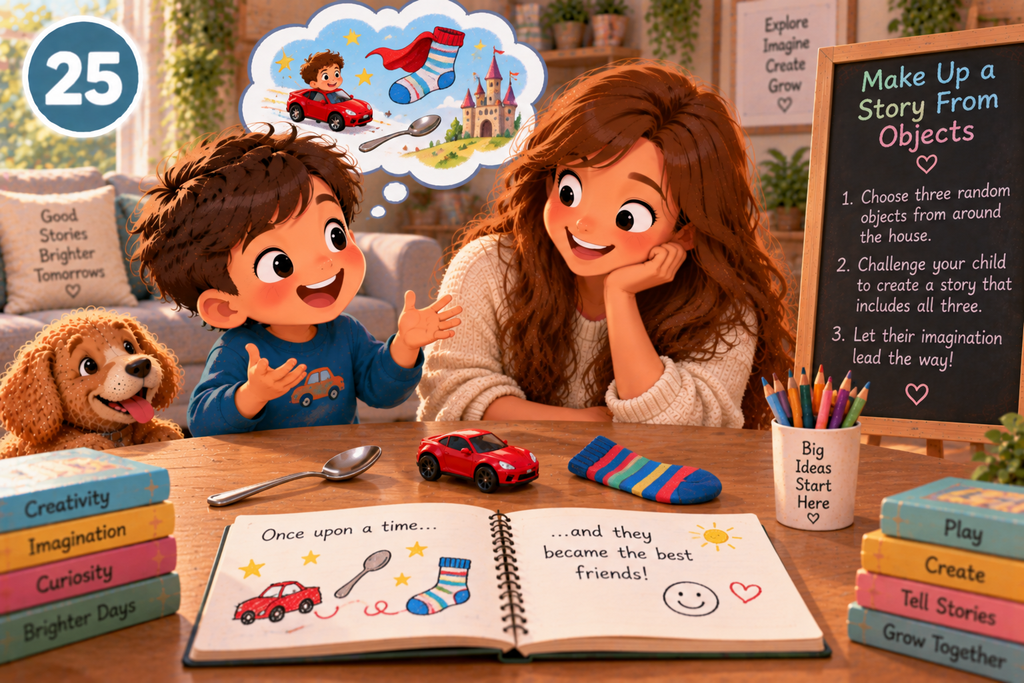
Choose three random objects from around the house.
For example:
A spoon + a toy car + a sock
Now challenge your child to create a story that includes all three.
There doesn’t need to be a “correct” story.
The sillier it becomes, the better.
What it encourages: Creativity, language development, imagination, and flexible thinking.
How to Choose the Right Indoor Activity for Your 5-Year-Old
Not every activity will work every day, and that’s completely normal.
A child who is full of energy may respond better to movement games, while a child who needs some quiet time might prefer storytelling, drawing, or a memory challenge.
A simple way to choose is to think about what your child needs at that moment:
Need to burn energy?
Try freeze dance, animal walks, or an obstacle course.
Need a calmer activity?
Try drawing, storytelling, or I Spy.
Want to encourage learning?
Try a letter hunt, number hunt, shape hunt, or science experiment.
Want independent play?
A fort, pretend restaurant, or scavenger hunt can give your child an opportunity to take the lead.
The goal isn’t to keep children constantly busy. It’s to give them opportunities to explore, create, move, think, and use their imagination.
How to Keep Kids Engaged Without Screens
Screen-free time doesn’t have to mean parents constantly entertaining their children.
One useful approach is to start the activity together and gradually step back.
For example, build the first part of an obstacle course together, then ask your child to create the next section.
Start a pretend restaurant, then let your child decide what the menu should include.
Begin a story, then let your child choose what happens next.
This turns an activity into an opportunity for children to take ownership.
It can also help to offer two choices instead of asking an open-ended question:
“Do you want to build a fort or play a scavenger hunt?”
Giving children a small amount of choice can make it easier for them to get started.
What to Do When Your 5-Year-Old Says “I’m Bored”
“I’m bored” doesn’t necessarily mean a child needs another toy or activity.
Sometimes boredom gives children a chance to figure out what they want to do on their own.
Instead of immediately solving the problem, try responding with a small challenge:
“I wonder what you could build with these cushions.”
Or:
“Can you find five things in this room that are round?”
You can also keep a small list of favorite activities somewhere accessible. When your child says they’re bored, let them choose one.
Over time, children may start coming up with their own ideas.
Do Indoor Activities Need to Be Educational?
Not necessarily.
Play is valuable even when there isn’t an obvious academic goal.
A pretend restaurant can involve language and social skills. Building a fort can involve planning and creativity. Dancing can involve coordination and rhythm.
The best activities often combine several skills naturally without feeling like a lesson.
That’s one reason simple activities can be so effective: children are learning while they are playing.
Frequently Asked Questions
What can a 5-year-old do indoors?
Five-year-olds can enjoy a wide variety of indoor activities, including movement games, pretend play, storytelling, scavenger hunts, simple science experiments, drawing, memory games, and early learning challenges.
How do I entertain my 5-year-old without toys?
Try activities that use imagination and everyday household objects. Building a fort, creating a pretend restaurant, making up stories, playing I Spy, or creating an indoor obstacle course can all provide engaging play without buying anything new.
What are good screen-free activities for 5-year-olds?
Good screen-free activities include freeze dance, scavenger hunts, pretend play, drawing, storytelling, obstacle courses, memory games, and simple observation or science activities.
How can I keep a 5-year-old busy at home?
Give your child a mixture of active, creative, learning, and quiet activities. It can also help to let children choose between two activities and gradually encourage them to take the lead.
What are easy indoor activities for a rainy day?
Rainy days are a good opportunity for forts, obstacle courses, pretend play, indoor scavenger hunts, storytelling, drawing, memory games, and simple science experiments.
Final Thoughts
You don’t need a house full of toys or a long list of supplies to create meaningful play opportunities.
A blanket can become a fort. A hallway can become an obstacle course. A few household objects can become a science experiment. And a simple question can turn into an imaginative story that lasts for an entire afternoon.
For 5-year-olds, curiosity, movement, imagination, and the freedom to explore can be more important than having the perfect activity prepared.
Sometimes the little moments — a silly dance, a made-up story, or an unexpected discovery — become the moments children remember most.
The best part? You probably already have everything you need.





One Comment